
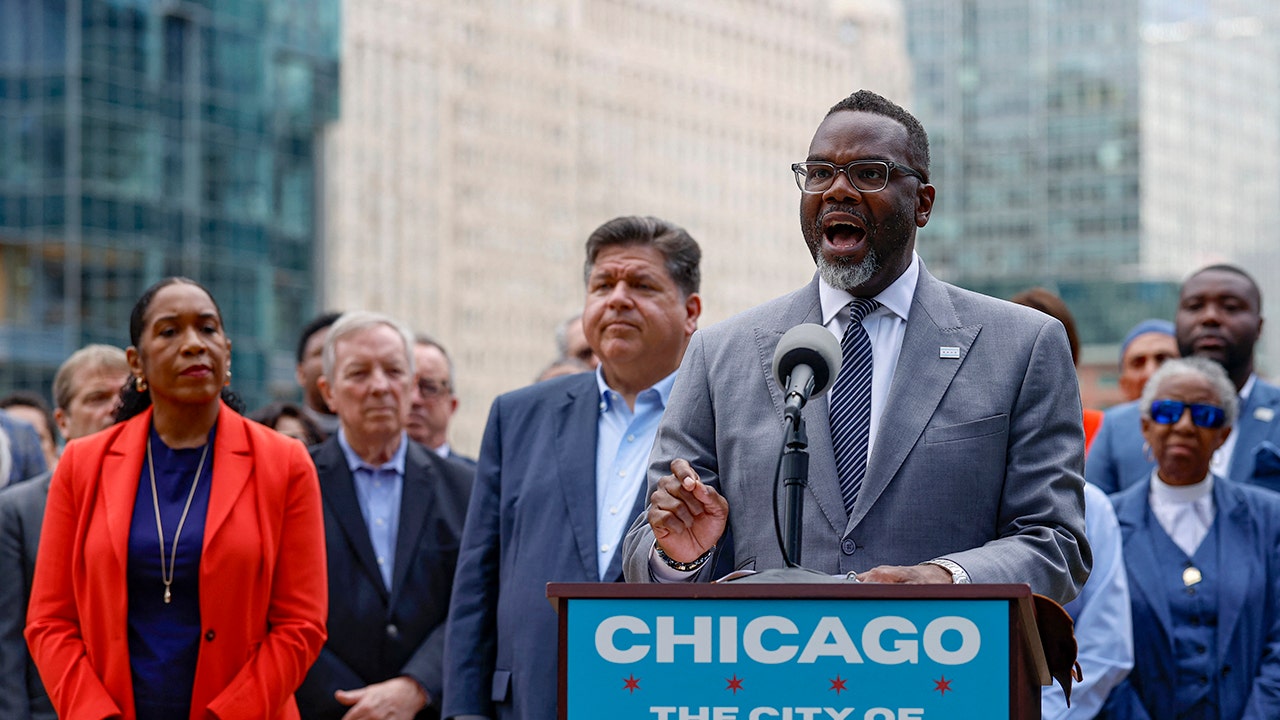
Chicago’s school funding crisis has become impossible to ignore, especially when the numbers for one neighborhood elementary school sit side by side with the city’s massive spending on newcomers. The gap is not just about dollars, it is about priorities, and that tension is at the center of the outrage. In a city that loves to talk about equity, the hardest question is why so many children already here keep getting the short end of the stick.
At Dulles Elementary, the performance numbers are brutal. Only 13.7% of students are proficient in English language arts, and just 3.9% are proficient in math. Those figures alone should set off alarms, but the deeper sting is that the school also receives far less per student than the broader district average.
The spending disparity is hard to miss. Dulles gets about $16,200 per pupil, while Chicago Public Schools is often described as spending somewhere in the $27,000 to $32,000 range per student overall. That kind of mismatch raises a simple question: how can a district talk about fairness while some schools scrape by with far less than others?
The political backdrop only makes it louder. Chicago’s leadership has built a reputation for using the language of racial justice and public compassion, yet that rhetoric rings thin when the budget tells a different story. City hall can praise inclusion all day long, but families notice when their schools are still under-resourced and their kids are still falling behind.
The district’s money troubles are not small or temporary, either. Chicago Public Schools is dealing with a deficit of roughly $732 million, and last summer it cut 1,458 jobs, including teachers and special education assistants. Even with some proposed cuts rolled back, the plan still leans on money the state has not promised, which looks less like a fix and more like a delay.
That is where the migrant spending figure lands like a hammer. Chicago’s inspector general found that roughly $639.6 million in city and grant funds went to services for new arrivals from August 2022 through the end of 2024. Compassion is part of any decent society, but people across the city are asking why so much unrestricted money could move so quickly for one group while schools waited, and waited, and waited.
None of this means vulnerable newcomers should be ignored. It does mean public money has to be weighed against public need, and children in struggling schools are not abstract numbers. They are kids who need books, teachers, aides, functioning buildings, and a real shot at reading, writing, and math before the next crisis shows up.
The pain is especially sharp on the South Side, where too many classrooms are trying to do too much with too little. There are students who cannot read at grade level, special-needs children who need steady support, and teachers worn down by empty promises and constant pressure. Aging buildings, falling enrollment, pension costs, and debt have all made the problem worse, but none of that explains why the urgency always seems to arrive late.
Residents hear the language of equity every election season, but equity without follow-through is just noise. If city leaders want credibility, they need to show that the children in the toughest neighborhoods matter as much as any other cause in town. Until that happens, the message sent to families is blunt and ugly: the adults running the place have their eyes on everything except the classrooms where the future is being decided.
That is why the frustration keeps building. Chicago has no shortage of slogans, press conferences, or moral posturing, but a school system cannot survive on speeches. The real test is whether the people in charge will stop treating local children like background scenery and start acting like their lives are the whole point.
