
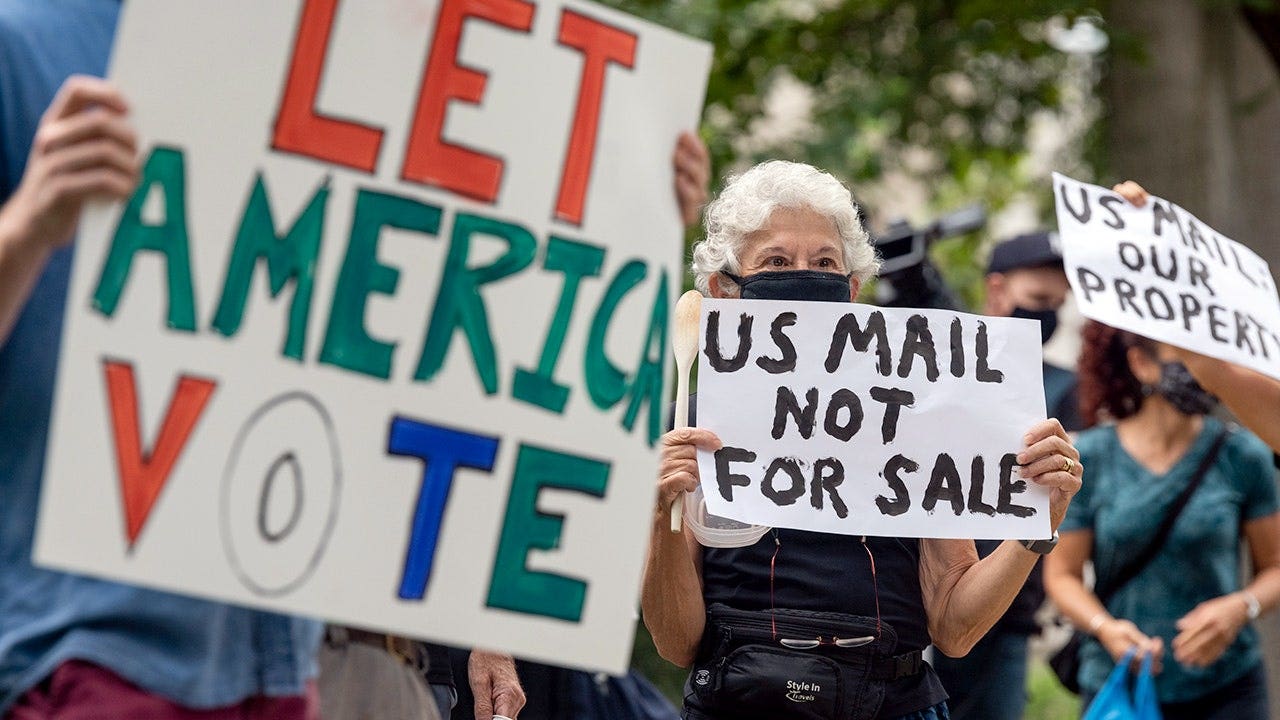
The Supreme Court declined to let new Postal Service mail-ballot rules kick in right away, keeping a lower court’s nationwide block in place as the 2026 midterms draw closer. The dispute centers on how much control the Postal Service can assert over election mail, how fast states could adapt, and whether the government tried to move too late for the changes to matter this cycle.
The blocked rules would have forced federal ballot mail to carry an election-mail logo, meet scanning requirements for high-speed equipment, and include a barcode tied to each voter. States and local election offices would also have had to send envelope designs to the Postal Service for review and feed basic voter information into an online USPS portal.
If the rules had taken effect, any mailing that missed the mark would not have been accepted. Instead, it would have been sent back to election officials for correction and resubmission, a process that would have added another layer of pressure to already tight election deadlines.
The court’s brief order signaled that the government had not cleared the high bar for emergency relief. The justices said the administration was “unlikely to succeed on the merits” at this stage and had not shown enough legal or practical reason to lift the injunction before the case plays out.
That restraint leaves the lower court order standing, which is a major setback for the push to install the new standards ahead of the midterms. The broader fight is not really about paper and envelopes, either, since it goes to the heart of who gets to set the rules when election systems are already in motion.
Justice Brett Kavanaugh agreed with the outcome, but his view left the door open for the Postal Service down the road. He said there was “at least a fair prospect that the final rule falls within the Postal Service’s statutory authority,” even while accepting that the timing made immediate enforcement a bad fit for the 2026 election season.
His concern was practical, not abstract. Kavanaugh said pushing the rules into the current election cycle would be “arbitrary and capricious” because state and local officials would not have enough time to reasonably put the changes into place.
Justice Samuel Alito, joined by Justice Clarence Thomas, saw it differently and dissented from the order. He argued that some challengers lacked standing and that the rest were making the kind of long-shot plea the court has previously described as a “Hail Mary pass” that “rarely succeeds.”
Alito also said the Postal Service has broad authority over the collection, handling, transportation and delivery of mail. In his view, the government would suffer real harm if the lower court’s injunction stayed in place because by the time the case was resolved, the midterms would already be over.
The fight quickly turned into a sharp political flashpoint outside the courtroom. New York Attorney General Letitia James praised the ruling as a win for voters, arguing that the last-minute shift could have pushed elections into chaos and made people question whether their ballots would count.
Senate Minority Leader Chuck Schumer piled on with a blast of his own, calling the case one of the most important voting-rights fights before the court. He said Trump’s plan was unconstitutional and accused the effort of trying to make voting harder right as the election cycle heats up.
Supporters of the Postal Service rule, meanwhile, framed it as a basic security measure. They argued that standardizing mail-ballot handling, tightening envelope requirements, and improving voter matching could help reduce errors and bring more consistency to how election mail is processed.
For now, none of that will matter in the short term because the injunction stays in place. The Postal Service cannot enforce the new requirements for the 2026 elections while the litigation continues, and that leaves election officials in the same system they have been using while the bigger legal battle keeps grinding forward.

1 Comment
To Rerun 2020???