
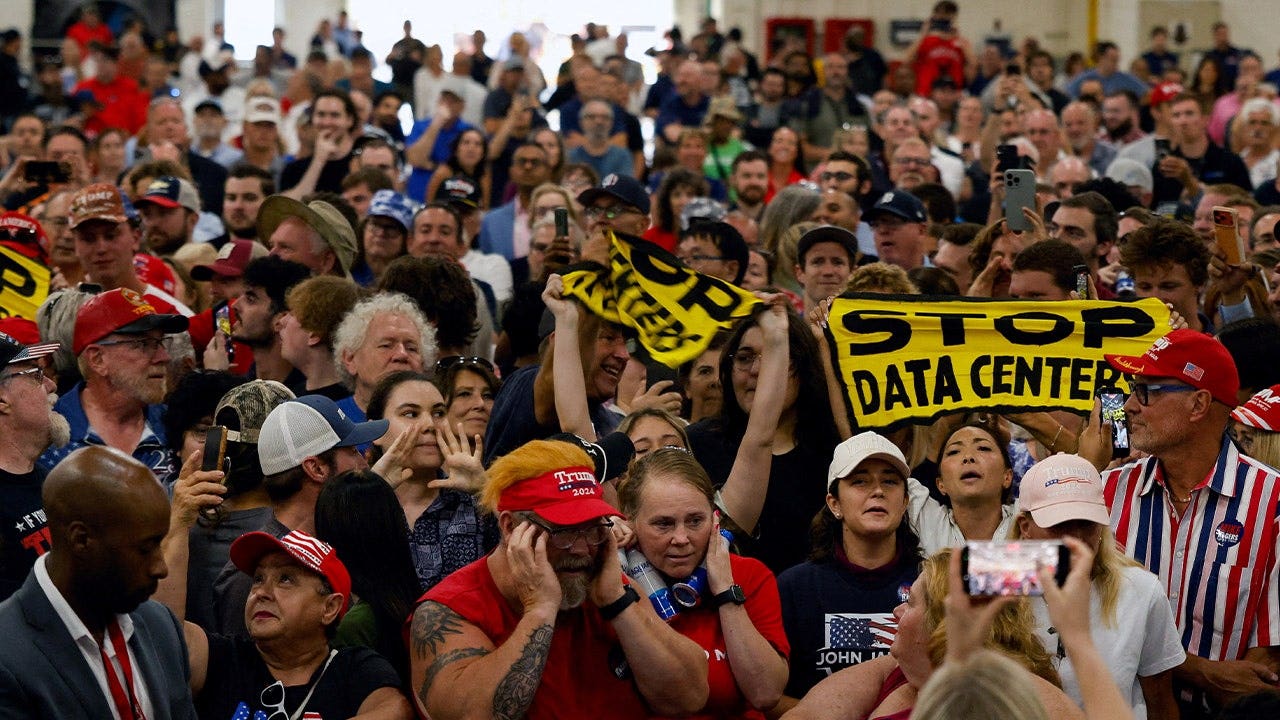
Artificial intelligence and the data center buildout around it are stirring up a fight that goes way beyond tech. The debate is really about who benefits, who gets to control the rules, and whether Americans should buy into the gloomy warnings that keep getting pushed by Democrats and their media allies. Strip away the panic, and a very different picture starts to emerge.
One big part of that picture is economic revival in places that have spent years getting overlooked. Small towns that were written off as yesterday’s news are suddenly seeing new investment, new tax money, and new reasons for young families to stay put instead of leaving for good. That kind of change is hard to fake, and it is exactly why the backlash against data centers feels so off to many communities.
There is also a growing line of attack about electricity, water, and rising bills, but those claims deserve a hard look. A lot of the fear has been exaggerated, recycled, or pinned on AI for problems that were already building long before the latest wave of data centers arrived. In practice, the real story is often more complicated, with newer systems using less water than critics want people to believe and large users sometimes taking pressure off the rest of the grid.
Then there is the political angle, and it is not subtle. Democrats are not just warning about AI, they are trying to shape who gets to supervise it, who gets blamed for its effects, and how much power government should have over the whole process. That is why the language around “safety” and “accountability” keeps sounding less like concern and more like a setup for control.
The small-town impact is where the debate gets real fast. Places like Ellendale, North Dakota, have seen what happens when a data center lands nearby: more work, stronger local budgets, and public services that suddenly have room to breathe again. That is not the usual story told in the alarmist coverage, but it is the one residents can actually see in their streets, schools, and town halls.
Richland Parish in Louisiana shows the same pattern in another form. A massive boost in tax revenue opened the door to major teacher bonuses, which is the kind of tangible win people notice right away. In towns like that, AI is not some distant abstraction or Silicon Valley hobby. It is a direct shot of money into real life.
Quincy, Washington, gives the point even more punch. Data center investment there helped bring a new high school, lower poverty, more public safety support, tax relief, and better infrastructure. For a lot of red-state and rural communities, that is the difference between decline and a future worth betting on.
The power-bill fear is another favorite talking point, but it does not hold up as neatly as critics pretend. Large users like data centers can actually absorb costs that would otherwise be spread across everyone else, and some studies have found modest rate relief instead of the catastrophe being advertised. That does not mean every project is perfect, but it does mean the usual doomsday script is badly oversold.
Water claims are even shakier. Much of the public panic has been driven by badly sourced narratives that aged poorly as cooling technology improved and more systems moved toward closed-loop designs. In plain English, the scary headlines often make it sound like data centers are guzzling the planet dry when the reality is far less dramatic.
For small businesses, the upside may be the biggest surprise of all. AI is giving owners access to tools that used to be reserved for giant firms with deep pockets and full-time staff for every little task. That levels the field fast, and it explains why so many owners are already using it and reporting a real boost.
Blue-collar workers are catching a wave too. Data center construction and support work can mean strong pay, steady hours, and a lot more opportunity than people usually expect from the tech boom. The work may be behind the scenes, but the paycheck is front and center, and that is what matters to families trying to build something solid.
That is the part the scare stories tend to miss. AI is not just a shiny toy for big companies or a political pawn for bureaucrats. It is becoming a force that can reshape towns, lift workers, and give small businesses a fighting chance, which is exactly why the argument over it is getting so fierce.
