
Kids Fighting Cancer Steal Show From Trump During Major Oval Office Announcement
President Trump used the Oval Office to announce an aggressive pivot in pediatric cancer research that doubles federal investment and leans heavily on Artificial Intelligence to speed cures. The moment was supposed to be about policy, but a group of brave kids in the room changed the tone and the news cycle. Republicans who want results and compassion can appreciate both the policy push and the human story that lit up the room.
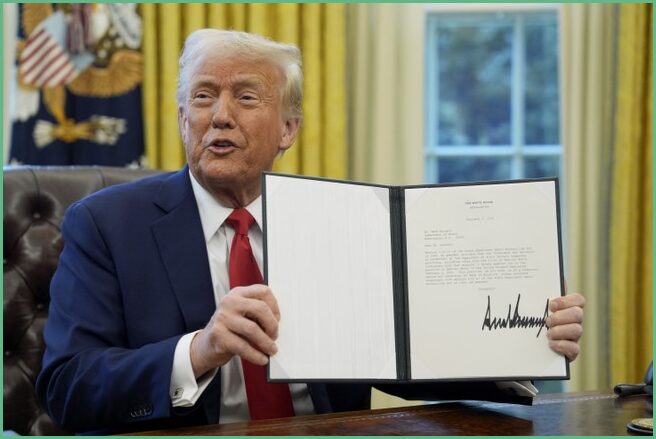
On Tuesday, Trump signed the Executive Order titled UNLOCKING CURES FOR PEDIATRIC CANCER WITH ARTIFICIAL INTELLIGENCE, a plan he said will “massively accelerate pediatric cancer research and harness the extraordinary potential of Artificial Intelligence to fight this terrible disease.” The EO amplifies the Childhood Cancer Data Initiative and directs federal agencies to use data and modern tools to move cures faster. The seriousness of the strategy was matched by the warmth of the people it’s meant to help.
“In 2019, I was proud to launch the Childhood Cancer Data Initiative,” Trump said. “And today, in line with recommendations made by [SecKennedy] and the MAHA Commission, we’re doubling that investment… I’m also directing the federal government to fully utilize Artificial Intelligence to supercharge pediatric cancer research.” That line summed up the administration’s pitch: more funding, smarter tools, and faster results.
Secretary of Health and Human Services Robert F. Kennedy Jr. said the EO “is about action, unlocking cures, empowering families, and giving every child the chance to grow up healthy and strong.” His brief remarks underscored a rare alignment of policy and purpose that can appeal across conservative audiences focused on outcomes. The message was simple: government can act, and when it does right, lives change.
Details about Trump’s action, “UNLOCKING CURES FOR PEDIATRIC CANCER WITH ARTIFICIAL INTELLIGENCE,” are available from official sources and outline how AI, data sharing, and public-private collaboration will be marshaled to accelerate research. The initiative aims to improve trial matching, shorten discovery timelines, and expand access to clinical data for researchers. That’s precisely the kind of results-oriented plan Republicans can champion: limited goals, measurable outcomes, and smarter use of taxpayer investment.
When Trump and other leaders in the room finished speaking, President Trump turned the spotlight over to the kids fighting cancer who were in the room, who had nothing but praise for Trump’s actions. The survivors and patients spoke plainly and powerfully, and the room responded the way citizens hope their leaders will when they show real empathy. Those moments cut through politics and reminded everyone why public policy exists in the first place.
“What you’re doing today, Mr. President, means that kids like me will get better options and so much more hope for the future,” Carolyn Hendrix, 16, a survivor of pediatric bone cancer, which she was diagnosed with when she was 4 years old, explained. “This will help doctors use technology to find cures faster, match patients to trials more quickly, and give our families more control over health.” Her words were a raw, precise description of how policy becomes personal and practical for families.
Trump’s immediate reaction was human and brisk: “Well, that was so cool. I don’t think your father could’ve done that. That’s great.” The line landed as a mix of pride and playful competitiveness that many Republican audiences expect from him. It showed a president comfortable with mixing policy announcements and candid moments with constituents.
It was then a 9-year-old leukemia survivor’s turn to tell Trump, “Thank you, Mr. President, for making everything happen today so kids like me… can still be living today and speaking.” The simple gratitude from a child put the whole room in perspective. “They are doing better than any of us,” Trump replied. “We’re doing lousy. We’re not doing so well today. They are doing so good. That was fantastic, thank you.”
Trump later thanked the kids and opted not to turn the presser over to the media for questions, announcing he couldn’t possibly top what the kids had all shared. He closed with a heartfelt line that acknowledged the moment’s emotional weight and the limits of political theater. “Thank you very much, that’s beautiful,” Trump said, before he turned to the press and said, “And thank you. We’re not going to top that. So, I wanted to just thank you all very much.”
Earlier the same day, Trump also announced a partnership aimed at lowering drug costs, and he got a quick laugh during a light moment when a colleague sneezed in the room. The president quipped, “God bless you, Bobby. I hope I didn’t catch COVID just there,” and the room cracked up at his timing. He even added a jokey, pointed line to a pharmaceutical CEO: “Give me a Paxlovid immediately.”
The public response to the day showed how smart conservative governance can work: deliver tangible policy wins while keeping a human face on government action. Doubling down on pediatric cancer research and prioritizing AI tools is not just a headline; it’s a strategy that can produce measurable improvements in diagnosis, trial matching, and treatment options. That combination of heart and performance is a political message and a real-world roadmap.
Beyond the optics, the initiative signals a willingness to use modern science and data to solve old problems while putting families first. Faster trials, better data sharing, and partnerships with private researchers will make it easier to translate discoveries into care. Republicans who favor limited government should welcome moves that maximize impact without ballooning red tape.
The kids in the Oval Office did more than steal the show; they reminded the country why leaders must deliver results and show compassion at the same time. This administration chose to pair policy muscle with visible empathy, and that matters to voters who want both competence and conscience. If this initiative produces even a handful of faster cures, it will stand as a policy win with a human face.
