
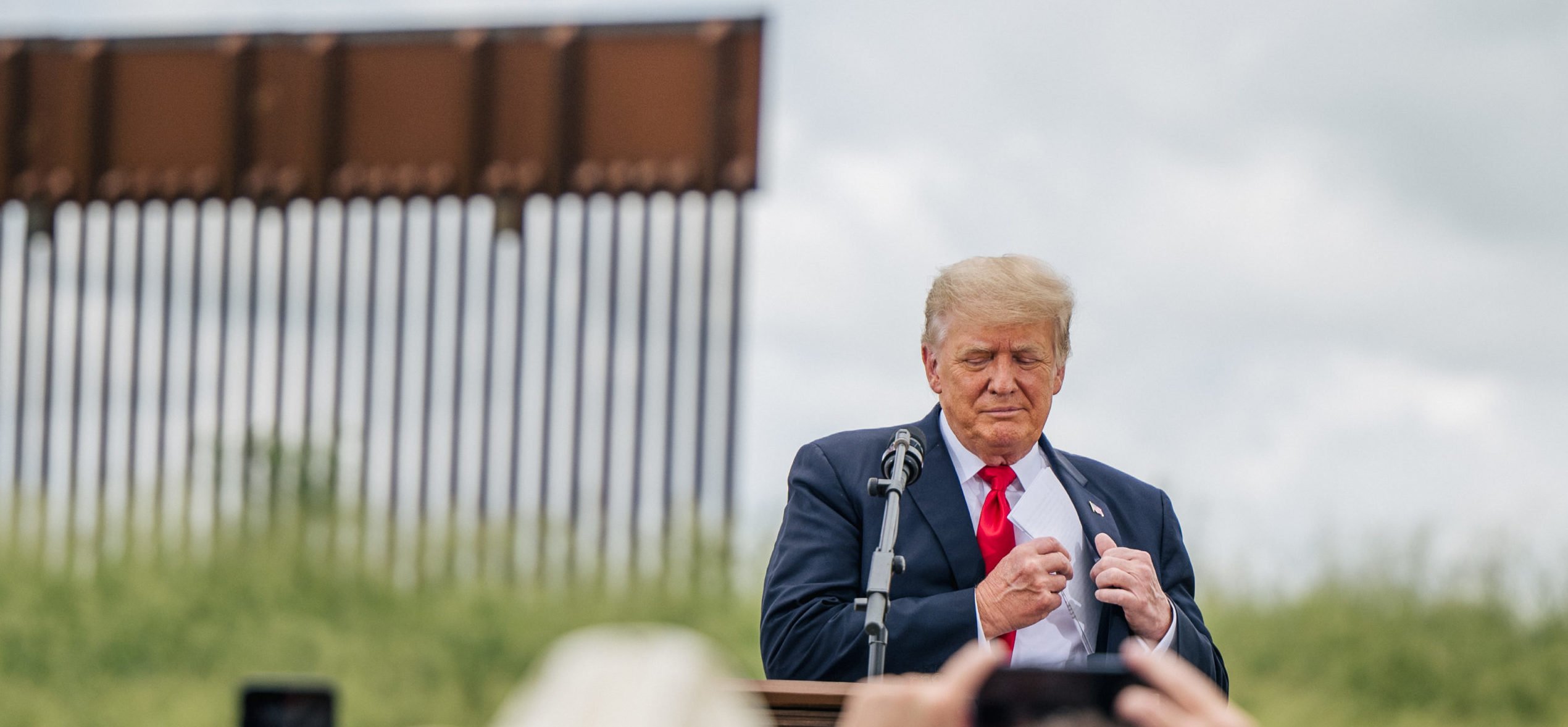
President Donald Trump achieved historic lows in border encounters without the need for a bipartisan border deal, much to the chagrin of his Democratic critics. Homeland Security Secretary Kristi Noem reported a mere 200 migrant encounters at the U.S.-Mexico border on February 22, marking the lowest single-day apprehension in over 15 years.
This significant reduction continued with only 8,326 migrant apprehensions during Trump’s first full month in office, drastically lower than the monthly averages under the previous administration.
Tom Homan, leading the Trump administration’s deportation efforts, expressed surprise at the calmness along the southern border, noting that such tranquility was unprecedented in his extensive career in federal immigration enforcement.
Despite the calm, a bipartisan border legislation introduced in early 2024 never materialized into law. Then-President Joe Biden and Vice President Kamala Harris blamed Trump for the bill’s failure, insisting it was necessary to address the border crisis that worsened under their leadership.
Biden criticized Trump, stating, “Why? A simple reason: Donald Trump. Because Donald Trump thinks it’s bad for him politically.” Biden argued that Trump preferred to politicize the issue rather than solve it, while Trump maintained his focus on securing the border through enforcement.
The bipartisan border deal, crafted by GOP Sen. James Lankford, Democrat Sen. Chris Murphy, and former independent Sen. Kyrsten Sinema, included immigration reforms but also provisions unrelated to the border, such as aid to foreign nations.
Kamala Harris, who took over as the Democratic presidential nominee, echoed Biden’s sentiments during a debate, accusing Trump of sabotaging the bill for political gain. “He preferred to run on a problem instead of fixing a problem,” Harris claimed. However, Trump’s administration showed progress in addressing the immigration crisis through decisive actions and policies.
Under Trump’s leadership, the U.S.-Mexico border saw a significant decrease in illegal crossings, with popular migrant routes in Central America also experiencing a decline in activity. Migrant crossings through the Darien Gap dropped by an astonishing 94% in January compared to the previous year. Central American authorities have noted a reverse migration trend, with many migrants now heading back south, seeking opportunities in South America.
Matt O’Brien, investigation director for the Immigration Reform Law Institute, praised the Trump administration’s approach, stating, “This is proof-positive all that has ever been needed to secure America’s borders is a Trump-style commitment.”
O’Brien criticized the Biden Administration’s claims that new legislation was needed to end illegal migration, labeling them as misleading. Trump’s policies demonstrated that using existing enforcement authorities could effectively manage border security.
On his return to the Oval Office, Trump signed several executive orders aimed at reinforcing border control. These orders included declaring a national emergency to allocate military resources for border security, resuming wall construction, and designating drug cartels as foreign terrorist organizations. Trump also suspended refugee admissions and ended birthright citizenship for children of illegal migrants born on U.S. soil.
Trump successfully engaged the Mexican and Canadian governments to enhance their border security measures. Mexican President Claudia Sheinbaum committed 10,000 national guard troops to curb illegal immigration and drug trafficking. The White House implemented administrative changes, such as canceling the CBP One app and removing “sensitive location” restrictions for deportation officers, significantly boosting enforcement efforts.
The Trump administration’s actions resulted in the arrest of over 20,000 illegal migrants in his first month, a stark contrast to the Biden administration’s approach. In comparison, Biden’s first month saw attempts to halt deportations and undo Trump’s immigration enforcement policies.
Biden stopped border wall construction, ended the Remain in Mexico program, and terminated Safe Third Country agreements, which critics argue exacerbated the immigration crisis.
The Trump administration’s swift and decisive measures demonstrated a commitment to securing the nation’s borders. By leveraging existing authorities and engaging international partners, Trump achieved significant progress in curbing illegal immigration. The results stand in sharp contrast to the previous administration’s approach, highlighting the effectiveness of a strong enforcement strategy.
