
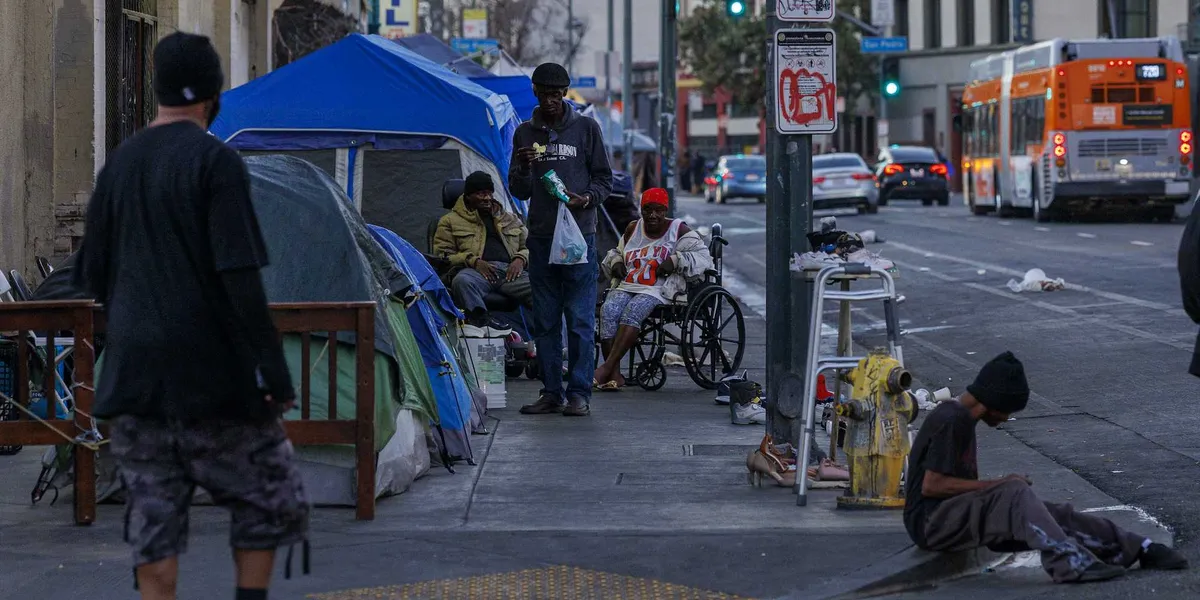
A Los Angeles case has put a harsh spotlight on voter roll integrity after a longtime petition circulator acknowledged paying homeless Skid Row residents to register and sign petitions, a scheme that turned routine fieldwork into a federal election offense and prompted calls for stronger safeguards.
Brenda Lee Brown Armstrong, 64 and known in some circles as “Anika,” spent roughly two decades gathering petition signatures and admits she crossed the line by turning cash into a recruiting tool. What began as a paid gig collecting signatures for ballot measures evolved into paying people small amounts to sign, and in some cases to register under an address that was not their own. That practice drew federal attention and now a guilty plea to a felony charge of paying another person to register to vote.
Armstrong’s method was blunt and transactional: drive around, find someone willing to sign, and collect payment for each signature. When that approach met the reality of Skid Row, she started offering $2 to $3 to induce signatures and registrations, a tactic that prosecutors say corrupted the petition process. ‘Armstrong regularly paid and offered to pay individuals cash, usually in amounts between $2 and $3, to induce them to sign her petitions.’
The scheme exploited the homeless population’s lack of a stable address, with registrants sometimes listed under Armstrong’s previous residence so they could be processed. That practice triggered federal prosecution because it targeted the mechanics of voter rolls rather than honest civic engagement. The case now stands as an example of how small cash incentives can spawn large legal consequences when they intersect with election administration.
U.S. officials framed the matter as more than a local scam; they called it a threat to the integrity of state and federal elections. “This case is important because it shows how it is under California law to corrupt the state’s voter rolls and thereby corrupt the state and federal elections administered by the state,” DOJ Assistant Attorney General Harmeet Dhillon said at a media briefing. The language was stark and deliberately broad, aimed at underscoring the systemic risks when registration rules are ignored.
Prosecutors also credited investigative reporting for uncovering Armstrong’s conduct and helping bring the case into focus, noting independent journalism played a role in identifying her. U.S. Attorney Bill Essayli was among officials who stressed that sloppy registration practices in some regions have national consequences. “California’s lax attitude towards voter registration endangers our democracy. We won’t stand by when ballot box corruption threatens the foundations of our republic,” Essayli said.
Armstrong faces a statutory maximum of five years in federal prison on the felony count, a heavy penalty for an act that began as a small-dollar inducement. “False registrations undermine Americans’ faith in elections — even more so when payoffs are involved,” Dhillon said, and the Justice Department signaled it intends to pursue similar cases to deter future abuses. “This Justice Department is committed to ensuring that all U.S. elections are fair and free from illegal meddling,” she added, “so that all Americans can accept the results with confidence.”
From a practical standpoint, the episode exposes gaps in how voter rolls are maintained and how petition circulators are monitored. Petitions are a cornerstone of direct democracy, but when signature collection is monetized in ways that incentivize fraud, the entire system risks losing credibility. If workers are paid per name regardless of validity, the temptation to cut corners grows, and vulnerable populations can be exploited to produce paperwork that looks legitimate but is not.
The political takeaway for those worried about election security is clear: enforcement matters and rules need teeth. This case will likely be used to argue for stricter verification, better training for circulators, and tougher penalties for those who treat registration as a cash-for-forms operation. Republican-leaning advocates are already pointing to the story as evidence that loose state practices invite federal intervention and undermine public trust in elections.
Beyond prosecutions, the episode raises questions about how to protect both the integrity of the voting process and the dignity of marginalized communities targeted by bad actors. Local officials, petition sponsors, and enforcement agencies will need to coordinate to prevent similar schemes, and citizens should expect clearer standards for who can collect signatures and how those signatures are verified. The Armstrong case is a warning that election administration failures, even at a granular level, can spiral into national headlines and criminal indictments.
https://x.com/USAttyEssayli/status/2056416314533798376
