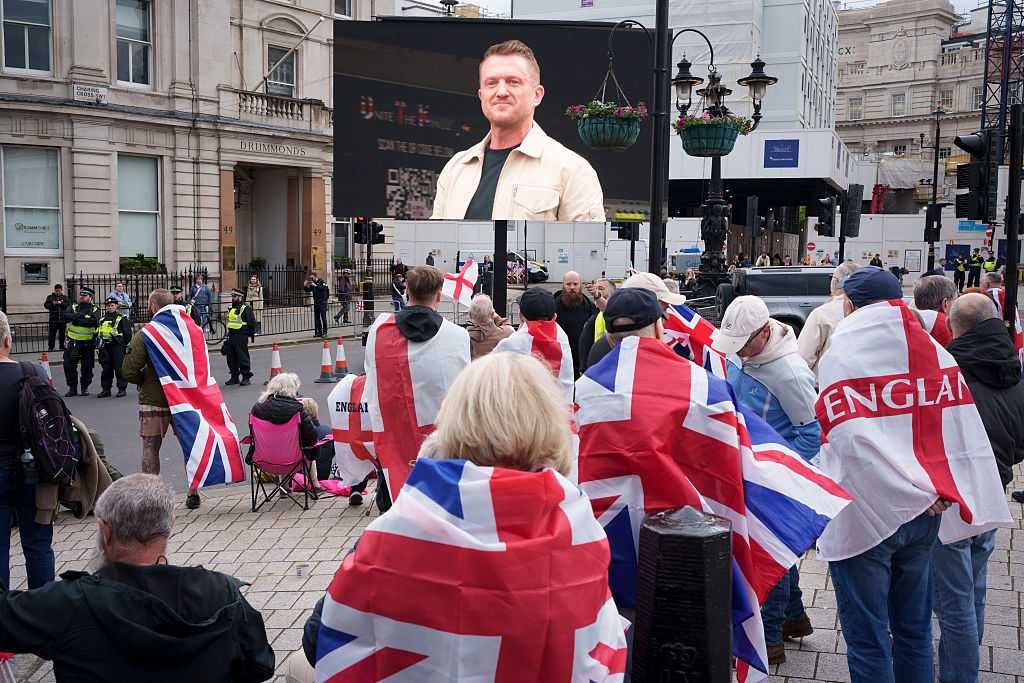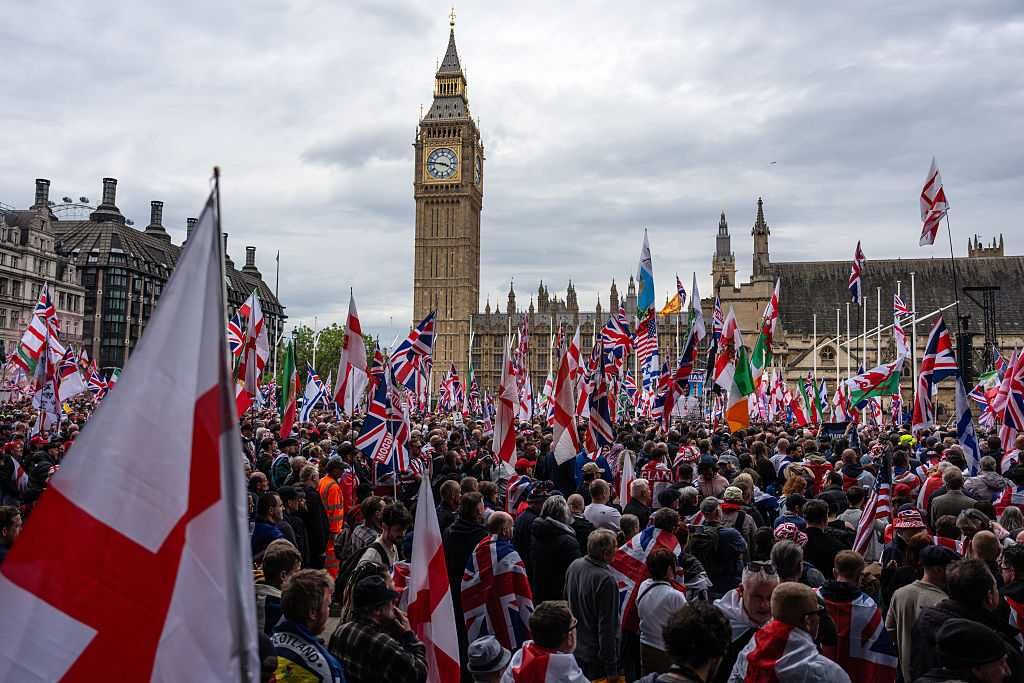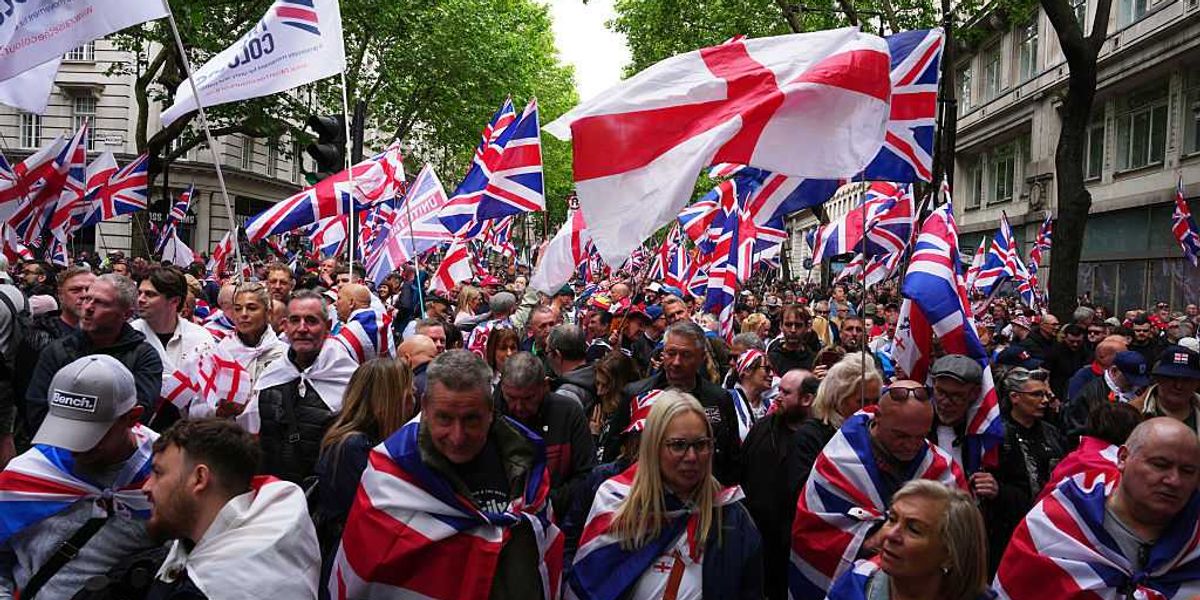
Tommy Robinson drew a huge crowd to London for his Unite the Kingdom march while Prime Minister Keir Starmer’s government moved to bar several international figures from entry, citing public safety and extremism concerns. The event became a flashpoint over free speech, border control, and who gets to speak in Britain’s public square. Voices on the ground and online traded sharp accusations about censorship, security, and political motives.
Tens of thousands turned up in central London to march, and the Metropolitan Police deployed thousands of officers and said it would use facial recognition in the crowd. Officials estimated around 60,000 attendees, a number that inflamed both critics and supporters of the rally. Robinson was in the “.”
Keir Starmer issued a public statement ahead of the protest condemning the movement for what he called “peddling hatred and division,” and his office announced a ban on a group of foreign activists the government labeled dangerous. The announcement said 11 non-British individuals were blocked from coming to the UK to speak at the event. The decision lit an intense debate about whether the state should police who can enter and speak on British soil.
https://x.com/TRobinsonNewEra/status/2055659104773796029?s=20
Journalists and commentators accused the government of overreach. Dan Wootton called Starmer’s video “a despicable and disgusting attack on British patriots.” He told Blaze News, “He was wanting to stoke violence,” and argued that ordinary people showed up peacefully to prove otherwise.
The government singled out specific people it said had used inflammatory language, naming a U.S.-based figure for “inflammatory and dehumanising rhetoric about Muslim communities.” That person responded online, denouncing the ban and blasting “corrupt politicians” while attacking Starmer for deploying facial recognition against rally-goers but not, in her view, against “muslim rape gangs and violent palestine protests.”
A pro-Palestine counter-demonstration took place the same day, and political tensions ran high across the city. Among those denied entry was American commentator Don Keith, who said he had no idea why he was barred other than his friendship with Tommy Robinson and disagreement with Starmer’s policies. Keith made that note public in a post on X.
Wootton also said Keith had been due to co-host coverage of the march and called the travel bans “North Korean stuff.” He added, “I am disgusted about what’s happening to our country when all we are trying to do is stop an Islamist takeover,” framing the bans as a political purge rather than a security measure.
American host Joey Mannarino, who has ties to the movement, slammed Starmer directly and described his feelings in blunt terms. “I’m one of the people you banned. I went to school in the UK and love your country. I love the people of your country. The British ones. Not the ones your lot caters to,” Mannarino wrote. “You’re truly a disgrace to the beautiful nation which you ‘represent.’”
Other named figures were listed by the authorities as barred, including journalists and , politicians and , and commentators and . These individuals were told that their presence “is not considered to be conducive to the public good.” The line has drawn criticism for being vague and easily applied to dissenting voices.
London-based commentator Connor Tomlinson argued the decision highlights contradictory priorities in government policy, praising border enforcement even while accusing ministers of selective action. “It’s good to know that Britain can enforce its borders and stop people from coming to our country, after consecutive years where legal migration ran above a million,” he said, while also accusing the leadership of targeting critics rather than criminals.
Backers of the march framed the turnout as proof that grassroots organizing still matters, while opponents warned of rising extremism and social fracturing. The episode leaves Britain with hard questions about who decides what speech is acceptable, how borders should be defended, and whether heavy-handed bans help or hurt public trust in democratic institutions.