
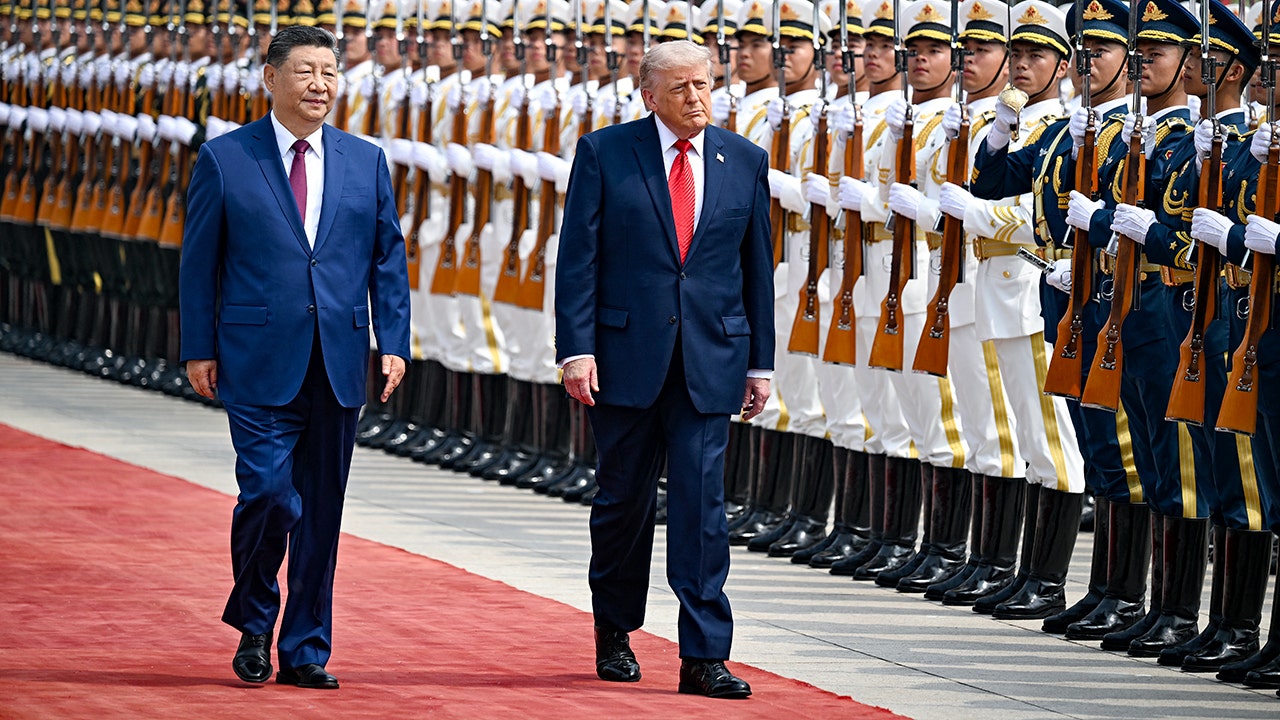
The Beijing summit laid bare what many in Washington refuse to admit: this is not normal diplomacy. Taiwan, Iran and the broader technology and military race are reshaping U.S.-China relations into something that looks a lot like a new Cold War, and the signals from Xi were blunt and strategic. The summit eased short-term tensions but clarified that competition, not cooperation, will define the era ahead.
Taiwan dominated the subtext of the talks and for good reason. Taiwan anchors the first island chain that constrains China’s naval reach, and its factories make the advanced semiconductors that power civilian economies and modern militaries. Under the Taiwan Relations Act, America has a commitment to help Taiwan defend itself, and the credibility of that commitment matters to allies from Tokyo to Manila.
Xi used unusually stark words that were no accident. He declared Taiwan “the most important issue in China-U.S. relations,” adding that if it is “handled properly, the bilateral relationship will enjoy overall stability. Otherwise, the two countries will have clashes and even conflicts, putting the entire relationship in great jeopardy.” That framing is a direct challenge to American deterrence and to allies watching closely.
When Xi later raised the Thucydides concept, his choice of language was strategic and ominous. He asked whether the United States and China could “overcome the Thucydides Trap and establish a new paradigm for relations between great powers.” He dressed his ambition in history, but the message was contemporary and clear: Beijing expects rivalry, and it is preparing accordingly.
President Trump deserves credit for keeping the meeting from spiraling into public hostility. His personal diplomacy helped preserve channels of communication between two nuclear powers juggling crises in Taiwan, the Gulf and the global economy. That calm matters, but optics alone cannot be mistaken for strategy.
On Iran the summit showed how tactical overlap can mask strategic distance. Both capitals claim they want the Strait of Hormuz open and deny support for a nuclear Iran, yet Beijing’s ties and transactions with Tehran remain a strategic lever. China’s access to Gulf oil makes regional stability an interest, but it also gives Beijing room to use Iran as a pressure point against U.S. global posture.
The summit’s substance on Iran produced few concrete commitments. Private assurances were not matched by public guarantees or a transparent plan to prevent Tehran from enhancing its military capabilities. That ambiguity matters because it lets Beijing claim cooperation while preserving leverage against American moves in the region.
The real, long-term competition lies in technology and industrial foundations. Control of semiconductors, rare earth minerals, advanced AI and computing infrastructure will determine military advantage for decades. Taiwan’s semiconductor strength and the presence of key American technologists at the talks were reminders that this is a race with existential stakes for U.S. security.
China is integrating AI and automated decision systems into military networks and surveillance platforms with strategic intent. That integration is not just about economic growth — it is about shaping battlefield advantage before open conflict ever begins. Americans should treat those developments as national security priorities, not merely industrial policy problems.
So what should Washington do? The Republican answer is straightforward: strengthen deterrence in the Indo-Pacific, accelerate semiconductor and supply chain independence, and keep direct communication lines open with Beijing. Deterrence only works if an adversary believes we have both the capability and the will to act in defense of our interests and our partners.
We should also stop confusing temporary alignment on narrow issues with a strategic partnership. Tactical cooperation on energy flows or regional stability does not alter a competing grand strategy that seeks to reorder influence across Asia and beyond. The summit made that distinction plain: warm banquets cannot hide hard aims.
The summit didn’t create the danger; it made it visible. Xi signaled he prefers cooperation when it suits Beijing, but on core issues like Taiwan he made clear China will not yield. For Republicans who prioritize American strength, the takeaway is simple: act now to deter, to secure supply chains, and to lead technologically so peace does not rest on wishful thinking.
