
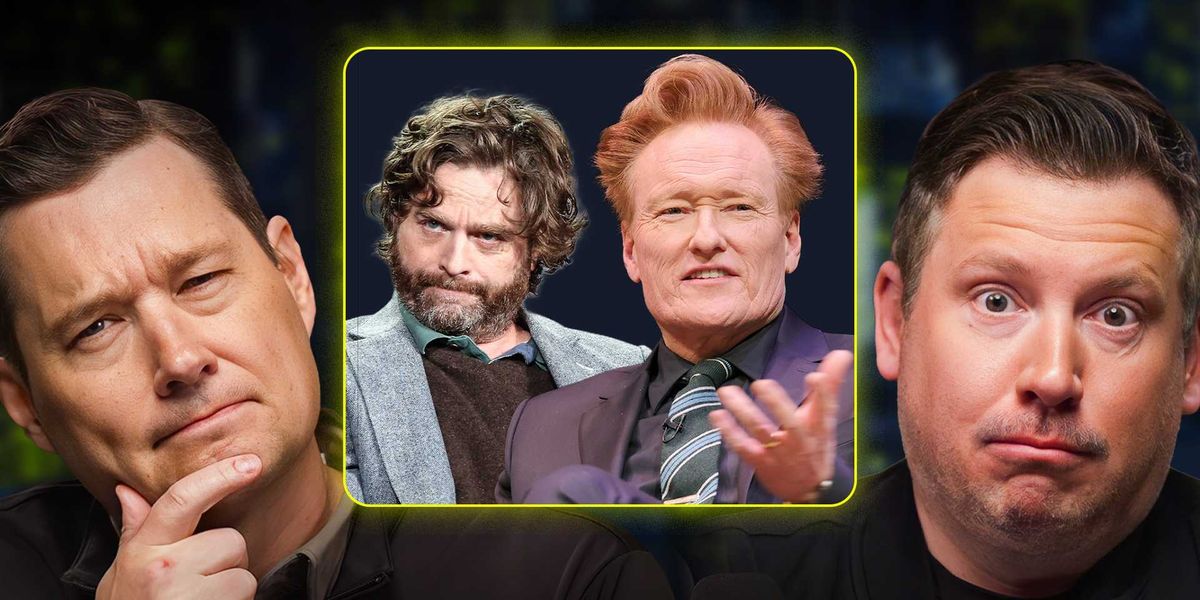
Comedians, hosts, and fans are pushing back against late-night’s shift from jokes to political sermons. Voices like Stu Burguiere and Conan O’Brien argue that humor should lead, not be traded for anger, while others share stories of when saying no mattered more than playing along. The debate is about craft, audience trust, and whether stand-up and talk shows can reclaim being funny first.
Comedy once put laughter ahead of lectures, which is why many viewers tune in: to be surprised and entertained, not scolded. “You’re looking for funny first. You don’t leave out funny,” Stu says, pointing out that too much political theater has hollowed out the laughs. When the punchline becomes a platform, the audience can feel used instead of amused.
That frustration is what Conan O’Brien is calling out when he criticizes the easy habit of punching political targets without craft. In a recent interview, O’Brien criticized comics who go “the route of ‘I’m just going to say F Trump all the time.’” “That’s their comedy,” he said, marking a clear line between sharp satire and reflexive outrage. His point is blunt: repetition without invention is a retreat, not a stance.
Conan digs deeper into the cost of that retreat, suggesting anger can co-opt a comic and blunt their tool set. “And I think, well, now a little bit you’re being co-opted because you’re so angry. You’ve been lulled. It’s like a siren leading you into the rocks. You’ve been lulled into just saying, ‘F Trump, F Trump,’” he continued, warning that rage can become a comfort zone. His worry is that comics trade wit for rhetoric and lose the very craft that makes satire effective.
He doesn’t stop there; Conan argues the solution doesn’t require surrendering seriousness, only sharpening the approach. “And I think you’ve now put down your best weapon, which is being funny, and you’ve exchanged it for anger. And that person or any person like that would say, ‘Well, things are too serious now. I don’t need to be funny.’ And I think, well, if you’re a comedian, you always need to be funny,” he explained, adding, “you just have to find a way.” That insistence on finding a way is a call to creativity over convenience.
Other performers back that stance with real-world examples of pushback against predictable scripts. Zach Galifianakis, known for offbeat interviews, recalled how he handled a big-name guest to preserve the bit rather than mute it. His story shows how refusing to play by a scripted, safe version of comedy can force powerful people out of their comfort zones and keep the joke alive.
“I remember when I interviewed Hillary Clinton, and I could tell she didn’t want to be there, and I totally get that. I get it. But before we had set that whole thing up, they wrote back, ‘Well, you can’t bring up those emails,’” Galifianakis said, describing the gatekeeping that often greets irreverent approaches. That kind of interference can neuter a segment before it even starts, and he wasn’t willing to let it do that.
He pushed back by setting terms and standing by the premise of the bit, which shifted the power dynamics in the room. “And I go, ‘Well, we don’t have to do the interview. That’s fine. We won’t do it.’ When you tell powerful people no, it’s crazy. They were like, ‘OK, we’ll do it. You can ask,’” he said, adding, “Because it’s not that important to me to do it the way they want to do it.” His approach underscores a bigger point: comedy can be stubborn and still land.
This moment feels less like nostalgia and more like a small cultural correction, where comics and hosts are reminding the audience and themselves what drew people to comedy in the first place. The arguments coming from both sides are simple and sharp: be funny, innovate, and don’t let ideology flatten the craft. That pressure to perform is turning into a quiet revival of risk, timing, and the unexpected laugh.
