
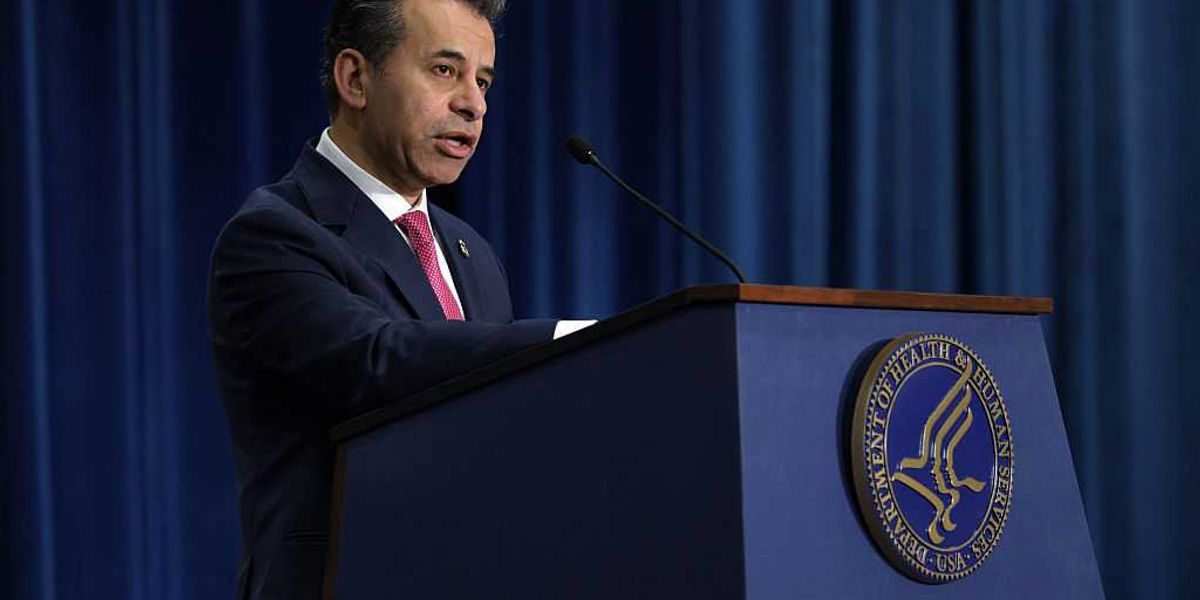
The Food and Drug Administration got a fresh leadership problem this week when Marty Makary resigned, and families whose kids depend on experimental treatments are rightly furious; this piece looks at the fallout, the real-life protests that followed, the broken right-to-try process, and what a new Republican-minded appointee should fix fast.
Marty Makary’s exit came after months of internal turmoil, staff departures, and morale problems inside the FDA. Complaints piled up that the agency had become more focused on internal politics than on helping patients, and that message landed painfully with families facing ticking clocks. When regulators put process ahead of people, the consequences are literal lives.
At the heart of the backlash is right-to-try, the principle that terminal or desperately ill patients should be allowed access to promising experimental therapies. Critics say Makary and his team often blocked that route, slowing or denying trials that might offer hope to children with ultra-rare disorders. Trump’s next appointee should restore the spirit of right to try and make safe, effective treatments available to children as quickly as possible.
The idea behind right-to-try is simple and plainspoken: if conventional options are exhausted, families should be free to try cutting-edge medicine in responsible, monitored ways. When approval is years away but science has advanced, bureaucratic delay can be equivalent to denying treatment. For many parents, that kind of delay is not abstract policy—it is a direct threat to their child’s future.
Families fought to be heard and were often rebuffed. Parents from the mucopolysaccharidoses community sent repeated requests to meet with FDA leadership and received form letters in response, a bureaucratic shrug instead of an honest conversation. That stonewalling pushed elected officials and journalists to probe, but glacial timelines and vague denials kept sponsors from knowing what evidence could change a decision.
When persuasion failed, advocates made noise. In March, more than 100 mothers and other activists staged a mock funeral outside FDA offices, carrying a coffin to dramatize the stakes for children with degenerative conditions. Mucopolysaccharidoses can range from mild symptoms to catastrophic heart and skeletal damage, and for many of these disorders there still are no approved therapies.
An FDA whose first instinct is to protect itself rather than serve families has lost its moral compass. Regulation exists for a reason: to filter out dangerous or ineffective drugs and to ensure safety and efficacy. But when that filter becomes a fortress, promising treatments get trapped on the wrong side and sick kids pay the price.
Mark Dant of the Ryan Foundation told Newsweek that some of these drugs were denied because of the FDA’s institutional “dislike” of the accelerated-approval pathway. “For decades we waited for science to find our tomorrows,” he said. “Now it has, and bureaucrats within the agency we pay for are keeping those treatments from our children. We know they are there. … We just cannot reach them.” Those are not abstract complaints; they’re the voice of parents who watched opportunity slip away while paperwork piled up.
Makary’s departure opens a window that can’t be wasted. The next commissioner, ideally appointed with a view toward patient access and common-sense regulation, must demand clear, evidence-based explanations for trial denials and outline what new data would reverse a decision. Transparency and accountability aren’t partisan extras; they are the essentials of a functioning regulatory system.
Protests abroad show how desperate parents can be: in Georgia, families kept up a vigil for more than 500 consecutive days to press their government on treatment access, and Americans should not have to camp outside federal offices for that kind of attention. If citizens elsewhere must live in front of government buildings to be heard, we should ask why our federal agencies are less responsive at home.
Practical changes are within reach: require specific reasons for right-to-try denials, integrate patient testimony early in reviews, and let Congress demand clear timelines without turning oversight into kabuki. The FDA exists to protect public health, not to shield its own missteps, and new leadership ought to prove that by putting children’s needs ahead of institutional preservation.
