
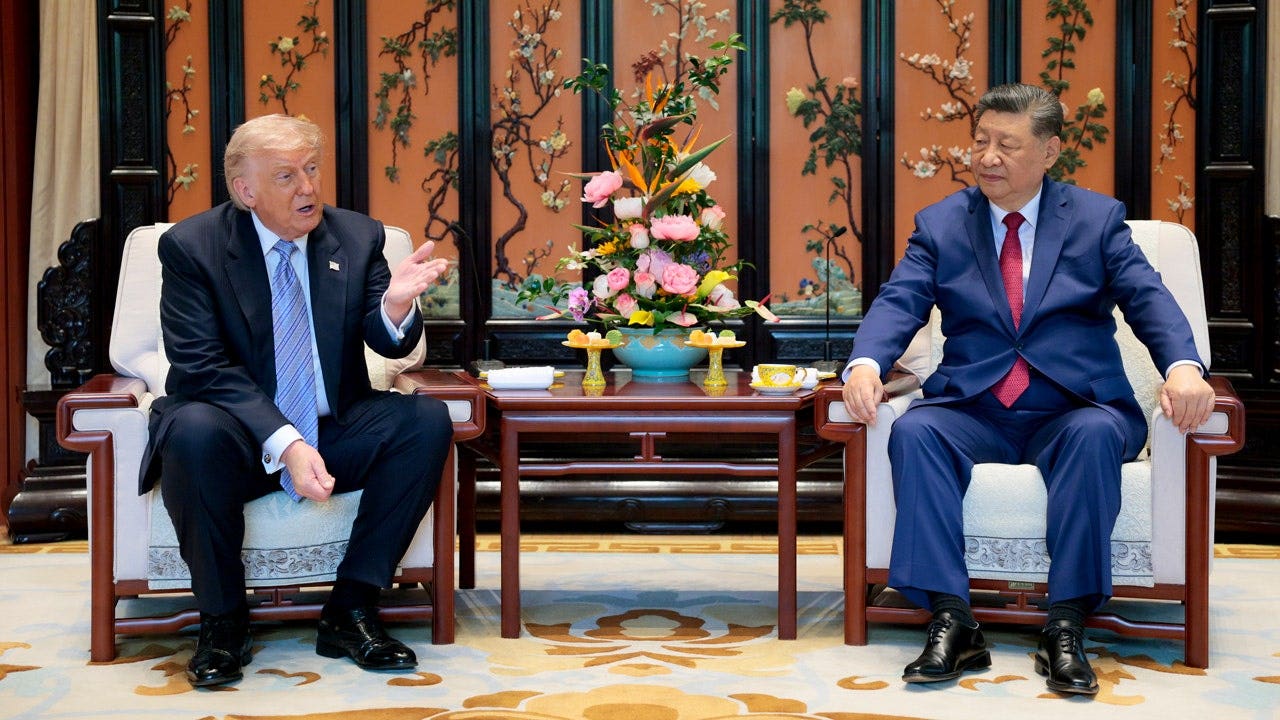
President Trump’s trip to Beijing looked like a win to anyone watching the power plays, even if much of the mainstream press called it a disappointment. Critics shouted that he “left China without any breakthroughs” while sneering at his calling President Xi “a friend,” but the optics and the lineup at the table told a different story. What mattered was the signal sent: America showed up with unrivaled tech, energy, and business muscle, and China’s weaknesses were on full display.
Talk of failure focused on stock jitters and headline drama, but summits are about leverage, not applause lines. The crowd Trump brought shifted the bargaining chips right onto U.S. turf, making the whole meeting a showcase of American industrial strength. That mattered far more than whatever the overnight market did.
Trump didn’t stage a fireworks stunt like the “delicious chocolate cake” moment, but he did something subtler and sharper. He brought roughly thirty of America’s top CEOs into the room, and their presence was a strategic move designed to unsettle a regime that prefers scripted encounters and ironclad schedules. Surprises are not an accident here; they are leverage.
When he described the scene in his own words, the message was plain. “It was a long meeting…It started off interestingly because they are very organized people.” He went on: “I suggested that before we start the meeting, I would like to introduce them to you. And they were surprised because it wasn’t, you know, it wasn’t scheduled. And they looked around and they said ‘Er…’.” Those lines capture the disruption of expectation, and disruption is a negotiating tool.
He spelled it out further: “The Chinese leadership, because it was President Xi and many other leaders… they got used to the fact that we were a little off-schedule here and we’re talking about a subject that wasn’t even thought about.” That off-script moment put Washington in control of the narrative on Xi’s soil, something the media rushed to downplay. Calling someone a friend while showing strength is both human and tactical.
Xi certainly tried to throw weight around early, pointing to Taiwan as a red line and warning of consequences if U.S. policy shifted. Headlines ran with that stern tone, but tough talk is theater when your economy and alliances are fraying. Bluster means less when the other side holds the chips in semiconductors, energy, and cutting-edge AI.
China’s setbacks are structural: cooling consumer demand, a housing slump dragging into its fifth year, and policies that have discouraged private initiative. For the first time in three decades, investment in housing, manufacturing and infrastructure – major drivers of the country’s economic growth – reported a decline last year. Those aren’t temporary bumps; they are the results of choices made at the top.
Political control has also crippled corporate dynamism. The “sinister disappearance of China’s bosses” has deep consequences when CEOs are silenced by fear and firms can’t flex or innovate. Compare that to the U.S., where risk, failure, and reinvention are rewarded; you don’t get global dominance in AI or energy by stifling your talent pool.
On the geopolitical front, friction has cut China off from some of its old havens. Venezuela has been neutralized as a dependable partner, Iran’s channels are tightening, and Russia is consumed by a war that critics once said would be brief. As one analyst put it, “the tide of war is beginning to change” and “Ukraine has begun to claw back territory.” When your partners are struggling, your global reach shrinks.
The summit’s real takeaway was plain: the United States still sets the pace in the industries that define power today. Trump’s approach was less about theatrical breakthroughs and more about reminding the world that American innovation and market dynamism are unmatched. The liberal press can declare a loss, but the people with the checkbooks and the chips read a different ledger.
