
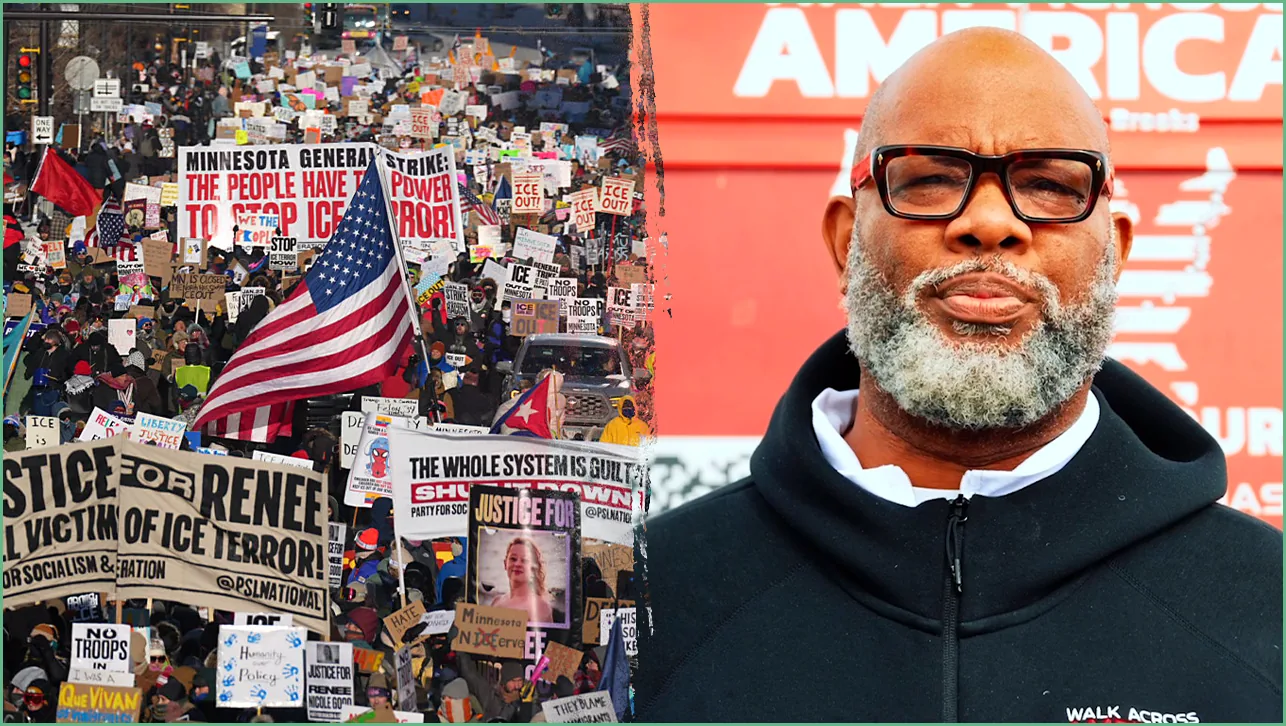
The article recounts a recent disruption at Cities Church in St. Paul, Minnesota, where anti-ICE protesters interrupted worship because a pastor also works for ICE, examines the irony of protests against agents who arrested violent offenders, critiques the politicization of sacred spaces, and argues for prayer, law and order, and community protection instead of theatrical activism.
What unfolded at Cities Church in St. Paul, Minnesota, felt like an invasion of a place meant for reverence. Worshippers were meeting to honor God when activists stormed in to protest a pastor who also serves as an ICE field office director. Their chants and theatrics turned a sanctuary into a spectacle, and that switch from worship to rally hit hard.
The timing was striking because ICE had been clear about Operation Metro Surge and the dangerous people it targeted in Minnesota. Agents had been arresting child rapists, murderers, pedophiles and violent assailants, the kinds of criminals communities fear most. Instead of focusing on those predators, the protesters were chanting, demanding, and calling to abolish the very agency that protects neighborhoods.
That unrest feels like a moral upside-down world where feelings outvote facts and protection is cast as punishment. To many of us, especially those who live where law and order matter most, this looks less like justice and more like ideological theater. When activism storms an altar, it ceases to be moral persuasion and becomes intimidation of people seeking God.
ST PAUL PASTOR DENOUNCES ANTI-ICE AGITATORS WHO DISRUPTED CHURCH SERVICE, SAYS ‘WE’RE HERE TO WORSHIP JESUS’
I was on my Walk Across America and in Alabama when this happened, and the contrast between my mission and that incident felt stark and personal. I walk to raise funds and protect kids in neighborhoods that have already paid a heavy price for failed policies like defund the police. On the South Side of Chicago I have seen what happens when order collapses and predators roam free; that experience shapes how I see this protest.
Churches are meant to be refuge, repentance and reconciliation, not stages for political stunts that frighten children and silence worship. “Hands Up, Don’t Shoot” was chanted inside a sanctuary, a phrase tied to a long-debated incident, and yet the church was turned into a microphone for a very different fight. That misuse of sacred space is not just rude, it’s an attack on the community’s soul.
WALKING ACROSS AMERICA SHOWED ME WHY FAITH AND FREE THOUGHT CAN STILL WIN
Some congregations may sympathize with activists or tolerate disruptions, and that shift risks replacing the Gospel with grievance. You can’t preach salvation while tolerating ideological coercion that makes worshipers feel unsafe. Protesters claim justice, yet invading a service elevates a political agenda over the eternal messageChrist preached.
There’s also a media angle that should not be ignored. A national figure rushed in as if chasing a scoop, apparently caring more about clicks than the sanctity of worship. When the consequences came, the reflex to blame broad social ills instead of personal responsibility revealed a readiness to trade nuance for narratives that score easy points.
Still, the response must be rooted in better remedies than outrage and spectacle. As Scripture reminds us, “Do not conform to the pattern of this world” (Romans 12:2), and “Blessed are the peacemakers, for they shall be called sons of God” (Matthew 5:9). That call points toward prayer, community service and enforcing laws that keep children and neighbors safe.
We should protect churches as places of worship and protect our streets from violent criminals, while insisting activists find lawful, respectful ways to press their causes. I keep walking, building community centers, and urging responsibility because the practical work of safety and charity matters more than headlines. The church will endure when congregations choose prayer, courage and practical love over political theater.
