
• Supreme Court fight over a last-minute election rule
• Jackson’s public break with the majority
• New Hampshire’s student ID voting dispute
• Lower-court orders and election timing concerns
• GOP support and election integrity arguments
• Jackson’s broader pattern of solo dissents
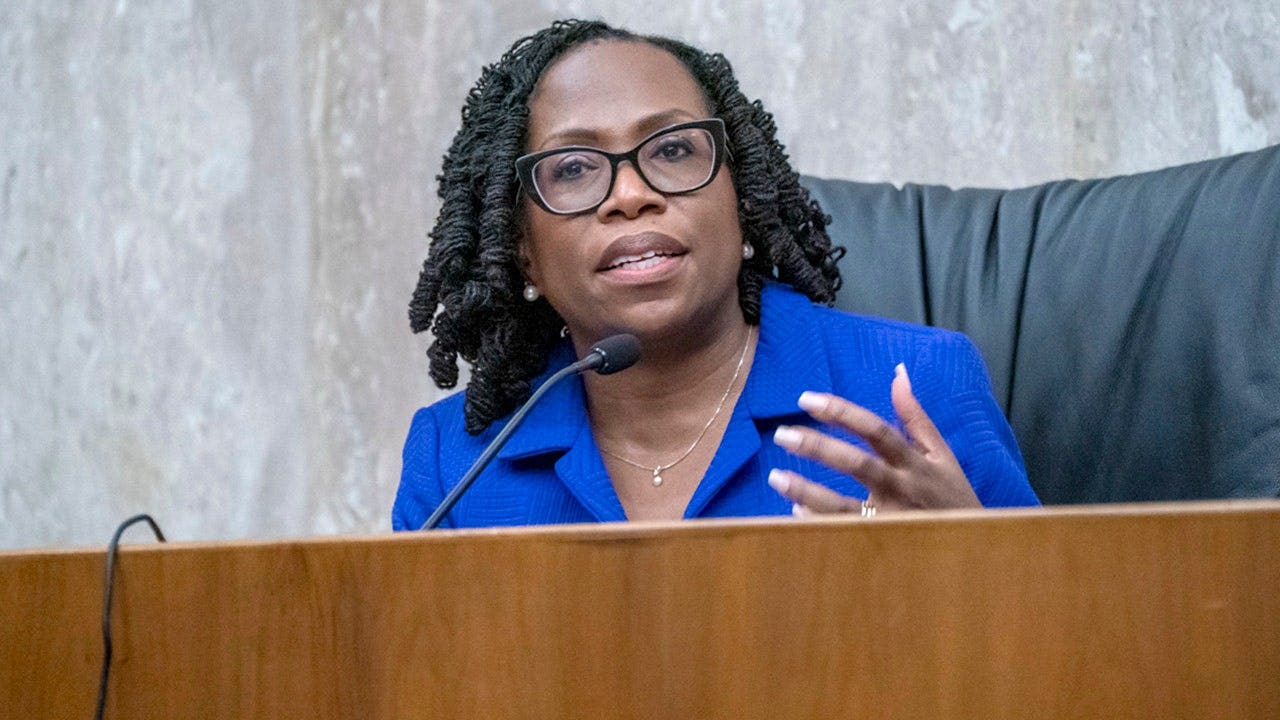
Justice Ketanji Brown Jackson once again found herself out on an island, publicly breaking from her colleagues in a closely watched election dispute. The Supreme Court’s move let New Hampshire enforce its decision to keep student ID cards off the list of accepted ballot identification just before the midterm elections, setting off another round of debate over how far courts should step in when an election is already around the corner.
The majority leaned on a familiar rule: courts usually do not rush in to change election procedures at the eleventh hour. In their view, the lower court had not shown enough reason to make this case an exception. Jackson saw it differently, arguing that timing alone should not override a valid federal court order meant to give voters accurate information about how the process works.
“I respectfully dissent because — even, and perhaps especially, when an election is looming — I would not disturb a clearly justifiable federal-court order issued to ensure that the public receives accurate information about a State’s electoral processes,” she wrote.
The dispute traces back to a law signed in April and effective in June, which removed student ID cards from the set of IDs election officials can accept when someone requests a ballot. A voting rights group challenged the change, saying it unfairly hit younger voters and made casting a ballot more difficult for students who had relied on campus identification.
That fight grew sharper when New Hampshire Secretary of State David Scanlan issued guidance saying student IDs could not be used even as supporting evidence under the state’s backup verification procedures. A district judge shut that guidance down, saying the secretary had gone further than the law itself, which only took student IDs out of the list of specifically accepted forms of identification.
The Republican National Committee backed the guidance, seeing the rule as a common-sense step to tighten election standards. Supporters of the change argue that voter ID rules are about clarity and trust, not roadblocks, and that states should be able to decide what counts as reliable identification before ballots are handed out.
The ruling lands in a state where the political stakes are already hot. New Hampshire has several close races on the ballot, including a Senate contest that could help decide control of Congress, while the governor’s race appears more favorable to Republicans. With margins this tight, even a narrow change in voter rules can carry real-world consequences.
Jackson’s solo public dissent also fits a pattern. Since joining the Court, she has regularly been willing to stand apart from the rest of the bench on issues ranging from campaign finance to immigration to redistricting fights. That habit has made her one of the Court’s most visible dissenters, especially in high-pressure cases where the legal question and political fallout collide.
Her lone voice has shown up in other major disputes too, including a 2023 case involving a concrete company and striking union workers, as well as a May 2026 decision tied to federal prisoners seeking compassionate release. The through line is hard to miss: when Jackson thinks the law points one way, she does not seem interested in softening the message just because the rest of the Court is heading elsewhere.
The student ID issue is not going away quietly either. College-age voters tend to lean Democratic, and even if the number of affected voters turns out to be smaller than some fear, the symbolism is potent. In a season where both sides are already looking for every edge, the battle over what counts as valid identification is shaping up to be one more loud fight over who gets to set the rules before the first ballot is even counted.
