
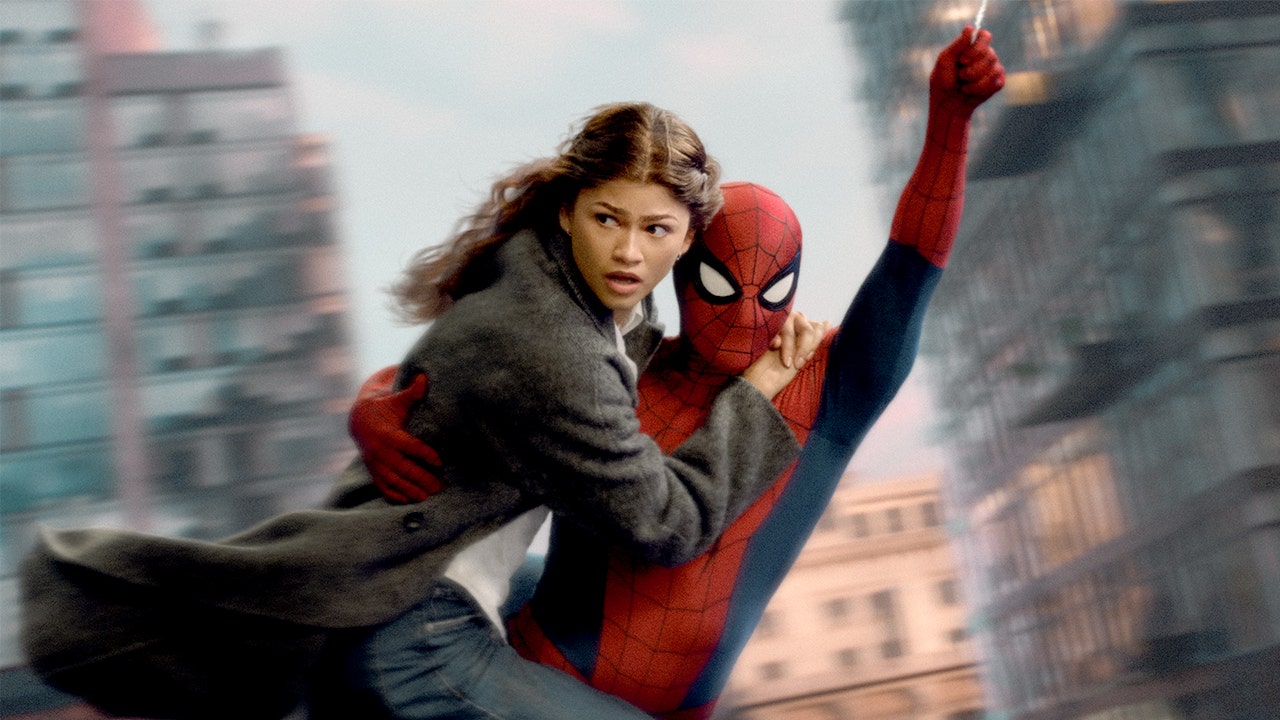
Checklist: Spider-Man’s isolation and emotional stakes; Peter Parker, MJ, and Ned; the new threats and returning Marvel faces; the shift in tone and action; the director, cast, and score; the verdict and post-credit tease.
Peter Parker is back, and life is still a mess. In Spider-Man: Brand New Day, Tom Holland’s Peter is trying to hold together a lonely, off-the-grid existence in New York after the events that wiped him from the memories of the people he loves most. That setup gives the movie a heavier pulse right from the start, because this time the danger is not just outside the suit, it is baked into Peter’s day-to-day life.
The pain hits hardest in the way Peter keeps circling the people he lost. Zendaya’s MJ and Jacob Batalon’s Ned are still part of his world, but only from a distance, and that separation gives the story a real sting. Peter is left watching life move on without him, which is a brutal place for a character usually defined by motion, jokes, and momentum.
The movie also leans into a more complicated threat than the usual smash-and-grab villain playbook. A telepathic bad guy jumps from one body to another while hunting for something called “V-Max,” which gives the film a slightly eerie edge. That kind of mind-game menace works well against Spider-Man, especially when the hero himself is already under pressure and not firing on all cylinders.
Marvel fans get a packed roster around the core story. Mark Ruffalo shows up as Bruce Banner, Jon Bernthal brings his hard-hitting version of Frank Castle, and Michael Mando returns as Scorpion, giving the film some extra bite. Liza Colón-Zayas also adds a sharp presence as Detective Jean DeWolff, who teams up with Spider-Man in a way that feels like a street-level partner dynamic with real friction.
Sadie Sink’s role is being held close to the vest, but the movie makes clear she is not just window dressing. Her character lands like a genuine curveball, the kind that can tilt a whole story in a new direction. That mystery helps keep the movie lively, because every time it starts to settle into familiar territory, it slips in another piece that changes the temperature.
Destin Daniel Cretton takes over the director’s chair, and the change shows. The film feels more emotionally tuned in than the earlier Holland entries, especially when Peter’s loneliness starts affecting him in ways that even his powers cannot fully smooth over. Cretton knows how to balance tenderness and pressure, and that balance keeps the movie from turning into a pile of noise.
Tom Holland is the big reason the whole thing holds together. He plays Peter with the same easy charm audiences expect, but there is more hurt behind the eyes this time, and that makes his performance stand out. Zendaya gets strong material too, and the chemistry between the two still pops, while Bernthal’s Punisher adds a rough, funny contrast that keeps the energy from getting too mournful.
The action is sharper, the imagery is brighter, and the set pieces are staged with real momentum. Michael Giacchino’s score also does a lot of heavy lifting, giving the film a punchy lift when it needs it and a more emotional undertow when Peter is alone with his thoughts. It is a solid combo that helps the movie feel bigger without losing the personal stuff that gives Spider-Man his spark.
The runtime is long, and the movie does sag a bit in places. Even so, it keeps enough tension in the tank to land its biggest moments, and it understands that Spider-Man works best when the hero is carrying more than just a city on his shoulders. For fans, there is also a post-credit scene waiting at the end, and it leaves just enough hanging in the air to keep the buzz going.
