
John Fetterman’s journey from Bernie backer to party outcast and Alexandria Ocasio-Cortez’s rise from local activist to national provocateur tell a bigger story about a Democratic Party that has drifted far left. This piece tracks that flip, the policy shifts that accelerated it, and the political fallout for figures who no longer fit their party’s new shape.
Back in 2016, a young Alexandria Ocasio-Cortez was still largely a local voice, while John Fetterman was cutting his teeth as a Bernie supporter and small-town mayor. Fetterman even declared that he and Sanders “stand together as the most progressive candidates in our respective races.” That early alignment helped define both men as insurgent figures challenging establishment politics.
Fast forward a decade and the roles have inverted in the public eye. Fetterman is now a U.S. senator who votes with his party most of the time, yet finds himself more popular with Republican voters in his state than with many Democrats. That odd popularity split is a symptom, not an anomaly; it points to a party that has changed faster than some of its elected officials.
AOC, meanwhile, has become a centerpiece of the modern left, touring with Bernie Sanders and endorsing candidates who push harder on taxes and regulation. Her national profile is rising, and the brand she represents is unapologetically bold on issues like taxing wealth and transforming energy policy. The contrast between her momentum and Fetterman’s isolation is stark and revealing.
Part of the tension is ideological. Fetterman has called for a tougher line on border security and chastised what he sees as blind party reflexes, noting “The president could come out for ice cream and lazy Sundays, and my party would suddenly hate them.” That kind of straight talk puts him at odds with a rank-and-file that often measures loyalty by louder, purer signals.
Fetterman’s vocal support for Israel after October 7, 2023, pushed him even further from the current left flank. He described an internal party rot, calling out those he believes are aligned with hostile elements, using the phrase “rot in my party standing with pro-Hamas people.” That blunt language did not endear him to activists who demand different priorities.
On other fronts he has refused to play by the new script. When critics defended a candidate in Maine despite troubling symbols and ties, Fetterman called the situation “crazy” and pointed to a tattoo scandal as an example of how standards had slipped. He said, “the guy who’s going to win the primary in Maine … has a Nazi tattoo on his chest, and that’s no problem for a lot of voters.” That kind of condemnation puts him in direct conflict with those who prioritize electoral alliances over optics.
The practical consequences are visible in policy debates. What started as the “Fight for $15” has been ramped into proposals like a $30 minimum in some urban plans. Praise for fracking and natural gas that once crossed party lines has been replaced by full-throated calls for the “Green New Deal” and quick fossil fuel phase-outs. These shifts leave old moderates and pragmatic populists scrambling to find a place in a reshaped coalition.
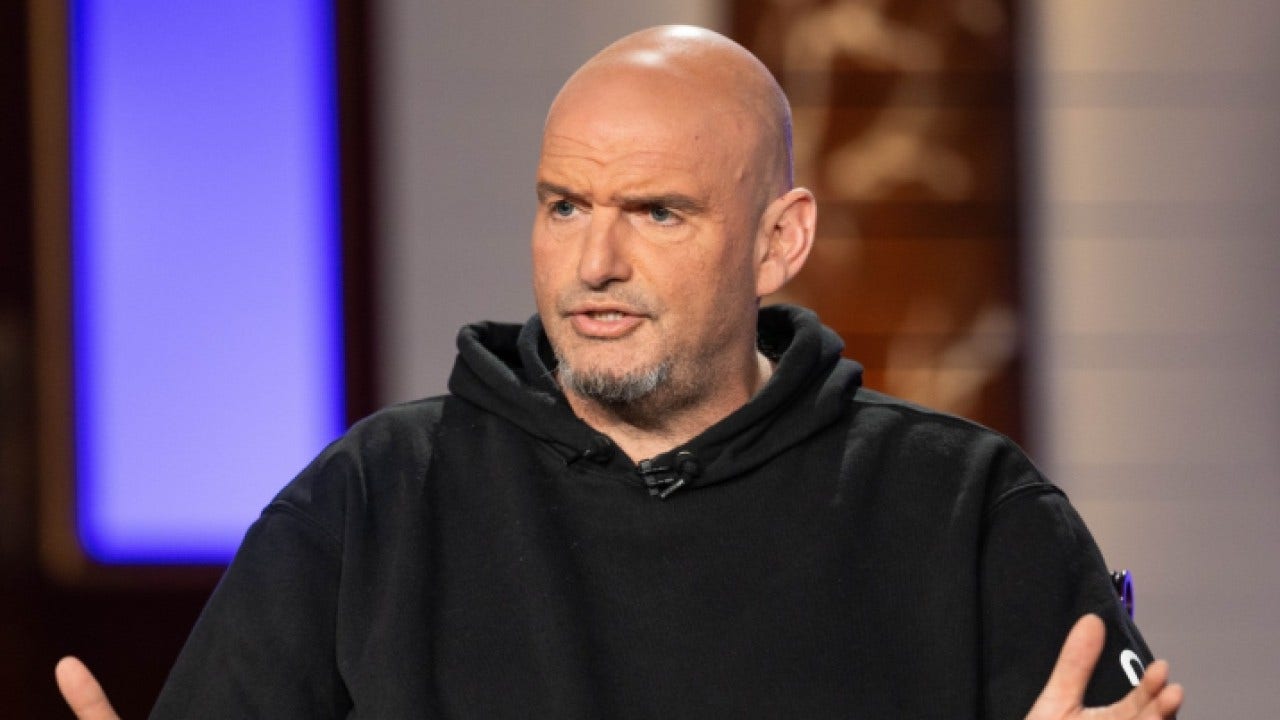
Fetterman’s personal brand — hoodies, blunt language, and a blue-collar persona — once fit the progressive insurgency. Today it reads like an awkward throwback in a party increasingly animated by tax-the-rich rhetoric and cultural signaling. Many voters who once admired him now see a politician out of sync with a party that has moved leftward on both economics and identity politics.
Meanwhile, the party’s center has moved, and candidates who embrace bold redistribution and aggressive climate agendas are the ones winning primary attention. AOC’s endorsements and national tours have helped push those priorities into the mainstream of Democratic primaries. That momentum pressures any elected Democrat who doesn’t fully buy into the new orthodoxy.
The result is internal friction and talk of primary challenges, party realignment, and even defections. Fetterman has dismissed the idea of switching parties and insists that his “values have not changed.” Yet the political math for him is now about survival as much as principle, because the voters who once defined the coalition have shifted their demands.
This is more than a personality clash. It’s a snapshot of a party wrestling with its identity, trading some pragmatic policies for ideological clarity. For Republican observers, the spectacle of Democrats eating their own is evidence that the party’s leftward motion has real electoral consequences. For voters in Pennsylvania and beyond, the question is whether elected officials will follow their conscience or follow the party line.
One thing is clear: American politics keeps evolving, and those who don’t adapt risk being left behind. Fetterman’s predicament and AOC’s ascent are just two faces of a much bigger story about the direction of the Democratic Party and how that direction reshapes who counts as an ally or an outcast.
