
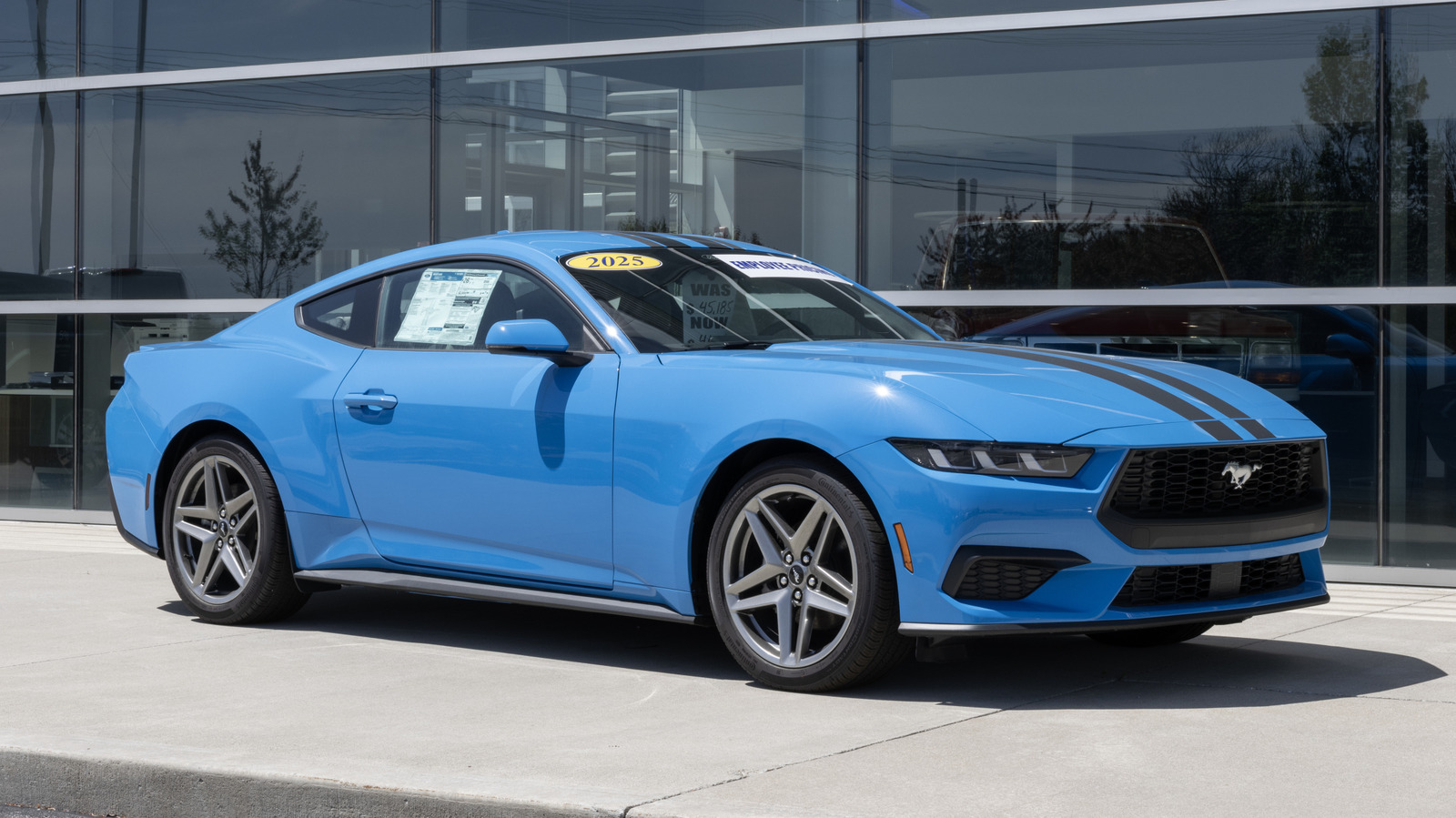
The base Ford Mustang EcoBoost has a reputation problem, and that is exactly what makes it fun. People hear “base model” and assume it is just the bargain-bin choice, but the 2.3-liter turbo four has enough punch to embarrass a few machines that wear sportier badges and cost a lot more. That is the whole charm here: the Mustang does not need a V8 to be quick enough to make some serious names sweat.
Under the hood, the EcoBoost Mustang makes 315 horsepower and 350 lb-ft of torque, and Ford pairs it with a 10-speed automatic. In testing, that combo has delivered a 0 to 60 mph run of 4.5 seconds and a quarter mile in 13.2 seconds, which is strong territory for a car that still sits at the entry point of the lineup. The result is a Mustang that feels like a shortcut to speed without behaving like a compromise.
The Mazda MX-5 Miata is the kind of car people buy for balance, steering feel, and a light-on-its-feet personality. Its most powerful version only makes 181 horsepower, and that keeps it honest, charming, and a little less urgent in a straight line than the Mustang. Tested numbers put the Miata at 5.5 seconds to 60 mph and 14.3 seconds in the quarter mile, so the EcoBoost jumps ahead by a comfortable margin.
The gap gets even wider when you compare entry trims. Some base MX-5 models need more than eight seconds to hit 60 mph, which is a reminder that a great roadster and a fast car are not always the same thing. The Miata still delivers a lot of smiles, but the Mustang’s turbo torque makes the sprint feel downright ruthless by comparison.
The Toyota GR86 brings a different vibe, leaning hard into light weight and driver involvement. Its 2.4-liter flat-four makes 228 horsepower, which is plenty for fun, but not enough to match the EcoBoost Mustang when the road opens up. MotorTrend has recorded the GR86 at 5.8 seconds to 60 mph and 14.3 seconds in the quarter mile, both well behind the Ford.
That difference can grow depending on transmission choice. Toyota’s own figures put the automatic GR86 at 6.6 seconds to 60 mph, which stretches the Mustang’s lead even further, while the manual version still cannot quite catch up. The GR86 proves that speed is only part of the story, but the Mustang shows how much damage a turbo four can do when it is tuned right.
The Volkswagen Golf GTI is not a classic rear-drive sports car, but it has earned its place in conversations like this for years. It uses a 2.0-liter turbocharged four-cylinder making 241 horsepower and 273 lb-ft of torque, and it is famous for being quick, practical, and genuinely entertaining in traffic or on a back road. Even so, Edmunds tested the manual GTI at 6.1 seconds to 60 mph and 14.4 seconds in the quarter mile.
That leaves the GTI a long way behind the Mustang’s numbers. Volkswagen’s dual-clutch version is a touch quicker on paper, but it still does not get close enough to threaten the EcoBoost in a straight-line sprint. It is a reminder that hot hatches can be sharp and clever without necessarily being the fastest thing in the lane.
The BMW Z4 sDrive30i brings more money, more badge cachet, and a lot more premium polish. Its turbocharged 2.0-liter four-cylinder makes 255 horsepower and 295 lb-ft of torque, which is respectable, but still less than the Mustang’s output. Edmunds has the Z4 at 5.3 seconds to 60 mph, and MotorTrend has seen a 13.8-second quarter mile, both behind the EcoBoost.
That is where the Mustang really starts to look like a bargain with a bite. The Z4 costs far more and wears the kind of image people associate with performance, yet the base Mustang still gets off the line harder. If you move up to the Z4 M40i, the script changes, but that version also pushes the price into another universe.
The Nissan Z closes the group with the biggest engine and the strongest power figure on the page. Its twin-turbo 3.0-liter V6 produces 400 horsepower and 350 lb-ft of torque, which should make it the easy winner, at least in theory. But Edmunds tested the manual Z at 5.0 seconds to 60 mph and 13.6 seconds in the quarter mile, and that still leaves it trailing the EcoBoost Mustang.
The explanation is not mysterious. The Mustang’s 10-speed automatic is simply better set up for hard launches than the Nissan’s manual, and that matters more than many people like to admit. Even in a crowd of respected sports cars, the base EcoBoost keeps punching above its weight and making a strong case that “entry-level” does not have to mean “easy to outrun.”
