
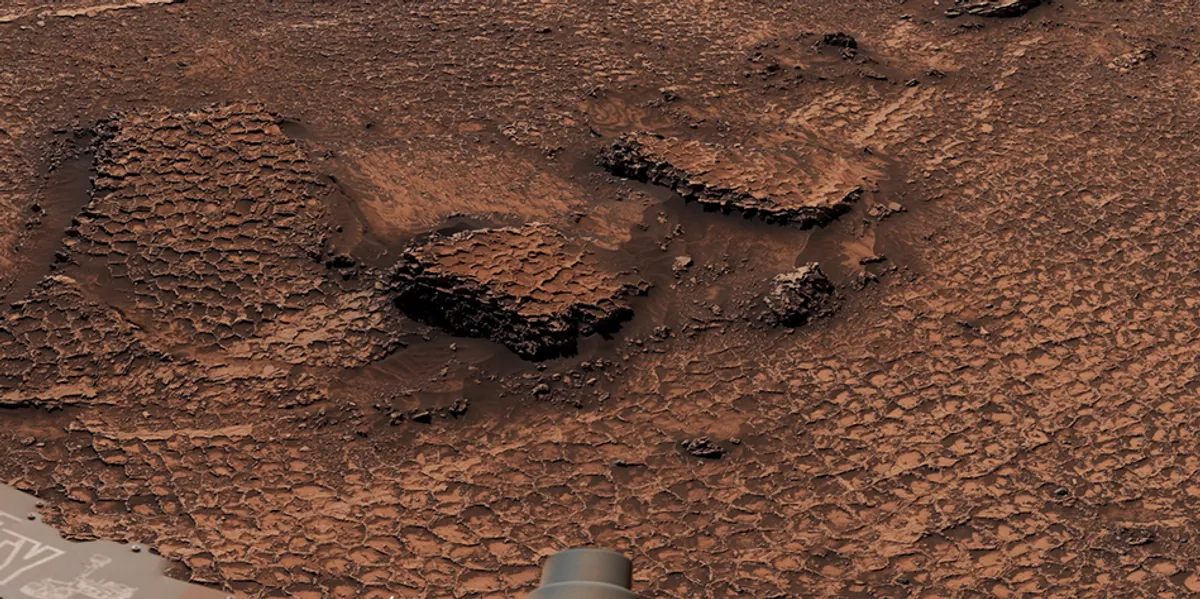
Mars has a way of turning a simple rock into a full-blown debate, and a recent NASA image of the red planet sent that exact energy through the internet. A strange-looking formation spotted in the photo lit up speculation fast, with people seeing everything from unusual geology to something a lot more dramatic. The bigger story is not just the shape itself, but how quickly a single image can become a Rorschach test for curiosity, skepticism, and the old question of whether we are really alone.
The photo in question comes from NASA’s Mars exploration work, where the planet keeps serving up landscapes that look almost staged. On a world hammered by wind, dust, and time, jagged edges and odd shadows can make ordinary terrain look wildly unnatural. That is part of why Mars is so addictive to watch, because every frame seems to invite a second glance.
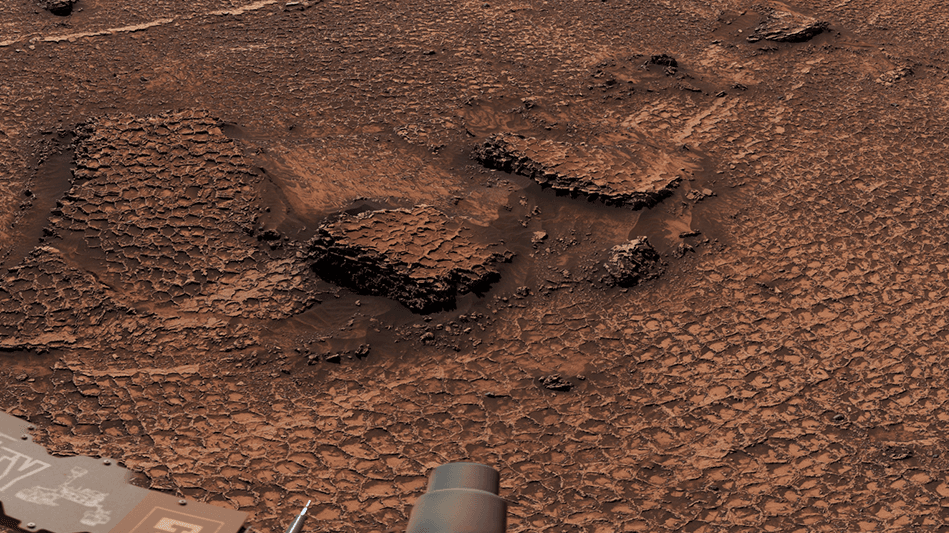
For some viewers, the formation looked suspiciously deliberate, the kind of thing that sparks talk of alien structures or hidden tech. That reaction is easy to understand because humans are pattern machines, and we are wired to recognize shapes even when nature is doing the heavy lifting. Put that instinct against a barren Martian landscape, and suddenly a lonely rock can start looking like evidence.
NASA has spent years dealing with this exact kind of reaction. Photos from rovers and orbiters often produce a wave of online theories, especially when lighting conditions create dramatic contrasts or when a natural feature has sharp angles that feel out of place. Most of the time, the explanation is far less cosmic than the imagination wants it to be, but that does not stop the buzz.
The Curiosity rover has been one of the biggest drivers of Mars fascination, because it keeps bringing back images that feel close enough to touch. Those pictures are not just scientific data, they are fuel for wonder, and that is where the fun and the friction collide. One person sees a cliff face, another sees a hidden doorway, and the internet does what it always does.
There is also something deeply human about wanting Mars to hold a secret. The planet sits close enough to feel familiar, yet far enough away to keep its mysteries intact, which makes every weird formation feel loaded with possibility. That tension between hard science and wild speculation is exactly why Mars remains one of the most talked-about places in space exploration.
Still, the science side matters most here. Mars is known for dramatic erosion, layered rock, shifting dust, and terrain shaped by ancient conditions that are still only partly understood. A shape that looks polished or unusual in one image may make perfect sense once viewed from a different angle, with better lighting, or in the context of the surrounding landscape.
That does not mean people should stop looking closely. In fact, the opposite is true because curiosity is what pushes discovery forward, even when the first guess is wrong. The trick is keeping both eyes open, one for wonder and one for reality, so strange-looking Martian scenery stays exciting without instantly becoming a fantasy.
What makes this latest photo stick in the mind is the same thing that has always made Mars so magnetic. It teases the imagination, feeds the debate, and reminds everyone that space is still a place where the obvious and the mysterious often share the same frame. And as long as the red planet keeps sending back images like this, people will keep staring, arguing, and asking what exactly they are really looking at.

2 Comments
That face of Mars from 1976 needs a new lookover too as well
With all the rampant corruption, greed, graft, hate, jealousy and deception happening here on this earth the only planet that we humans can live and flourish on, why should I give a care or want a penny spent by the American government to look at odd shapes, designs or shadows on the surface of Mars! “I don’t give a crap about Mars” or anything else out there for that matter! People better focus on their short finite flesh lives and this out of control evil going on right here in our home, because its absolutely real and off the charts coming straight from the Father of All Lies Satan; who is trapping so many of us foolish often willfully stupid humans to take to hell with him upon the final judgment by God Almighty; which is approaching at lightening speed! Thus the deception and distraction now ramps up, increasing feverishly! The Devil “is” in the details, and his time is very limited just like ours is, because he wants to own as many of us as he can snatch before his time runs out!
God bless,
In Jesus’ name.
Amen.