
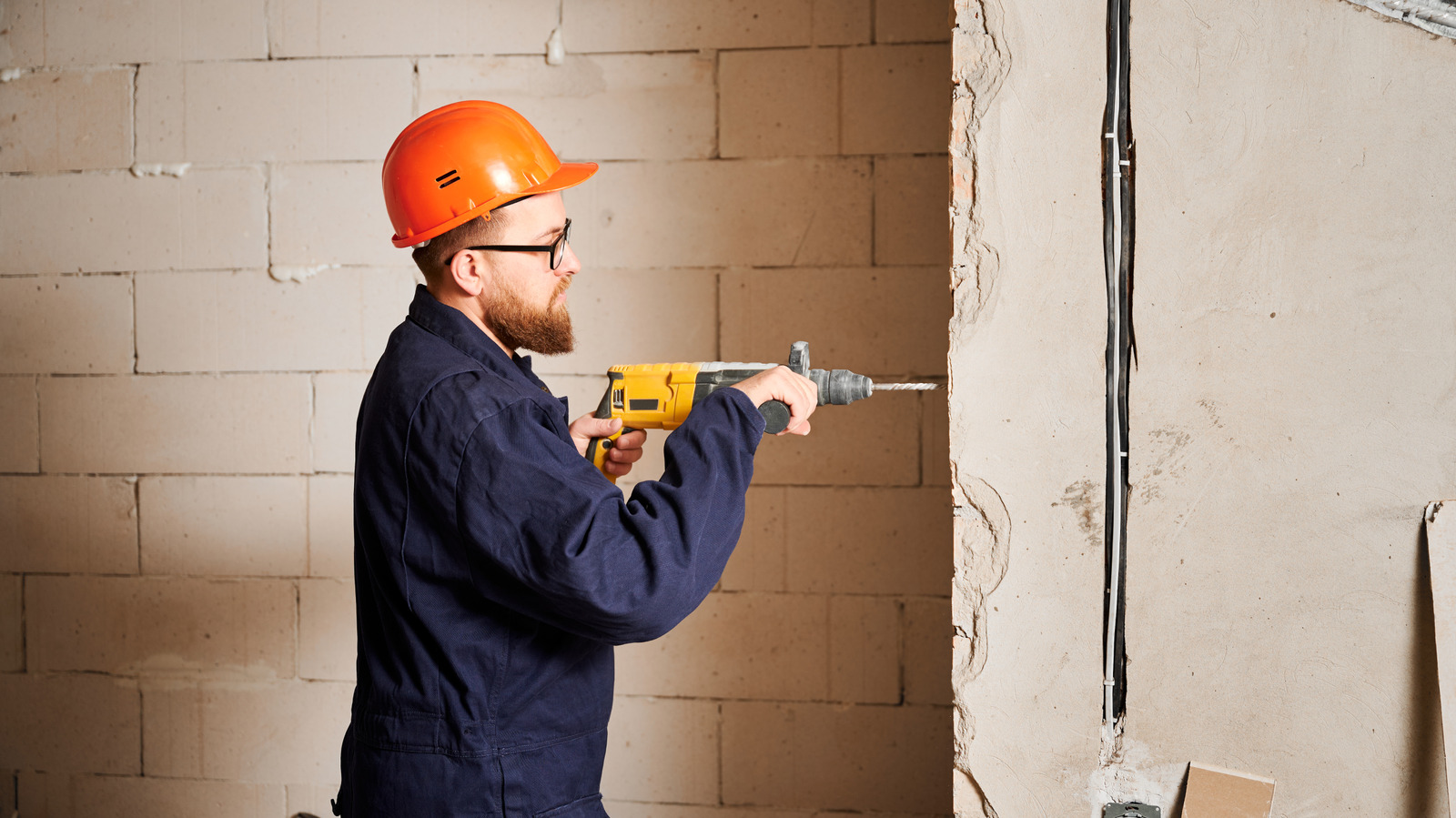
Concrete can turn a simple drilling job into a fight, and the right cordless tool makes all the difference. Voltage matters, but only as part of a bigger picture that includes hammer action, battery size, motor quality, and the type of bit being used. For most home projects, the sweet spot starts at 18V, while heavier work often calls for a stronger setup built for real masonry.
Here are the main points to keep in view:
- 18V is the practical minimum for useful concrete drilling
- 12V tools can handle only light, occasional work
- Hammer action matters as much as battery voltage
- 20V MAX and 18V sit in the same basic power class
- Rotary hammers are better for demanding concrete jobs
A capable 18V or 20V MAX cordless hammer drill can handle small holes in concrete if the masonry bit is sharp and the pressure stays controlled. That setup is usually enough for hanging shelves, mounting fixtures, or other household tasks that do not demand much depth. Once the concrete gets harder or the hole gets wider, though, weaker drills start to show their limits fast.
A 12V drill is not completely helpless, but it is not the tool to trust for much beyond very light, shallow work in softer concrete. It will cut slower, drain the battery quicker, and start to struggle as the material gets denser or the hole gets deeper. A plain 12V drill without hammer action is even less suited, because it has to grind through the aggregate without the percussive help masonry work really needs.
The clean answer for most shoppers is simple: 18V minimum, with 20V MAX treated as the same class of tool. The label can look different from one brand to another, but the real-world voltage category is basically the same. What matters more is whether the drill has a strong hammer mechanism, solid torque, decent cooling, and enough battery capacity to keep going without fading too early.
For occasional work around the house, a brushless 18V or 20V hammer drill is usually the best balance of power and convenience. A two-speed gearbox helps keep the drill under control, and a reliable side handle is a smart safety feature because masonry bits can bite hard. Bigger batteries, like 4Ah or 5Ah packs, often deliver better runtime, though they also add weight that can wear out your arms during longer jobs.
When the job gets serious, a standard hammer drill is not always enough. If the plan involves drilling multiple holes, reinforced concrete, or larger openings, a cordless rotary hammer with an SDS-Plus chuck is the better pick. Its electro-pneumatic impact system is built to punch through dense material more efficiently than the gear-driven tapping action found in a regular hammer drill.
That is where voltage becomes only part of the story. Professional-grade tools may sit in the 18V to 24V range, but the real difference often comes from impact energy and the way the bit is seated and driven. A rotary hammer clears dust better, reduces effort, and keeps progress moving instead of making the user lean on the tool and hope for the best.
Before any drilling starts, the basics still matter more than people like to admit. Check for hidden wiring or plumbing, mark the depth, and wear eye and hearing protection so the job does not get ugly fast. Start slowly to keep the bit centered, then let the hammer function do its work once the hole is established, but skip hammer mode on tile or other fragile surfaces where a little force can cause a lot of damage.
