
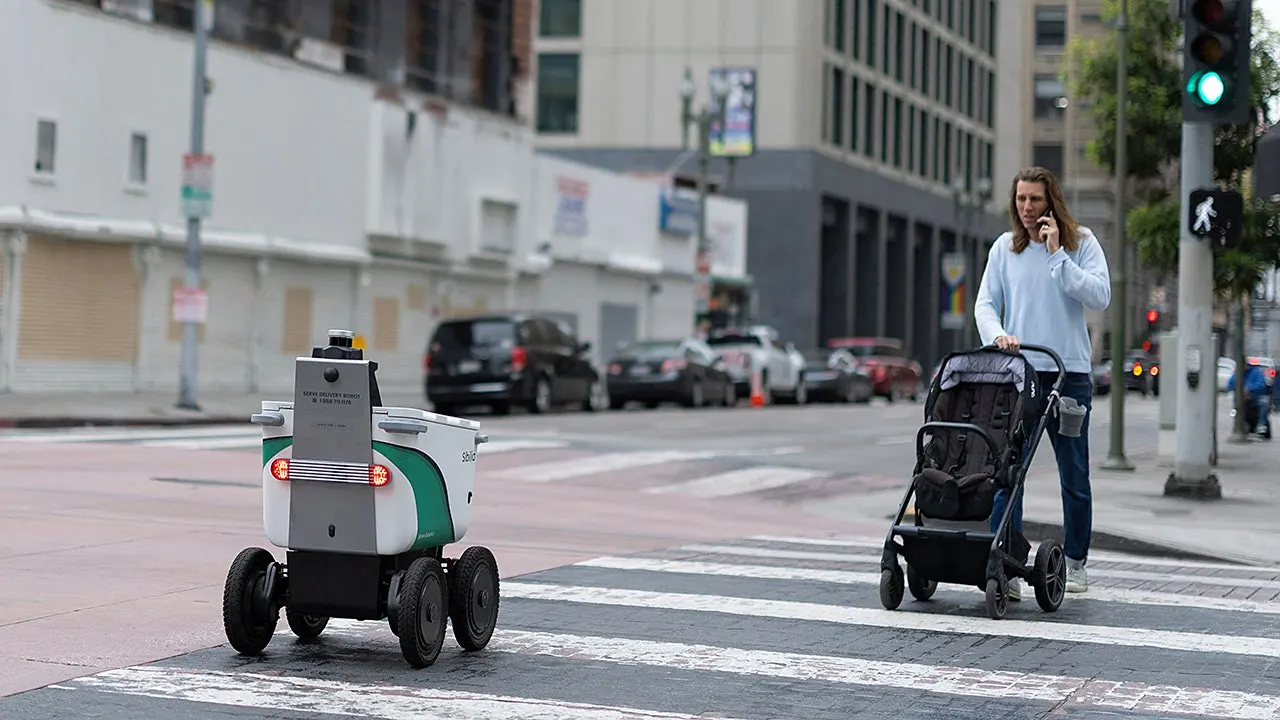
Food delivery robots are rolling into more neighborhoods, but the welcome has been anything but warm. Some people are kicking them, tipping them over, and turning the whole thing into a street-level feud over AI, jobs, privacy, and who gets to control the sidewalk.
There’s something oddly surreal about a tiny machine carrying dinner getting treated like a public enemy. These robots move slowly, look harmless, and mostly just try to get from point A to point B, yet they’ve become a lightning rod for anger that goes far beyond the robots themselves.
Part of the backlash comes from job anxiety. When a robot shows up where a human courier used to be, it can feel less like convenience and more like replacement, especially for workers who depend on delivery income to pay the bills.
That tension has already spilled into real-world conflict. In Philadelphia, a retired professor was arrested after blocking an Uber Eats delivery robot, saying she was protesting the replacement of human labor with machines, and the moment put a spotlight on how quickly these disputes can move from frustration to confrontation.
Not every complaint is philosophical, though. Some robots have caused very real headaches by clogging sidewalks, misrouting, or running into traffic trouble, which only adds fuel to the idea that they are invading spaces built for people first.
Chicago offered one of the stranger examples when a cluster of delivery robots ended up tangled together on a sidewalk. It was funny for a second, until the scene was viewed through the eyes of someone trying to push a stroller, use a wheelchair, or simply get past without a hassle.
That’s the tricky part with this technology. A sidewalk jam caused by machines is still a sidewalk jam, and when a robot gets in the way, it stops being a neat tech demo and starts looking like a public nuisance.
There is also the broader fear that these little vehicles are symbols of a bigger shift. For many people, artificial intelligence already feels like it is creeping into more parts of daily life, and a robot cruising past the front door makes that shift feel immediate and personal instead of abstract.
Social media pours gas on the fire. A single video of someone kicking a robot or a robot acting up can go viral fast, making the whole trend seem far larger and more chaotic than it may actually be in everyday life.
Even so, the business side of delivery robots keeps growing. Companies like Serve Robotics, Coco, and Avride are expanding fleets, testing new markets, and betting that automated deliveries will eventually become a normal part of urban life.
The pitch is easy to see. Robots can handle short trips without traffic stress, they may reduce the number of cars making quick food runs, and customers get a fast delivery without thinking much about what is happening behind the scenes.
Still, the economics are not exactly effortless. These companies are spending heavily on hardware, repairs, software, and support, while also dealing with the reality that a robot can only save money if it works reliably enough to justify the whole system.
Cities are starting to respond, and that is probably overdue. Some local governments are writing new rules for where robots can operate, how companies must coordinate with officials, and what kind of access pedestrians should expect on public sidewalks.
Privacy is another question that keeps hanging over the whole industry. Most of these robots rely on cameras and sensors to move safely, which raises the obvious issue of what gets recorded, how long it is kept, and who gets access to it later.
At the same time, there are glimpses of something genuinely useful. Some companies are trying to use robot data to help identify sidewalk obstacles, which could make life easier for people with visual impairments or other mobility challenges if the systems are handled responsibly.
For anyone who runs into one of these machines on the street, the best move is simple: don’t try to manhandle it. Give it space, report a blockage to the company if needed, and let local authorities or city reporting systems handle the problem instead of turning it into a showdown.
