
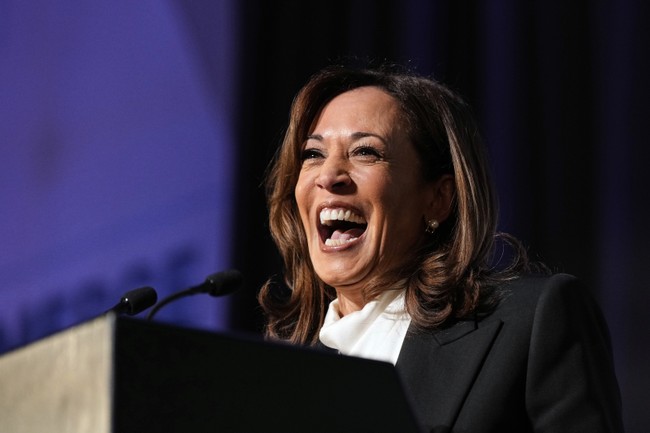
Kamala Trips All Over Herself During Maddow Interview With Bizarre Takes on Buttigieg, Trump
Kamala Harris walked into Rachel Maddow’s show with a new book and what looked like a strategy to put out fires, but the whole thing mostly fueled them. Her answers landed clumsy and defensive, and they raised fresh questions about judgment and political instincts. For Republicans watching, it read like a string of missteps that explain a lot about the party’s position today.
She tried to explain why she didn’t pick Pete Buttigieg as a running mate and ended up making things worse, not better. Harris insisted it wasn’t about bias, then used language that sounded suspiciously like bias. That kind of contradiction is the sort of political malpractice that costs votes.
Harris repeated that with only 107 days she saw naming Buttigieg as “a real risk,” and insisted it was not “prejudice.” Saying one thing and then describing the same thing in another way doesn’t help her credibility. Voters notice when politicians trip over their own words and offer excuses instead of clarity.
Beyond that, the interview offered a familiar pattern: deflection and selective memory. She dodged direct answers when pressed about future ambitions and framed bumps in the road as misunderstandings. That won’t reassure donors or swing voters who want plain talk and accountability.
When Harris claimed the 2024 election was somehow closer than it looked, she ignored the map and the math. The electorate moved, county by county, toward Republicans in a big way, and pretending otherwise strains credulity. Expecting people to accept spin over results is a losing play in the long run.
And 2,678 counties became more Republican, by an average of 13.3 percentage points. That’s six times as many counties moving toward the G.O.P. than toward the Democratic Party — and by a substantially wider margin.
The erosion of working-class support — among Black, white and Latino voters alike — has unnerved every ideological wing of the Democratic Party.
That blunt snapshot of the electorate explains why Harris sounded like she was coping rather than diagnosing. She compared herself to other Democratic figures and reached for platitudes instead of owning the losses. Republicans will point to that as proof of a party out of touch with its own voters.
Asked whether she plans to run again, Harris gave the classic politician’s non-answer: “That’s not my focus right now.” That phrase is political code for “I’m keeping options open” and it telegraphs ambition more than restraint. People notice when leaders dodge plainly phrased questions about their future.
The interview also highlighted her trouble naming allies and staking clear endorsements, like when she failed to give a straight answer about Zohran Mamdani and then called him not the only “star” of the party. Dropping the word “star” and then listing obscure figures comes off as tone-deaf and disconnected. Grassroots voters prefer leaders who can call out candidates and issues directly.
Harris admitted she was “reckless” for not challenging Joe Biden’s decision to run again, which reads like a late-inning concession on judgment. Saying she was reckless is not the same as explaining why she stayed quiet about serious concerns. Republicans will use that as evidence that Democratic leadership often protects its own instead of confronting hard truths.
Then came what might be the most extreme rhetorical flourish of the night: Harris labeled President Trump a “tyrant” and a “communist dictator.” That kind of overheated language is both inaccurate and self-defeating. It plays to an audience already convinced of the villain narrative while pushing independents away.
Calling Trump a “communist dictator” is especially odd coming from a party that usually paints communism as a left-wing failing. The vocabulary confusion suggests panic more than strategy, and panicked rhetoric rarely wins back skeptical voters. If Democrats want to rebuild, rhetoric like that won’t help their cause.
There’s also the larger optics problem: in the wake of real political violence, Democrats have been asking for calmer tone, yet Harris escalated it. Talking up extremes while calling for restraint is tone-deaf and politically risky. Voters want consistency and seriousness from their leaders, not theatrical alarmism.
Across the interview, Harris’s biggest problem was not just what she said but how she said it. The mix of defensiveness, vagueness, and over-the-top fear-mongering made a weak case for her continued prominence. Republicans will happily point to every stumble as evidence Democrats are running on emotion instead of clear policies.
From a conservative perspective, the Maddow segment was a gift: it reinforced a narrative that Democrats are fractured and circling. Harris’s comments about Buttigieg, the election results, and Trump provided plenty of sound bites for opponents. Political careers are fragile and this interview didn’t do her any favors.
At the end of the day, voters judge on competence, clarity, and conviction, and Harris came up short on all three in this conversation. The GOP will keep hammering that point because it’s persuasive: Americans want leaders who communicate plainly and make smart calls. If Democrats want to stop the bleeding, they need clearer answers and fewer rhetorical fireworks.
