
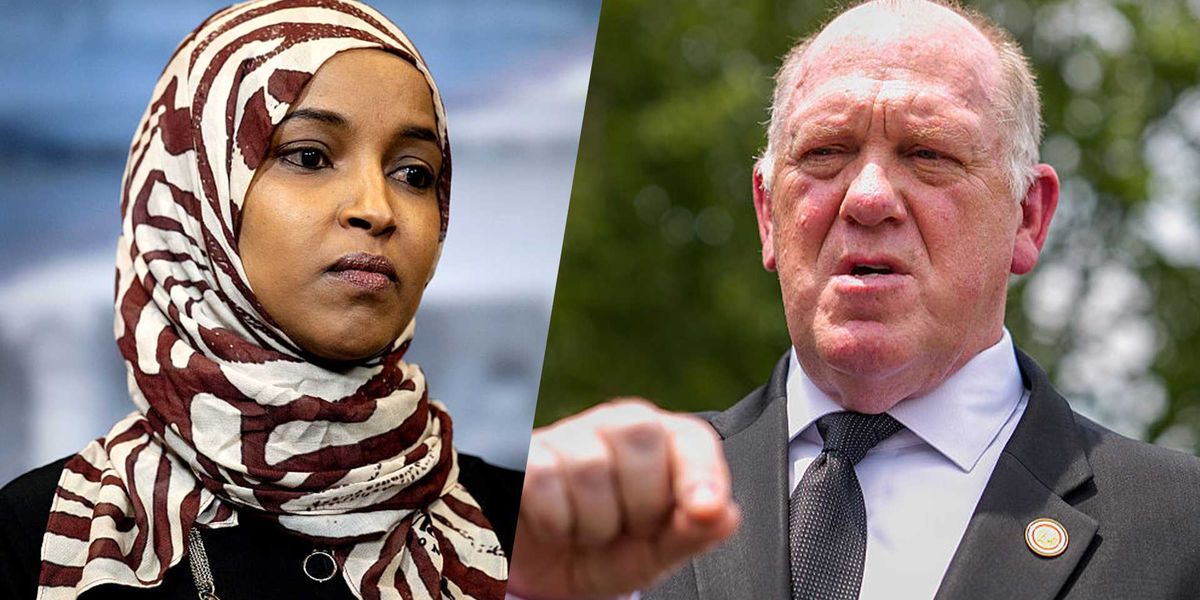
Questions around Ilhan Omar, Tom Homan, and a possible federal probe have stirred up another round of hard-edged political noise, with immigration and enforcement once again sitting at the center of the fight. The issue has pulled in names like JD Vance and Markwayne Mullin, and it has also pushed the Department of Homeland Security back into the spotlight. What started as another political clash quickly became part of a wider argument about law, status, and how aggressively federal agencies should press forward.
The tension has been building for a while, and it lands in a climate where immigration is never far from the front page. Homan has become a familiar figure in that debate, often tied to enforcement-first messaging that resonates with voters who want tighter control at the border and in the interior. Omar, meanwhile, remains a lightning rod for criticism from Republicans who see her as a symbol of the broader left-wing approach to immigration and enforcement.
That mix makes any federal investigation talk especially combustible. In Washington, once the words “federal investigation” start floating around, every side races to frame the story before the facts harden. Democrats tend to circle the wagons, while Republicans usually press harder, arguing that no one should get a pass just because the politics are ugly or the person involved is well-known.
The immigration-status angle adds another layer of heat. It is one thing to argue about policy in the abstract, but quite another when questions about who is here legally, who entered under what terms, and how the system is being used start pulling in a high-profile member of Congress. That is the kind of subject that gets voters fired up fast because it cuts straight to fairness, accountability, and whether the rules still mean anything.
JD Vance and Markwayne Mullin have both been part of the broader Republican push to keep immigration front and center, and their names fitting into this story is no accident. The GOP has leaned hard into the idea that the country has been too soft on border chaos and too willing to excuse the downstream mess. For Republican voters, this is not just about one controversy, but about a pattern that has gone on too long.
Tom Homan’s presence in the discussion only sharpens that divide. He represents the blunt, no-nonsense style many conservatives want to see from federal enforcement, and that makes him a natural contrast with politicians accused of bending the rules or ignoring them altogether. When Homan is in the frame, the message is usually clear: laws should be enforced, consequences should be real, and excuses should not carry the day.
The Department of Homeland Security also matters here because any serious immigration-related dispute tends to wind up back at the agency responsible for the system’s backbone. That means the argument is not just political theater in a vacuum, but a reminder that federal institutions are expected to sort through messy facts and act on them. When confidence in those institutions slips, every new controversy feels bigger than the last.
At the same time, the broader public is left watching a familiar Washington loop play out. One side says the questions need answers, the other side says the issue is being weaponized, and the middle gets stuck trying to make sense of the noise. In the current climate, that noise can travel fast, especially when it touches immigration, law enforcement, and a Congress already packed with partisan grudges.
What gives this story real staying power is the way it taps into a deeper frustration about whether the country is still operating by the same rules for everyone. That frustration does not fade just because officials issue statements or cable news moves on to the next fight. It lingers, and it keeps dragging the same names back into the spotlight whenever Washington starts arguing about borders, enforcement, and who gets protected when the heat rises.

2 Comments
Probe all her kin, staffers etc too
Investigate her entire mob.