
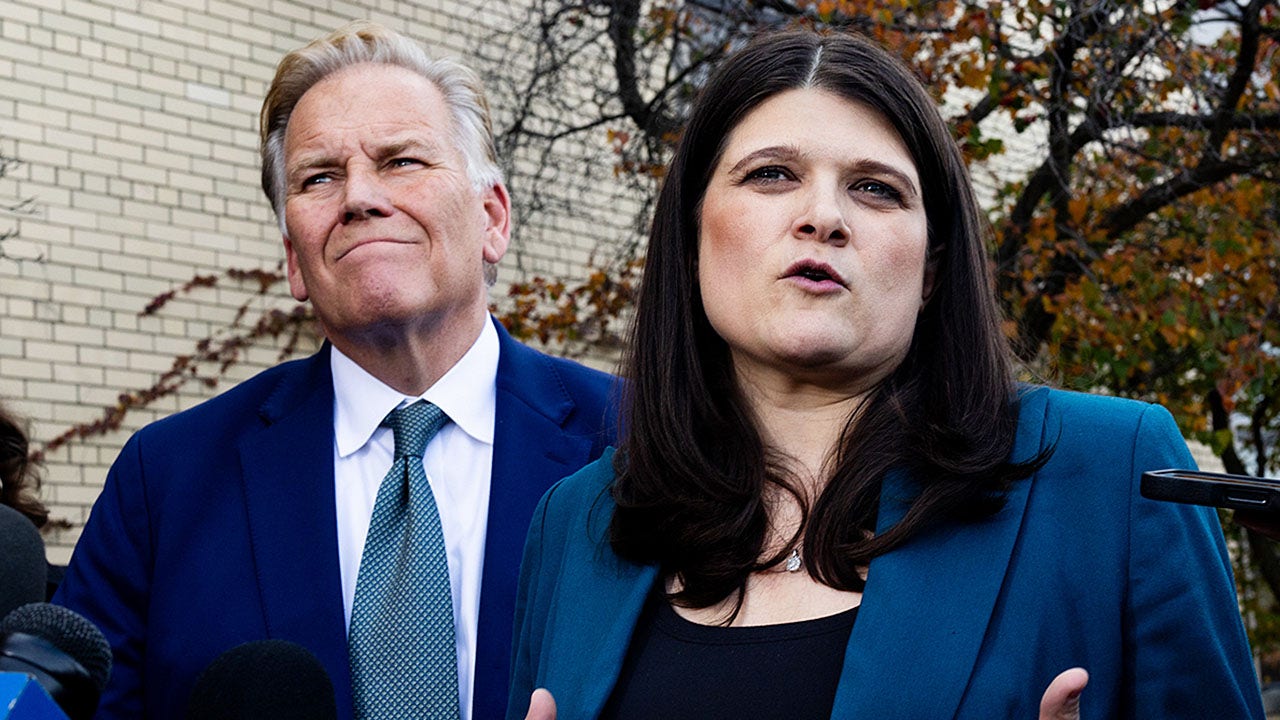
Mike Rogers is making the most of a political shocker in Michigan, where Democratic Rep. Haley Stevens broke with her party and backed him in the Senate race. The move sent ripples through both camps, triggered harsh reactions from top Democrats, and put Abdul El-Sayed on the defensive in a contest already packed with tension, sharp language, and last-minute drama.
Rogers said Stevens effectively changed the shape of the race when she chose to stand with him over El-Sayed. Speaking on the “Brian Kilmeade Show,” he said her decision “flipped this thing upside down” and described a phone call from Stevens that came while he was on the way to church. According to Rogers, the endorsement was not preplanned theater but a real-time break that caught even his side off guard.
He praised Stevens as someone willing to put the country ahead of her party, a line that landed with extra force given how rare cross-party endorsements can be in a Senate race this tight. Rogers also used the moment to hammer El-Sayed, calling him divisive and blasting what he sees as hostility toward Jewish voters and broader political opponents. In Rogers’ telling, Stevens’ move was less about party loyalty and more about refusing to back a candidate she viewed as too extreme.
The backlash was immediate and ugly. Senate Minority Leader Chuck Schumer and former House Speaker Nancy Pelosi both went after Stevens, with Schumer labeling the move a “despicable betrayal” and Pelosi accusing her of betraying Michigan families. That kind of public pile-on showed just how badly the endorsement hit Democrats, especially with the election clock running out and party unity suddenly looking fragile.
Stevens had already been sending mixed signals for weeks after losing the primary. In an October CNN interview, she dodged repeated questions about whether she fully supported El-Sayed and said she was “still on the team,” while also signaling that she would back Democrats elsewhere on the ballot. That left the door open for speculation, even if the actual endorsement still came out of nowhere for plenty of people watching the race.
The friction between Stevens and El-Sayed had been building before the endorsement ever happened. Stevens pushed him to condemn an outside ad that tied U.S. support for Israel to higher grocery prices, calling it antisemitic, and El-Sayed’s campaign then asked her to stay away from its remaining events. He denied responsibility for the ad and said he disagreed with it, but the episode widened an already visible rift inside the Democratic coalition.
Her fiancé, Jason Turkish, added another twist when he publicly said he would vote for Rogers too. Turkish, a Jewish attorney and registered Democrat, argued that El-Sayed’s rhetoric on Israel made the community “less safe,” and he framed his choice as putting country before party. That personal break only reinforced the sense that the race was splitting people in ways that went beyond standard campaign politics.
Rogers also pushed back hard on any suggestion that he had orchestrated the endorsement behind the scenes. He said his campaign had no advance warning and insisted Stevens received no promise of anything in return. He described the exchange as straightforward, saying she simply made up her own mind and chose to say so publicly after a private conversation that morning.
The campaign noise did not stop Rogers from taking aim at Democrats for attacking Stevens after her announcement. He argued they were furious because she refused to fall in line and instead backed the Republican in a race they had counted on for months. Rogers said Democrats were trying to punish her for admitting what she believed, which in his view only underlined how brittle their coalition had become.
He also dismissed a New York Times/Siena poll that showed El-Sayed ahead, saying his own numbers point to a much tighter contest. Rogers said his internal data has the race within a point or two and argued that the polling may be missing support in places like Detroit, where he says his campaign has made real inroads with Black voters. That claim fits neatly with the broader fight over who can actually expand the map in a state where every slice of the electorate matters.
Stevens herself had already pressed El-Sayed on that issue, saying during the CNN interview that she had urged him to speak directly to the Black community. She later said, “But yeah, I mean, that didn’t happen,” and added, “That speech hasn’t happened.” In a race this close, that kind of public frustration can echo louder than any stump speech, especially when it comes from someone who was supposed to be in the same political lane.
