
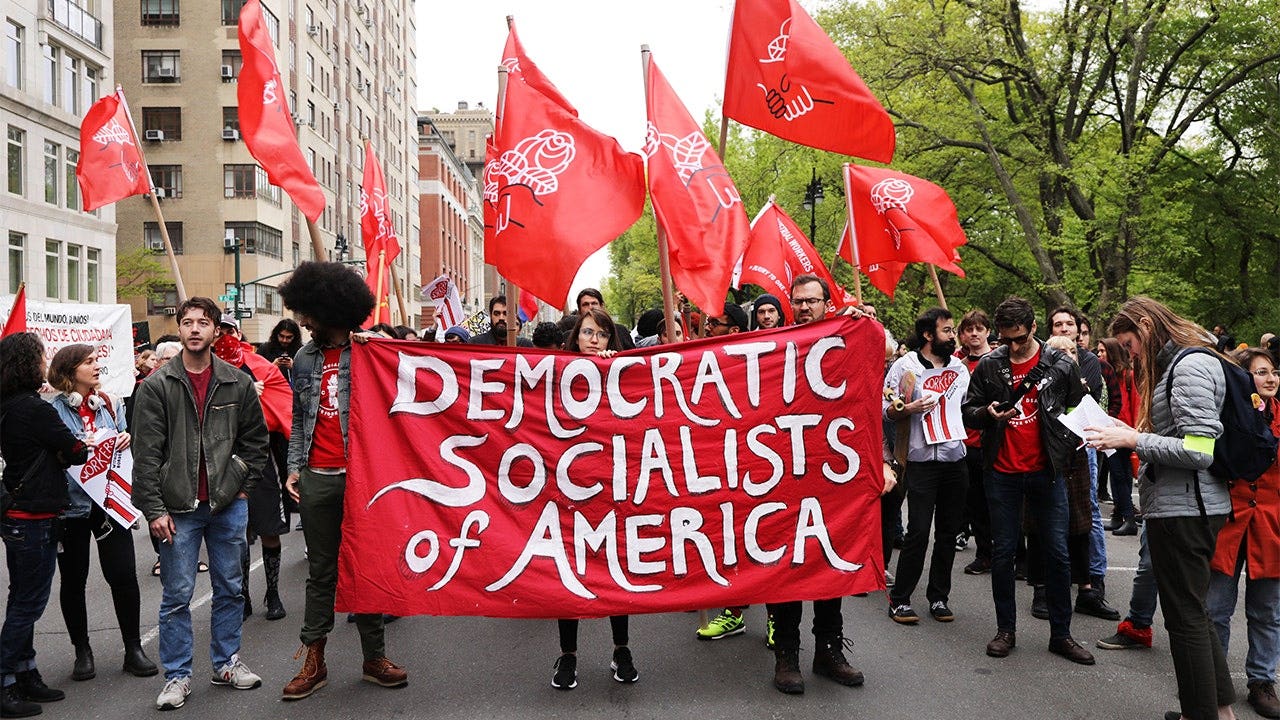
Capitalism runs on incentives, and that simple fact explains why top-down economic control keeps running into trouble. Human nature does not vanish because a government office says it should, and the appeal of socialism often fades once the real costs become clear.
Friedrich Hayek’s famous warning still lands hard because it cuts through the noise. In The Road to Serfdom, he argued that central planning does not just reshape markets, it slowly squeezes out freedom itself. Once the state takes over more decisions, individual choice gets pushed aside and people are expected to fit the plan, not question it.
That is where the trouble starts. A government that tries to direct an economy has to decide what gets made, how much gets made, who gets it, and what it costs. The more it controls, the more dissent looks like a problem, and the more pressure builds to force people into compliance.
This is why socialism keeps selling a comforting story while ignoring the bill. It promises fairness, security, and equal outcomes, but it still has to work inside the real world, where scarcity, effort, and trade-offs never disappear. When those realities are pushed aside, the result is usually not harmony but control.
Any healthy economic system starts with freedom. People need the room to choose, earn, save, and build within the rule of law if the system is going to produce anything worthwhile. That is where incentives kick in, and incentives are powerful because they shape behavior without needing a heavy hand.
Property rights sit at the center of that process. When people can own what they create, keep the rewards of their labor, and benefit from smart decisions, they have reasons to work harder and think bigger. One person may take a job, another may launch a business, and another may invest for the future, but all of them are responding to the same basic signal: effort can pay off.
Adam Smith captured that idea perfectly when he wrote, “It is not from the benevolence of the butcher, the brewer, or the baker that we expect our dinner, but from their regard to their own interest…” That is not selfishness dressed up as theory. It is a plain description of how ordinary self-interest, when channeled through markets, ends up helping everyone else too.
Markets do something government planners rarely can. They coordinate millions of decisions at once, with prices and profits acting like a live feedback system. No central committee has to map every need by hand, and no official has to pretend to know what millions of people want better than they do themselves.
Government still has a role, but it is a limited one. It should protect rights, enforce contracts, defend property, and stop fraud or force. Once it starts meddling with prices, picking winners, shielding favored companies, or cushioning every consequence of bad choices, the incentives get warped and the whole system starts losing its edge.
That distortion matters more than policy wonks like to admit. If hard work no longer improves a person’s life, hard work starts looking optional. If risk brings little reward, fewer people will risk anything at all, and if innovation gets buried under red tape or political favoritism, stagnation is never far behind.
This is not really about party labels or clever slogans. It is about how people behave when rewards and responsibility are connected, and what happens when that link is broken. Systems that ignore incentives can talk endlessly about fairness, but they rarely deliver abundance, because abundance depends on people having a reason to create it.
Socialism and communism promise dignity and security, yet history keeps exposing the same weakness. Once the state controls too much and private effort is cut off from meaningful reward, shortages, dependence, and decline tend to follow. The lesson is not subtle, and it is not new: when freedom is weakened, prosperity gets harder to defend and easier to lose.
That is why the old case for limited government still has bite. Fiscal restraint, private property, and personal liberty do more than sound good on paper, because they line up with how people actually live and work. The closer a society stays to those principles, the more room it gives ambition, creativity, and real growth to take hold.
