
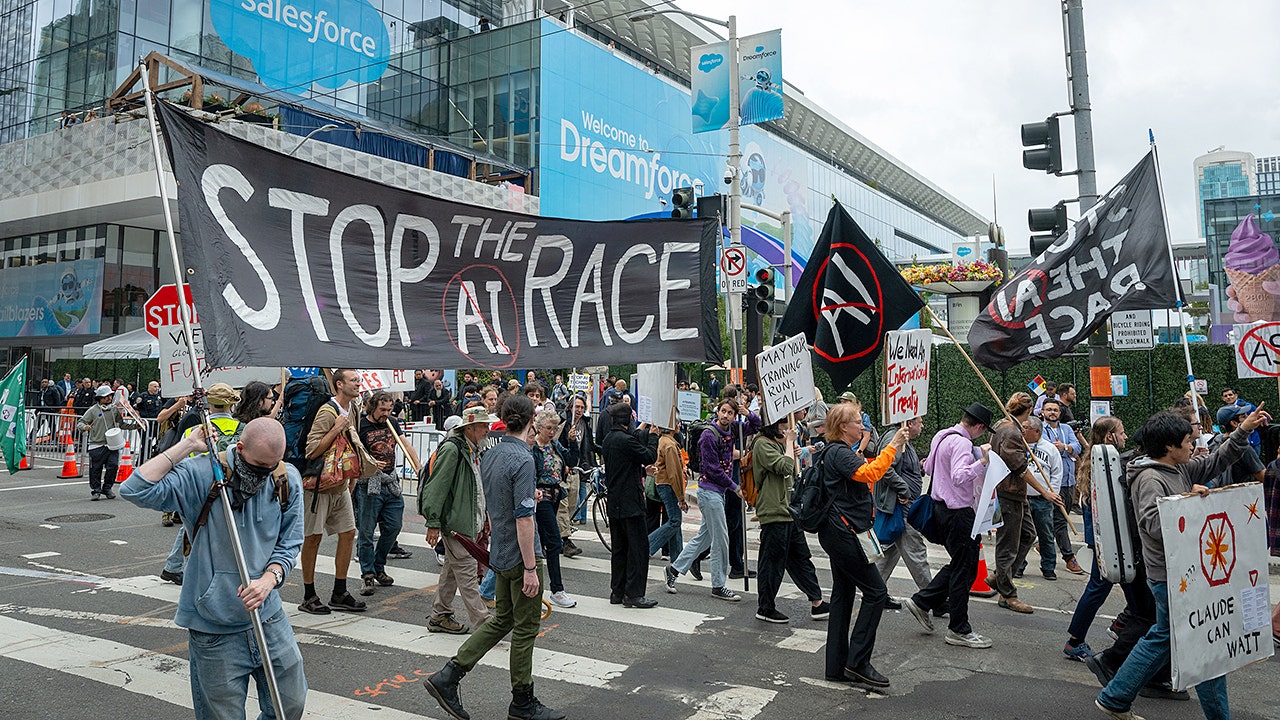
America’s AI race is starting to hinge on trust, not just raw speed. Big tech leaders have already backed a voluntary pledge with the White House, and the real test now is whether regular people feel safe enough to actually use these tools in daily life.
That’s the tension at the center of the moment: the country wants AI to power growth, security, and productivity, but a lot of Americans still see danger first. Surveys keep showing the same basic message, too. People are not asking for hype, they want proof that the systems around them are being watched, checked, and held accountable.
Fear is becoming a drag on progress. If workers, consumers, nurses, engineers, and business leaders do not trust what AI is doing, adoption slows down fast. That matters because AI only delivers its promised benefits when people are willing to put it to work.
The numbers behind that skepticism are hard to ignore. Large shares of Americans say AI companies have not done enough to prevent harm, while many also say they would feel better if independent experts reviewed the systems and third parties audited them. The pattern is clear enough: confidence rises when oversight is visible and real.
That’s why the conversation needs to move past the tired choice between more regulation and less regulation. The better question is how to build governance that can keep up with the technology without freezing it in place. Americans do not just want promises, they want mechanisms that can catch mistakes, explain decisions, and fix problems when systems go sideways.
Congress has tools already sitting on the shelf. Procurement rules, agency oversight, consumer protections, and clearer standards for reporting AI incidents could all help create a stronger guardrail system. None of that requires pretending the challenge is small. It simply means treating AI like a serious piece of national infrastructure instead of a flashy experiment.
Companies do not need to wait for Washington to get moving, either. Any organization deploying AI should know where it is used, what it can access, who is responsible for it, and what happens when it behaves badly. That kind of visibility is not bureaucracy for its own sake. It is the difference between control and chaos.
Independent evaluation is another major piece of the puzzle. The key questions are straightforward: who is checking these systems, what are they being measured against, and what happens if they fail the test? If those answers stay fuzzy, trust stays low.
There also has to be a real incident response mindset. When AI causes harm, there needs to be a defined path for escalation, reporting, and correction. The same logic that made cyber incident reporting more serious and more useful should apply here as well, especially as AI systems spread into higher-risk uses.
Accountability matters just as much. Every serious deployment should have a named person responsible for it, especially when the system can take actions instead of just producing text or images. As AI becomes more autonomous, the need for minimum access, clear boundaries, and human oversight only gets sharper.
And none of this works without AI literacy. Workers and families do not have to become technical experts, but they do need to know what AI can do, where it falls short, and when human judgment has to override it. That kind of basic fluency can take the mystery out of the machine and make people less likely to freeze up when they encounter it.
The country has handled big technological shifts before. Cars became safer and more useful once licensing, traffic lights, and safety standards showed up. AI is heading down a similar path, where trust grows when the rules are clear and the public sees that someone is actually in charge.
The smart move is not to hit pause until every risk disappears. It is to make sure governance advances alongside capability so Americans can use the technology without feeling like they are walking into a trap. That balance will decide whether AI becomes a tool people embrace or a breakthrough they keep at arm’s length.
