
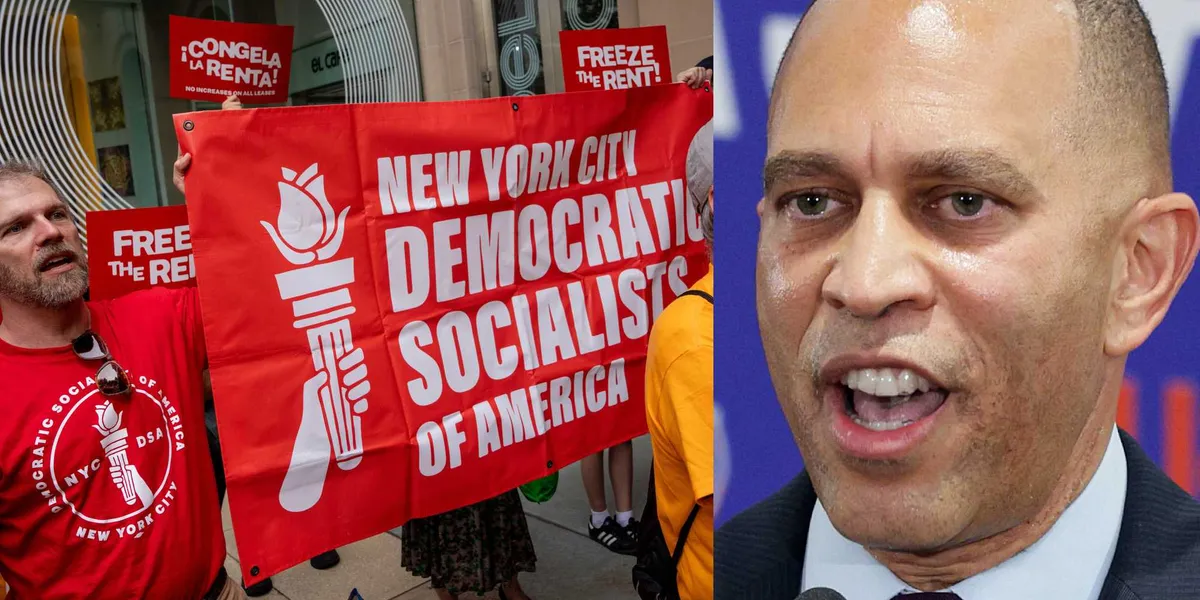
Hakeem Jeffries is back in the middle of a noisy fight inside the Democratic Party, and the latest clash is pulling old tensions into the open. At the center is a bitter standoff with Democratic Socialists, with race, power, and ideology all getting dragged into the conversation.
The argument flared after Jeffries suggested that opposition from the party’s left flank was being driven by racism. That claim landed hard, especially because it turned a political dispute into something far more personal and combustible. Instead of calming the waters, it widened the gap between the party’s mainstream leadership and its activist wing.
Jeffries has long tried to present himself as a steady, pragmatic face for House Democrats, someone focused on winning elections and keeping the caucus together. But the rise of outspoken left-wing figures has made that job harder, not easier. Every time he draws a line around what the party should be, someone from the far left seems ready to kick that line apart.
The tension is not happening in a vacuum. Democrats are still wrestling with what kind of party they want to be, and that fight keeps showing up in public. On one side are leaders who want discipline and message control, and on the other are activists who want a louder, more confrontational brand of politics.
Zohran Mamdani is one of the names hovering over that divide. His rise has energized Democratic Socialists and given the movement more visibility, while also making establishment Democrats more nervous about where the party is headed. That kind of attention can be a gift in one corner and a headache in another.
Barack Obama’s name also keeps surfacing in these conversations because his political legacy still shapes how Democrats talk about race, coalition-building, and power. For some, Obama represents the party at its most successful and polished. For others, his influence is a reminder that even a historic presidency did not settle the argument over who really speaks for Democrats.
What makes the Jeffries clash sting is that accusations of racism are not minor background noise. They change the entire tone of the fight and force people to defend motives instead of policies. Once that happens, the original disagreement gets buried under suspicion, resentment, and a whole lot of bad blood.
That is part of why Democratic Socialists have become such a disruptive force for party leadership. They are not just pushing different policy ideas. They are also challenging the idea that the old guard should get deference simply because it has the titles and the institutional muscle.
Jeffries has every reason to protect his standing, especially as Speaker of the House remains one of the biggest prizes in Washington. Leadership in that role depends on discipline, patience, and the ability to keep rival factions from tearing each other apart in public. But when internal critics refuse to back down, the speaker’s office can start to look less like a command center and more like a pressure cooker.
The situation also shows how much Democrats rely on identity politics when arguments turn ugly. That approach can rally supporters fast, but it can also poison trust just as quickly. Once a party starts treating every internal disagreement as a moral indictment, compromise gets a lot harder to sell.
For now, the feud is less about a single remark and more about a party that cannot stop fighting with itself. Jeffries wants authority, the Democratic Socialists want leverage, and the space between them keeps shrinking. With every new round of public friction, the whole thing gets a little sharper, a little louder, and a lot more personal.

1 Comment
Really why now where have U been