
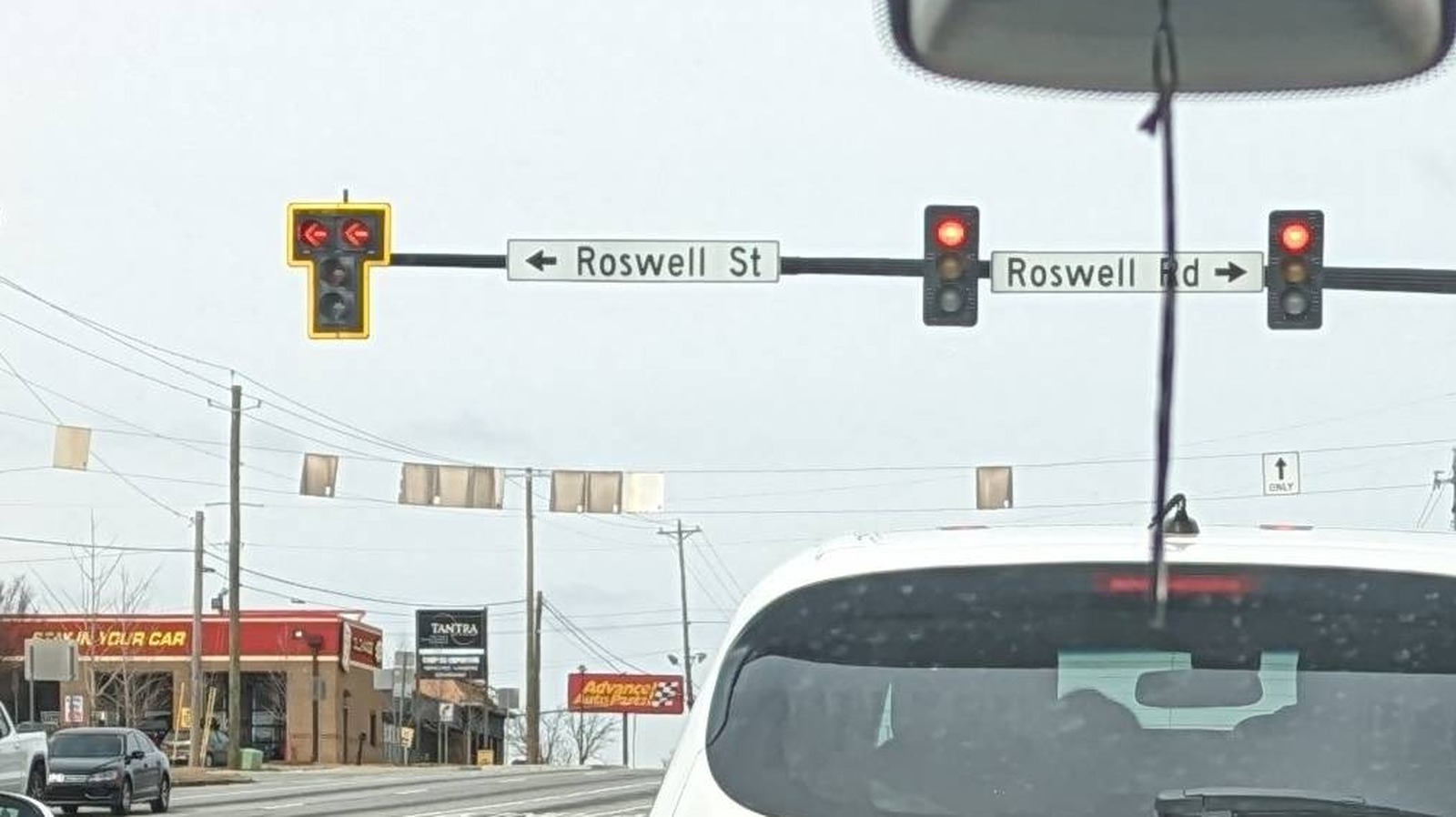
Short and practical: this article explains what a traffic signal showing two red arrows pointing the same way means, why cities use them, and exactly how you should respond at the curb to stay legal and safe.
When you approach an intersection and see two red arrows aimed in the same direction, they usually control two adjacent turn lanes. Those arrows are not decoration; they tell drivers that the turning movement is currently stopped for both lanes until the signal changes. Treat the arrows as a firm command to stop and remain stopped for that specific turn.
Two red arrows exist because many intersections have more than one lane dedicated to the same turn, often during rush hours or near freeway ramps. Traffic engineers program those arrows to protect pedestrians and oncoming traffic during complex signal phases. By separating straight-through traffic from turning traffic with dedicated signals, the intersection can handle higher volumes more safely.
A steady red arrow is different from a standard red light in one important way: it controls a specific turning movement and forbids that turn while it displays. You cannot make the indicated turn on a steady red arrow, even if the way looks clear, unless local signage explicitly allows it. In contrast a standard red light sometimes allows a right turn on red where permitted, but a red arrow removes that option for the direction it points to.
Some locations use a flashing red arrow to show a different rule: stop, then proceed when safe and when you have yielded to pedestrians and cross traffic. Flashing and solid signals mean different things, so do not assume a flashing arrow means the same as a steady red. Always be aware of local laws, because jurisdictions can treat arrows and turns in slightly different ways.
At the moment you see those two red arrows, position your car behind the stop line or crosswalk and keep it clear of pedestrian space. Do not creep forward to get a head start on the green arrow; that creates hazards and can block sight lines for people walking. When the green arrow finally appears, complete your turn only when the way is clear and pedestrian crossings are respected.
Engineers use dual red arrows to stage traffic phases efficiently: one lane can be protected while the other is released on a separate signal in some setups, and in other setups both lanes stay protected together. This staged control helps avoid collisions with oncoming vehicles and gives pedestrians a reliable window to cross. It also reduces the chance of left-turns and right-turns colliding when visibility is limited.
Confusion happens when drivers see multiple signals and try to apply rules for a normal red light instead of a red arrow. If the signal appears to be malfunctioning, or if a police officer or flagger is directing traffic, follow the officer’s instructions over the signal. Never assume and always yield to pedestrians, cyclists, and emergency responders passing through the intersection.
Bottom line: two red arrows mean stop that turning movement for both lanes, wait for the appropriate green or green arrow, and respect pedestrians and local rules while you wait. Being patient, predictable, and attentive at intersections is the simplest way to avoid tickets and crashes. Keep your focus on the signals and on people crossing, and the intersection will do its job without drama.
