
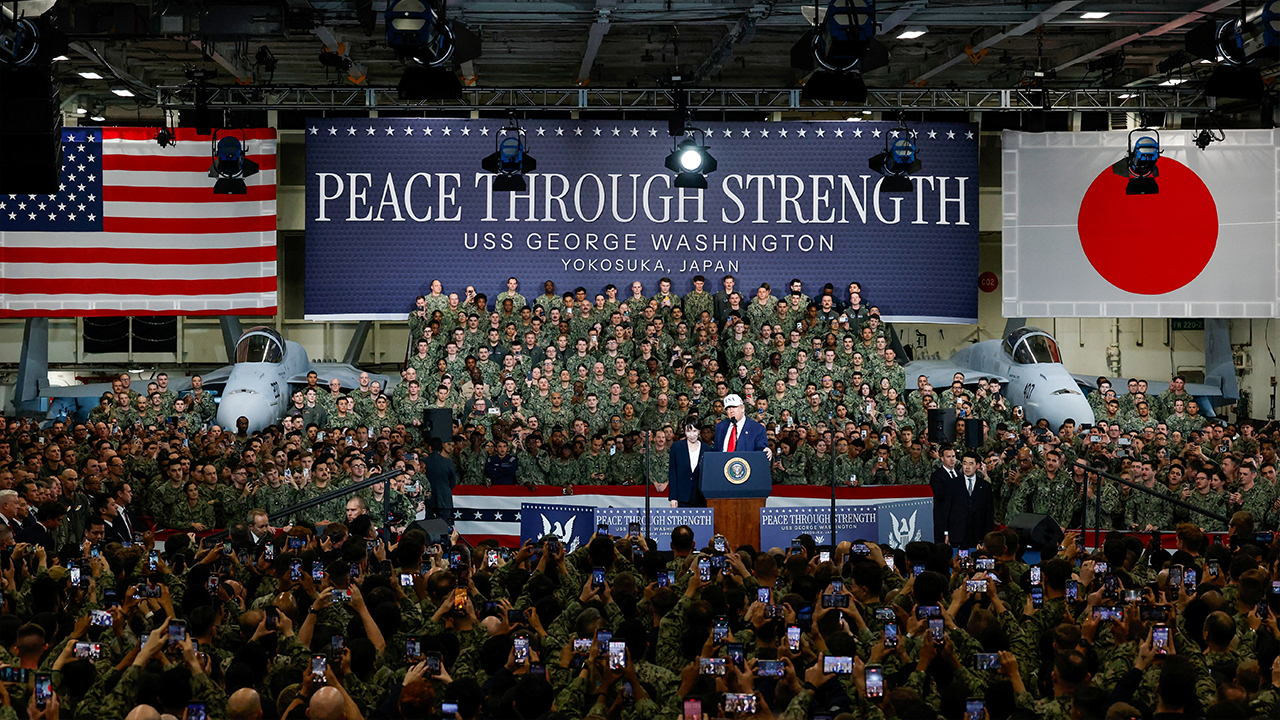
Japan has become the kind of ally Washington wishes it had more of: steady, serious, and willing to carry real weight. In the middle of rising pressure from China and Russia, the U.S.-Japan partnership is tightening fast around defense, industry, intelligence, and access to the Indo-Pacific, and that matters far beyond the headlines.
For years, Americans have thought of the United Kingdom as the classic special partner, and that bond still carries a lot of history and trust. But in hard strategic terms, Japan is now doing more of the heavy lifting in the world’s most important region, while also showing a far stronger commitment to shared security than many other allies.
Geography gives Japan a huge edge in the balance of power. Sitting on the first island chain, it helps box China in and protects America’s access to Pacific trade routes and critical markets. That location also makes Japan central to deterring Chinese aggression, especially as Beijing keeps testing boundaries with air and naval pressure.
Japan is not just important on paper, either. It has repeatedly shown that it is willing to act when Chinese activity gets aggressive, including regular air scrambles in response to incursions. On Taiwan, Tokyo has also been more open and more useful than most countries, working publicly with Taipei and coordinating closely with the United States to preserve stability across the strait.
The military side of the alliance has deepened in very concrete ways. Japan hosts about 60,000 U.S. service members and contractors, plus roughly 35,000 civilians, making it the largest American military presence outside the United States. Tokyo also pays about 75% of those costs, which is a serious signal that it is investing in deterrence instead of freeloading on it.
That commitment keeps growing. Japan’s defense spending has climbed sharply, reaching 2% of GDP ahead of schedule, and its budget has kept setting records year after year. With roughly $275 billion planned through 2027, Tokyo is putting real resources behind its promises and sending a message that it understands the danger in the region.
Japan is also helping on the industrial side, where the West has been too slow for too long. Co-producing advanced weapons systems, expanding interceptor production, and integrating U.S. missiles and systems into Japanese forces all make the alliance stronger and more practical. This is not just a buyer-seller relationship anymore, because Japan is becoming a serious defense partner that adds capacity when it is badly needed.
Intelligence cooperation is another area where the relationship is maturing fast. Tokyo is moving toward deeper reforms that could eventually make it a kind of “Sixth Eye,” joining the close intelligence-sharing circle now made up of the U.S., U.K., Australia, Canada, and New Zealand. That is a major shift for a country that has long been cautious, but the threat from Chinese and Russian influence operations makes the change hard to ignore.
The partnership goes well beyond military posture. The two countries are working together on critical minerals, supply chains, and private-sector investments that can reduce dependence on China. Japan is also strengthening ties across Southeast Asia and the Pacific Islands, which gives the alliance more reach in a region where influence is constantly contested.
Japan has not limited its global role to Asia, either. It has become a major backer of Ukraine and has also put significant money into Africa through business-focused partnerships that prioritize trade and development. That kind of broad engagement shows Tokyo is thinking like a global power, not just a regional one.
Beijing has noticed, and it has tried to respond with pressure. Chinese forces keep probing around the Senkaku Islands, and Beijing has used trade and access to critical minerals as leverage. It has even detained Japanese businessmen, which only confirms how far China is willing to go when it wants to intimidate a rival.
Instead of backing down, Japan has leaned in harder with America. The deeper this relationship gets, the more both countries can protect their interests, keep the sea lanes open, and push back against hostile regimes that want the Pacific to belong to them. That kind of alignment does not happen by accident, and it is already reshaping the strategic map in ways Beijing clearly does not like.
