
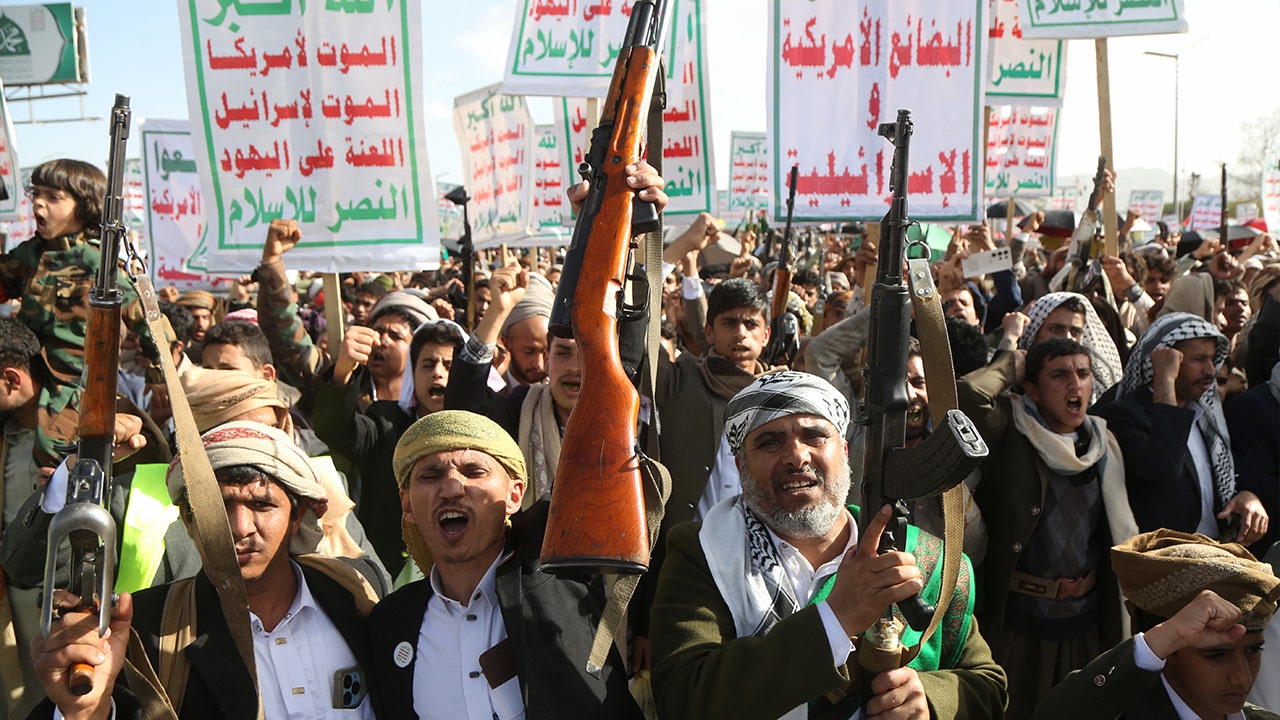
Saudi Arabia’s scramble for extra air defenses has turned a regional security problem into a much bigger question for Washington. As Houthi missiles and drones keep forcing their way through expensive protection systems, the kingdom is leaning on allies while the U.S. weighs whether helping to shield Saudi cities is enough or whether the threat calls for something far sharper.
Britain has said it will send Typhoon fighter jets to help defend Saudi cities and critical infrastructure, while Egypt is already involved and Israel has offered assistance as well. Riyadh is also pressing Washington for more interceptors, putting added pressure on President Donald Trump as he considers whether the U.S. should step in more directly against the Iran-backed Houthis.
The immediate goal is simple enough: keep airports, oil facilities and population centers from taking a hit. The harder part is that defensive help only goes so far when the launchers, drones and missiles are still coming out of Yemen.
That gap is what has made the latest wave of attacks so unsettling. The Houthis have shown they can still land punches on a country that spends heavily on defense and owns some of the most advanced military hardware in the region.
Jason Campbell, a senior fellow at the Middle East Institute, described the current posture as mostly defensive, with the real question being whether it eventually becomes more offensive. Saudi Arabia and its partners were better prepared for the upper end of Iran’s arsenal, he said, but much less ready for the cheaper, lower-tech threats now being used by Tehran’s allies.
The scale of the attacks has also changed the tone. According to the Armed Conflict Location & Event Data Project, Houthi strikes and attempted strikes on Saudi Arabia more than doubled in a single week this month, with airports in Riyadh, Jizan, Najran, Dammam and Abha targeted since Oct. 5.
The deadliest attack hit King Khalid International Airport in Riyadh, killing at least 13 people and injuring more than 300. Other strikes have gone after Saudi energy infrastructure, which raises the stakes far beyond battlefield damage and pushes the issue into the realm of economic pressure and public fear.
Saudi Arabia has spent decades building a serious military machine. Last year it spent an estimated $83.2 billion on defense, ranking it among the world’s biggest military spenders, and its inventory includes U.S.-made F-15s, Patriot batteries and advanced radar systems.
Even with all that, the Houthis have found a weak spot. Campbell said the region was built to face high-end ballistic threats, but the lower-flying weapons now in play can slip into a crowded and expensive defense network that was never designed for this exact fight.
Secretary of State Marco Rubio said Saudi Arabia is not the only one hunting for interceptors. He noted that Israel, the U.S. military and partners around the world are all competing for the same limited stock, calling them “probably the most in-demand product right now in the defense field.”
That shortage matters because interceptors are not quick to replace. American forces still have to protect their own bases, and even with production increasing, the supply chain cannot instantly satisfy every request that comes in from a tense corner of the globe.
Saudi Arabia’s geography makes the challenge even uglier. The kingdom stretches across more than 800,000 square miles, which means cities, airports, oil sites and military bases are spread out and hard to cover all at once.
Farea Al-Muslimi, a research fellow at Chatham House, said the bigger lesson is how much damage a relatively small nonstate actor can cause against a wealthy, sophisticated military. The Houthis do not need to spend much to force everyone else to spend a lot, and that imbalance is doing real work on the ground.
That is why outside help is welcome but not necessarily enough. Al-Muslimi said many countries now understand the Houthis are not just Saudi Arabia’s headache, but he also warned that foreign support will not make a major military difference unless the U.S. gets directly involved.
Trump has not ruled that out. Asked earlier this month whether the U.S. could join Saudi strikes against the Houthis, he replied, “We may. We’re gonna look at it.”
Any direct U.S. action would come with baggage, though. Operation Rough Rider hit Houthi positions in Yemen for about two months in 2025 before Trump shut it down after Oman helped broker an agreement, and critics say the campaign produced little strategic payoff.
Israel has also offered help, and Trump has encouraged Riyadh to take it, but that creates its own political and religious complications. For Saudi Arabia, appearing too openly aligned with Israel against a Yemeni movement could ignite backlash at home and complicate the kingdom’s broader image in the Muslim world.
For now, the U.S. is still providing intelligence and targeting support while allies try to harden Saudi defenses. The pressure, though, is not going away, and every new strike keeps the same question hanging in the air: how long can the kingdom absorb these attacks before the response has to become something much bigger?
The wider Yemen war is still grinding on in the background, with civilians paying the price again. The Houthis took Sanaa in 2014, Saudi Arabia intervened the next year, and years of airstrikes and proxy fighting have done little to erase the group’s missile and drone threat, which has only grown more dangerous with time.
