
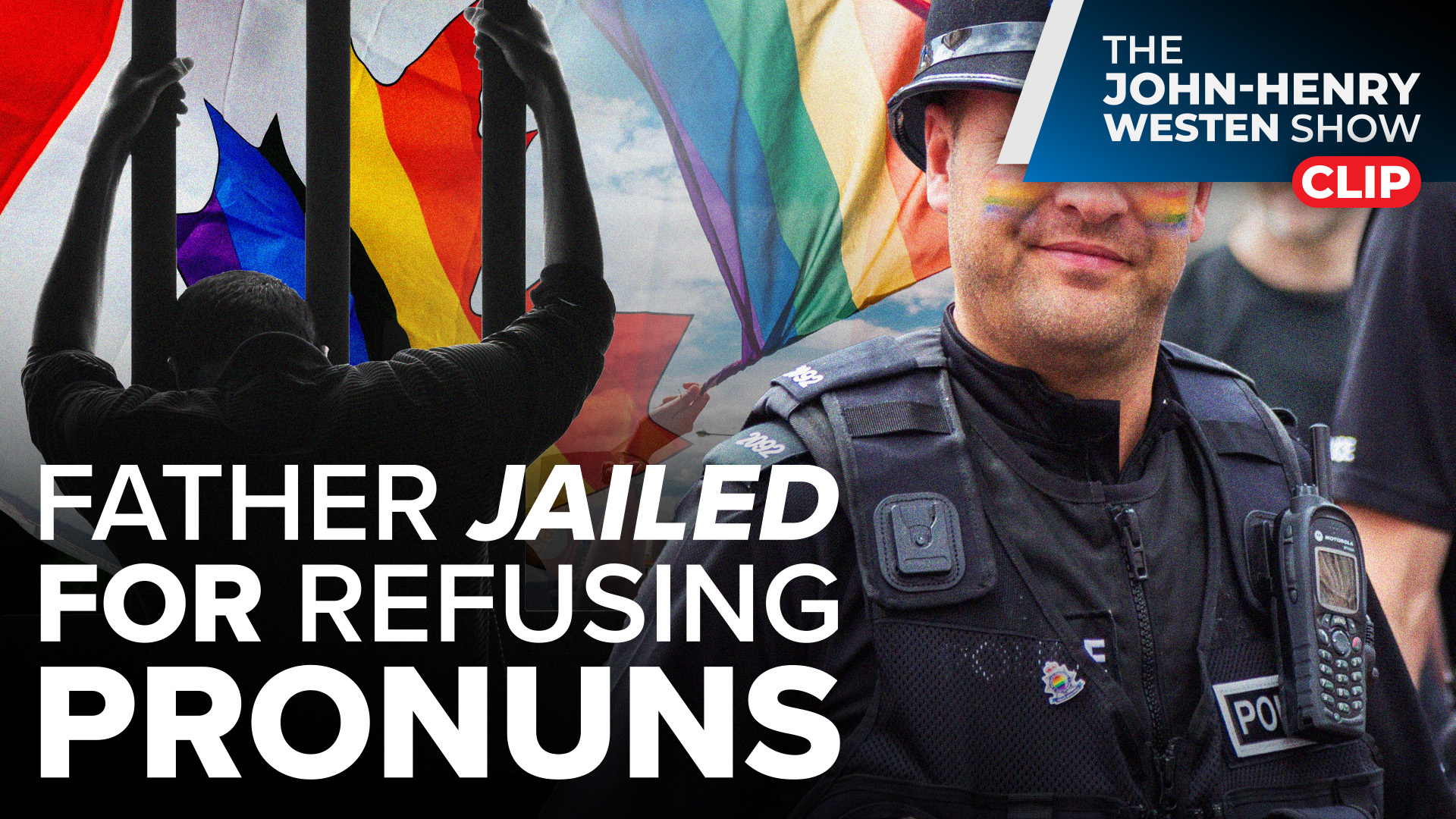
This piece looks at a string of Canadian cases and interviews that show how disputes over gender identity have moved from private family fights into the public square, with judges, hospitals and politicians taking sides. A father was jailed after refusing to use his daughter’s “preferred pronouns” and chosen name, and a judge labeled that refusal “domestic abuse.” In Calgary a parent lost a defamation suit for calling drag queen story hour participants “groomers,” and voices like Jeff Eveleigh, a Canadian military veteran, joined John-Henry Westen to warn that institutions are captured by gender ideology.
A father serving time for refusing to use his child’s “preferred pronouns” is a headline that would have been unthinkable a few years ago, yet here we are, watching criminal consequences land on a private parent’s choices. This is not about violence or theft; it is about compelled speech and the limits of the law when it reaches into families. From a Republican vantage point, the core worry is simple: when the state criminalizes certain speech between family members, it undermines parental authority and common sense.
The judge’s description of the refusal as “domestic abuse” rewrites what abuse means and stretches legal language into new territory, with big consequences for ordinary people. Labeling dissent inside a home as abuse is a move that chills honest conversation and hands prosecutors a wide net they can throw over family life. That kind of legal redefinition risks turning disagreement into suspicion and opens the door for punitive responses where guidance, boundaries, or counseling would traditionally belong.
In Calgary, the defamation case over calling drag queen story hour participants “groomers” shows courts policing public rhetoric in ways that feel selective and politically charged. When a court rules against a parent for using that term, it signals that certain criticisms are off limits, not because they are false, but because they clash with a dominant cultural narrative. Critics will say this stifles debate about children’s programming and sexual messaging in public spaces, while defenders claim it protects vulnerable communities.
Jeff Eveleigh, a Canadian military veteran, speaking with John-Henry Westen, frames these instances as part of a larger capture of institutions by gender ideology, claiming that courts, the medical system and political establishments now reflect a single orthodoxy. Hearing a veteran raise alarms gives the story a different weight; he is speaking not as an ideologue but as someone concerned about civic order and norms being reshaped without broad public consent. That perspective emphasizes that the issue isn’t just legal language but how institutions decide what counts as normal speech and correct behavior.
One detail that stands out is the claim that “Even the Conservative Party, the supposed opposition, voted unanimously to impose a five-year jail sentence” for certain offenses, which suggests a surprising convergence across political lines. If true, that kind of unanimity raises questions about how robust any institutional guardrails are when both governing and opposition parties are on the same page. From a Republican viewpoint, opposition must be real and principled, not performative, or else voters have nowhere to turn when they disagree with policy directions.
The practical effect on families is obvious and grave: parents face the risk that expressing concerns or setting boundaries will be treated as a crime, while children are placed in the middle of public battles that used to be private. Hospitals and pediatric practices adapting to new standards about gender identity complicate matters further, especially when medical decisions intersect with legal interpretations. Veterans and other civic actors sounding the alarm suggests this is not a fringe issue but a mainstream concern about institutional overreach.
Legally, these cases create precedents that will ripple outward, informing future prosecutors and judges about what counts as harm and what counts as permissible disagreement. That precedent-setting is precisely why many on the right argue for clearer laws that protect free speech, parental rights, and medical due process, rather than leaving definitions vague and prosecutorial discretion broad. The fight now is over who gets to shape those definitions and whether ordinary citizens will retain the ability to raise red flags without being criminalized.
People on all sides should be asking whether courts and lawmakers are equipped to balance dignity and free expression without erasing basic freedoms, and whether political institutions will act as skeptical guardians or as enforcers of a single cultural view. This story is a test of whether democratic institutions can manage cultural change while protecting families, veterans and everyday citizens from overreaching rules that punish conscience. The answers will determine whether debates about identity stay civic or slip into criminal enforcement that leaves people with fewer rights and fewer remedies.
