
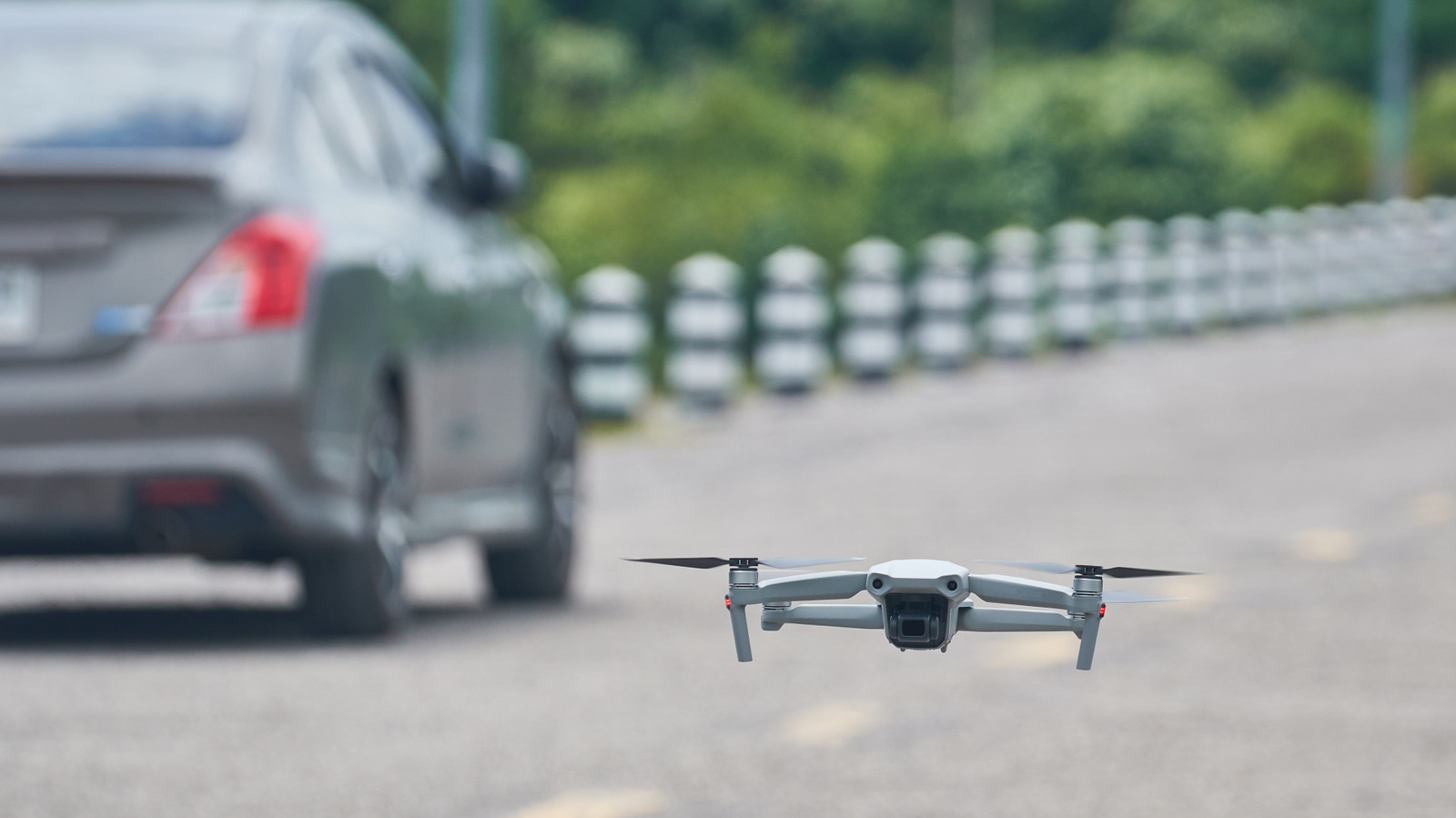
This piece breaks down why you might spot a drone tailing a car on a highway, who is likely flying it, what risks are involved, how the technology works, and sensible steps you can take if it happens to you. It covers legal and safety angles and practical tips without speculation. Read on for a clear, no-nonsense look at the phenomenon and realistic responses.
Seeing a small aircraft hover near your vehicle feels weird and a little threatening, and there are several ordinary reasons for that sight. Journalists and content creators often use drones to capture dramatic traffic footage and crash scenes from angles ground cameras cannot. Those operators usually try to stay clear of fast-moving lanes, but mistakes and risky positioning happen.
Law enforcement sometimes deploys drones for traffic monitoring, accident reconstruction, and suspect tracking, which can explain drones near highways. Agency pilots are supposed to follow rules and safety protocols, but oversight varies by jurisdiction. When a law enforcement drone is in range it may appear to follow a car if the operator is tracking an incident or keeping the scene secure.
Hobbyists and commercial testers are another common cause, especially near suburban stretches that back onto open fields. Many enthusiasts experiment with “follow-me” flight modes that lock onto a phone or tracker and trail a moving subject. Those systems work well at low speeds but can misjudge distance or fly into dangerous positions near high-speed traffic.
Technology explains a lot of the behavior you see: modern drones use GPS, visual tracking, and inertial sensors to maintain a course relative to a target. Follow modes can be surprisingly aggressive, closing distance to keep the subject centered in frame, which looks like deliberate tailing. Battery limits and wind also force frequent altitude and path changes, making the flight-path feel erratic.
Safety and legal rules matter and they are not uniform everywhere, but there are basic standards most pilots should follow. The FAA requires registration and limits careless operation, and remote identification rules are rolling out that will make operators more traceable. That said, enforcement is not instant, and private flyers sometimes ignore rules, increasing risks for drivers beneath them.
There are real dangers when a drone gets too close to vehicles: distraction for drivers, sudden maneuvers to avoid hitting the aircraft, and the worst-case scenario of a drone falling into a lane. Propellers and batteries can cause damage and injury on impact, and even small drones can startle drivers into unsafe actions. The risk rises when visibility is poor or traffic is dense.
If a drone seems to be following your car, stay calm and focus on driving safely rather than trying to chase or confront the operator. Maintain your speed within the flow of traffic and avoid sudden swerves. If you can do so safely, note the drone’s appearance, direction of travel, and any markings that might help identify the operator later.
Pulling over to a safe place to document the incident is sensible when conditions allow, but do not stop on a highway shoulder unless it is an emergency. From a safe spot, photograph or video the drone from a distance to capture identifying details without putting yourself at risk. Record the time, location, and any other relevant context to support a report to local authorities or aviation regulators.
Reporting matters because patterns of risky drone use should be flagged to prevent accidents and protect privacy. Local police can investigate potential harassment or dangerous operation and coordinate with civil aviation authorities when needed. Aviation regulators accept incident reports and may follow up if an operator violated rules or created a hazard.
Privacy concerns are real, and being followed by a drone can feel intrusive even when there is no immediate danger. Operators should respect private property and avoid persistent tracking without consent, but not all do. If you suspect a drone is conducting unlawful surveillance, document the behavior and involve law enforcement rather than attempting to disable or capture the aircraft yourself.
Finally, awareness and sensible responses reduce odds of escalation. Know the basic drone behaviors, keep a safe driving focus, and collect evidence only when it is safe to do so. If you witness repeated hazardous flying near roads, report it so regulators and police can address it before someone gets hurt.
