
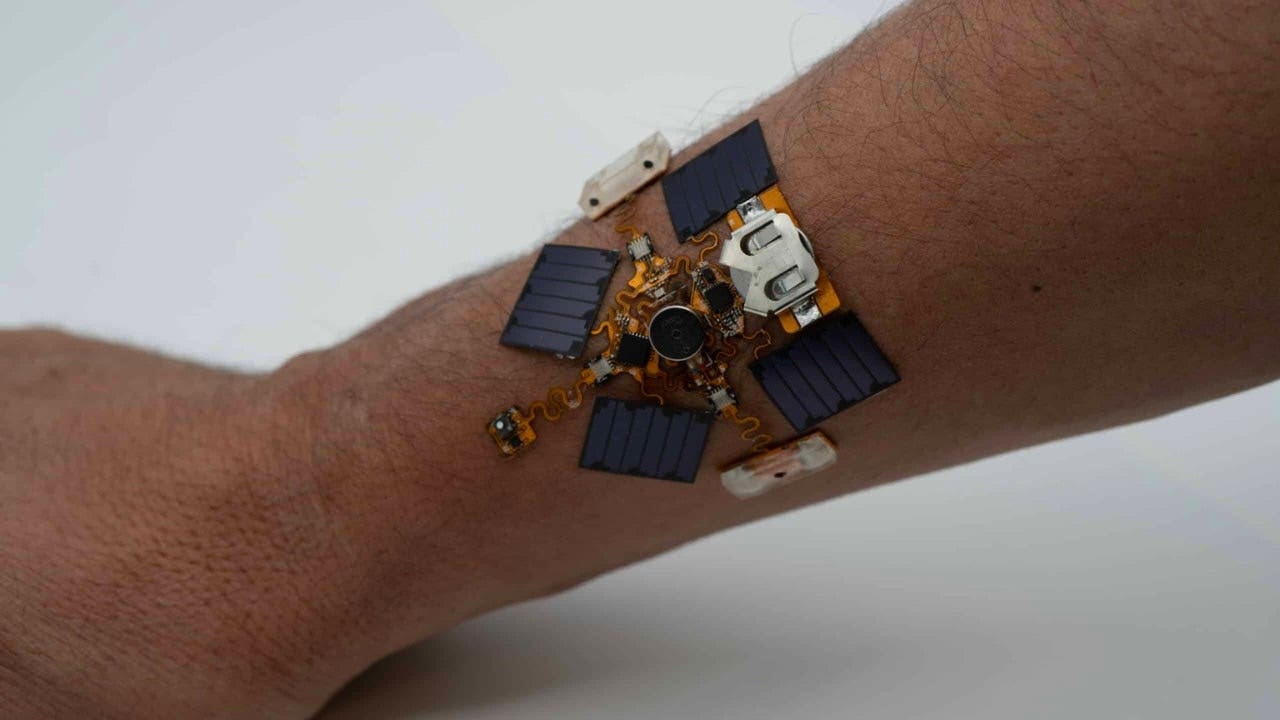
A new wearable patch is turning safety alerts into something you can actually feel, not just read on a screen. Built by researchers at North Carolina State University, the compact device detects dangerous gases and contaminated water, then sends a direct vibration to the skin so the warning lands fast, even when a phone would be ignored.
The patch is small, simple, and built to stay out of the way. About the size of a driver’s license, it can be clipped to clothing or worn against the skin, where its sensors keep watch over the surrounding environment. Inside, a microcontroller acts as the brain, a small battery keeps it running, and six sensors scan for threats in air and water.
What makes the idea stand out is the way it cuts through delay. If a person is near a hazardous gas or exposed to a contaminant in water, there may not be time to dig out a phone, unlock it, and notice an alert. A vibration on the skin skips all of that, which is the whole point.
The team did not stop at a generic buzz. Different hazards trigger different vibration patterns, so the patch can signal more than just “something is wrong.” That gives the wearer a chance to understand whether the issue is in the air or in the water without staring at a display or waiting for a text-style notification.
There is a practical reason for using touch instead of relying on another alert from a device people already carry. Phones get buried in pockets, silenced in meetings, or left on a workbench, and even a loud alarm can disappear in noisy spaces. A physical sensation stays with you in a much more immediate way, which is exactly what safety tech should do.
The researchers also spent time making the vibration clear but not irritating. Tiny textured surfaces sit between the motor and the skin, shaping how the sensation feels so it stands out without becoming unpleasant. That detail matters, because a warning system people do not want to wear will not get very far in the real world.
Solar power helps the patch go the distance. Thin-film photovoltaic cells on the outside collect energy while the device is worn, working alongside the battery and low-power sensors to keep the system alive for about 24 hours during testing. That is enough to suggest a full workday of coverage, though sunlight and usage would still affect performance.
The same sensing idea also turned into a robot version. In that setup, the sensor patch sits over a piezoelectric layer, letting vibrations become electrical signals that a robot can interpret on the spot. Instead of waiting for wireless data or a remote computer, the machine can react right away when it encounters a chemical threat.
That robot skin was tested on quadrupedal robots, which changed direction when chemical hazards were detected. It is a smart move for situations where people should not be wandering around blindly, such as industrial sites, leak inspections, or other risky areas where invisible dangers are a bigger problem than what the eye can see.
Another nice part of the design is how grounded it is in parts that already exist. Most of the system uses off-the-shelf components, with only a few custom pieces needed, which could make future production easier and cheaper. The modular setup also means sensors could be swapped in or out depending on the job, whether that is water testing, chemical inspection, or something even more specialized.
For now, the patch is still a prototype, not a consumer product. But the concept points to a future where alerts do not have to live on a screen to matter, and where touch becomes a fast, personal language for danger. If the technology keeps improving, it could become a useful tool for workers, first responders, and anyone who needs a warning before it is too late.
