
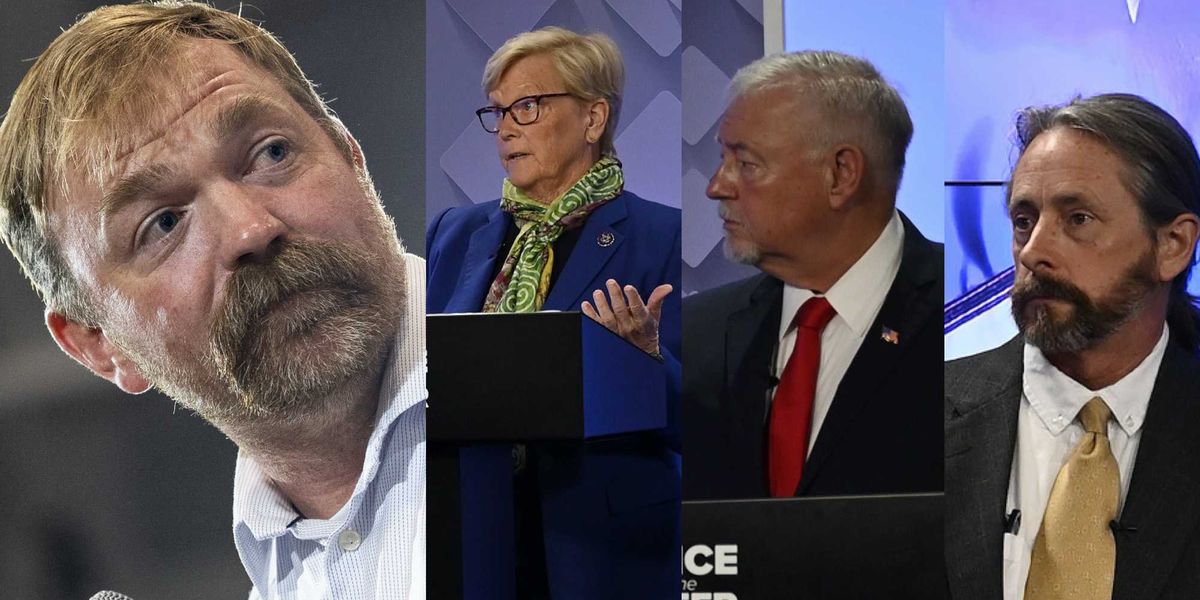
Democrats in Maine are staring at a messy Senate situation, and the latest debate over who can step into Graham Platner’s lane is feeding the fire. What was supposed to look like a smooth political handoff instead turned into a loud, awkward, and very public spectacle that is giving Republicans plenty to work with. The clips are spreading fast because the whole thing looks less like disciplined leadership and more like a party trying to improvise its way through a problem it should have seen coming.
The debate itself drew attention because it exposed just how shaky the Democratic bench can look when the pressure is on. Instead of calm answers and a clear message, voters got a lot of noise, a lot of side-stepping, and a sense that the party is still arguing with itself. For Republicans, that kind of chaos is exactly the kind of thing that matters in a state where every Senate seat can tip the balance.
Graham Platner’s role in this story is central, but the bigger issue is what happens when Democrats try to replace one name with another and assume the public will just nod along. That rarely works when the race is already tense and the voters are watching every stumble. If the party wanted a clean transition, it did not get one, and the viral clips made sure of that.
Susan Collins, meanwhile, remains a major factor in the background, and that alone keeps the pressure high. Republicans know that Collins brings real political strength and a familiar brand that can hold up under scrutiny. Democrats, by contrast, look like they are still searching for a message that can stick without falling apart the second it meets live questions and a camera lens.
The online reaction has been brutal for Democrats because the footage captures what a lot of voters already suspect. When a party looks disorganized, every awkward moment gets amplified, and every weak exchange becomes a new talking point. That is especially true in a Senate race, where confidence matters almost as much as policy, and the other side is always ready to turn a stumble into a slogan.
What makes this moment even sharper is how quickly political embarrassment now travels. In the old days, a rough debate might have faded by the next morning, but now a few clips can race across social media before the candidates are even back home. That means one bad performance can shape the story far beyond the room where it happened, and Democrats are finding that out the hard way.
Republicans are likely to lean into this because it fits a bigger message they have been pushing for years. They argue that Democrats talk a big game about competence while often delivering confusion, infighting, and speeches that sound polished only until someone asks a simple follow-up. When a debate turns into a viral mess, that message gets a fresh burst of oxygen.
The bigger political lesson is simple. Voters do not need perfect candidates, but they do want leaders who look steady, sound clear, and can handle pressure without falling apart on stage. When a debate meant to show strength instead highlights division and discomfort, it gives opponents a clean opening and leaves supporters explaining away damage they did not want to see.
That is why these clips matter more than the usual campaign chatter. They are not just funny internet moments, even if people are laughing at them that way. They are evidence of a party struggling to present itself as confident and unified, and in a close race, that kind of image can linger a lot longer than anyone on the Democratic side would like.
