
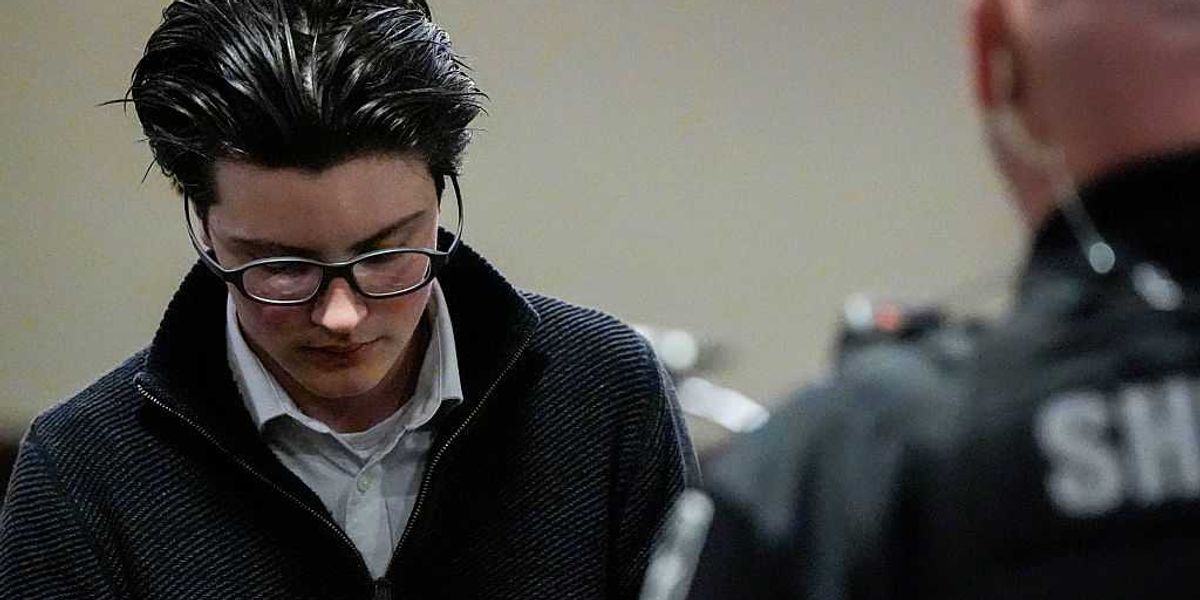
Colt Gray’s case has reignited a brutal debate about punishment, justice, and what society owes to victims after a school shooting tears through a community. The judge’s life sentence lands as a hard answer to a crime that left no room for easy sympathy, especially for anyone still wrestling with the damage done at Apalachee High School. Beneath the courtroom fallout sits a bigger argument about the death penalty, mental health, and whether modern criminal justice still knows how to draw a line between explanation and excuse.
Gray was not treated like a misunderstood kid drifting into trouble. He was treated like a killer who made a deliberate choice, and that distinction matters in a case like this. When a teenager commits a massacre at school, the public wants more than legal language and procedural calm, because the pain is too raw and the stakes are too high.
That is why sentencing in cases like this hits so hard. A life term says the state has no intention of letting the offender walk free again, and it sends a clear message that some crimes burn through every claim to leniency. For many people, that is the minimum response, not the maximum.
The death penalty sits just beyond that, waiting in the background of the debate like a loaded question nobody can ignore. Supporters see it as the only punishment that matches the scale of the harm, especially when children are targeted in cold blood. Critics point to delays, appeals, and the possibility of mistakes, but those concerns often sound distant to families who have already buried their dead.
Cases like this also stir up the mental health conversation, because the term gets tossed around whenever a young attacker is involved. Mental illness may explain some behavior in some cases, but it does not erase intent, and it certainly does not restore the lives that were taken. There is a real danger in turning every horrific act into a therapy seminar, because that can blur the line between illness and moral responsibility.
That tension shows up in criminal justice policy all the time. One side wants treatment, compassion, and a broader look at the social pressures that shape violent behavior. The other side sees a system that has grown too soft, too eager to search for backstories while victims are left to absorb the cost.
Restorative justice sounds appealing in the abstract, but some crimes are too monstrous for that language to land. It works best when there is still some chance of repair, some shared ground between offender and community. A school shooting built on terror and loss does not leave much room for that kind of healing, at least not in the early, jagged aftermath.
The public reaction to Apalachee High School has followed a familiar pattern, with grief quickly hardening into anger. That is not a flaw in the system, it is a sign that people still understand the difference between accountability and excuses. When the victims are students and teachers who never got a fair shot at safety, the demand for firm punishment only grows louder.
Stories like this also force a harder look at what justice is supposed to do. It cannot bring back the dead, and it cannot fully soothe the people left behind, but it can make a moral statement that evil acts will meet severe consequences. That statement matters in a country where too many public tragedies are met with slogans instead of resolve.
Nicholas Pimm and other voices in these debates have helped keep attention on the larger culture around violence, punishment, and public responsibility. The argument is not just about one defendant or one sentence, but about whether the system still has the nerve to punish the worst crimes without apology. In that sense, the Gray case is not only a legal matter, it is a test of whether justice still means something sharp, direct, and impossible to miss.
