
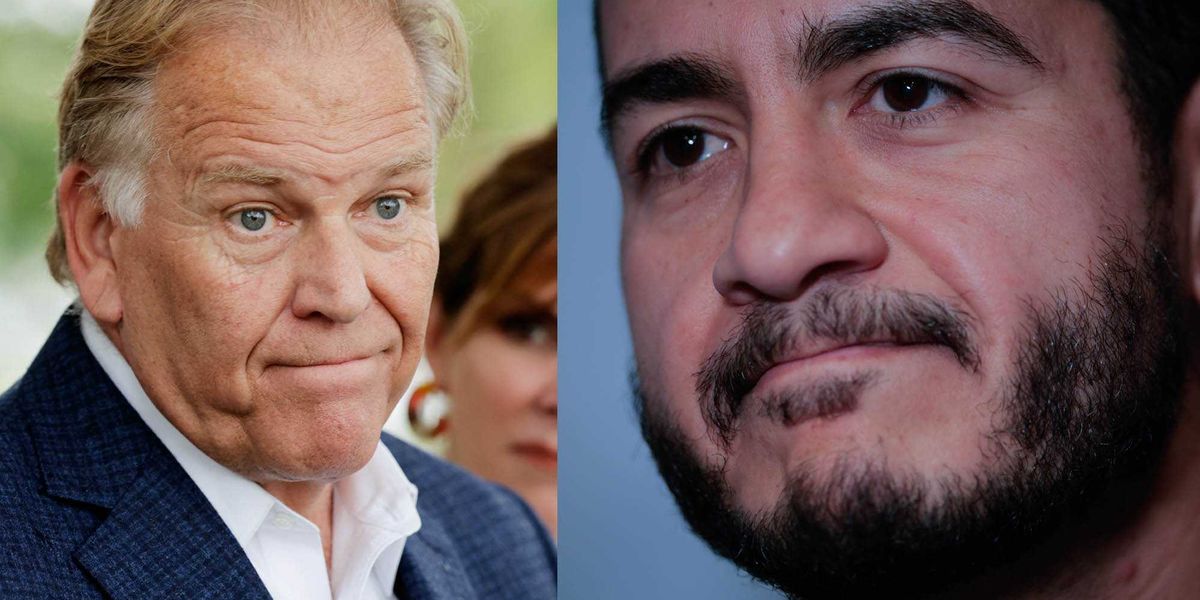
Abdul El-Sayed walked into a high-stakes Michigan Senate race with a familiar kind of political confidence, but the conversation quickly turned to something far more combustible. During an appearance on Meet the Press, he denied any family connection to the Muslim Brotherhood, only for old material to resurface and put that claim under a harsh spotlight.
The exchange landed at exactly the wrong moment for El-Sayed, who is trying to hold together support in a race where every word gets checked, clipped, and replayed. Michigan voters have already seen enough campaign drama to know when a controversy is about to spread, and this one had all the ingredients to catch fire fast.
What made the story sting was not just the denial itself, but the speed with which the pushback arrived. Once the receipts came out, the focus shifted from policy talk to credibility, and that is a tough place for any candidate to be when the pressure is already high.
El-Sayed’s comments were aimed at drawing a clean line between himself and the Muslim Brotherhood, a group that has long drawn scrutiny in American politics. That kind of distance can matter in a competitive statewide race, especially when opponents are eager to turn any family history into a campaign weapon.
But politics has a way of punishing loose claims. If a candidate says something absolute on live television and the record looks murky afterward, the story stops being about spin and becomes about trust, which is always harder to repair.
That is especially true in a Senate contest in Michigan, where the audience is broad, skeptical, and not easily impressed by polished answers. Voters there tend to care about whether someone seems straight with them, and once a contradiction enters the bloodstream, it can hang around longer than the original interview.
Mike Rogers, the Republican in the race, has every reason to let the moment do its work. He does not need to overcomplicate it when the cleaner message is simply that voters deserve honesty, not a carefully managed answer that falls apart under a little pressure.
The broader issue is how quickly modern campaigns can be tested in real time. One statement on television can become a full-blown problem before the segment even cools off, and candidates who lean too hard on denial often discover that the internet keeps better books than the spin room.
For El-Sayed, the episode creates an immediate credibility problem that could follow him well beyond a single news cycle. Even if supporters are willing to give him the benefit of the doubt, opponents will keep pushing the contradiction because it is exactly the kind of thing that changes the tone of a race.
There is also the simple reality that voters notice when a politician seems to be playing defense instead of answering directly. In a campaign already packed with sharp elbows and identity-driven arguments, this kind of stumble can make every future answer sound a little more guarded and a little less believable.
That is the danger of making a hard denial before the facts are fully settled. Once the paper trail starts talking, the story stops belonging to the candidate and starts belonging to everyone else, which is usually when a campaign gets a lot less comfortable.
