
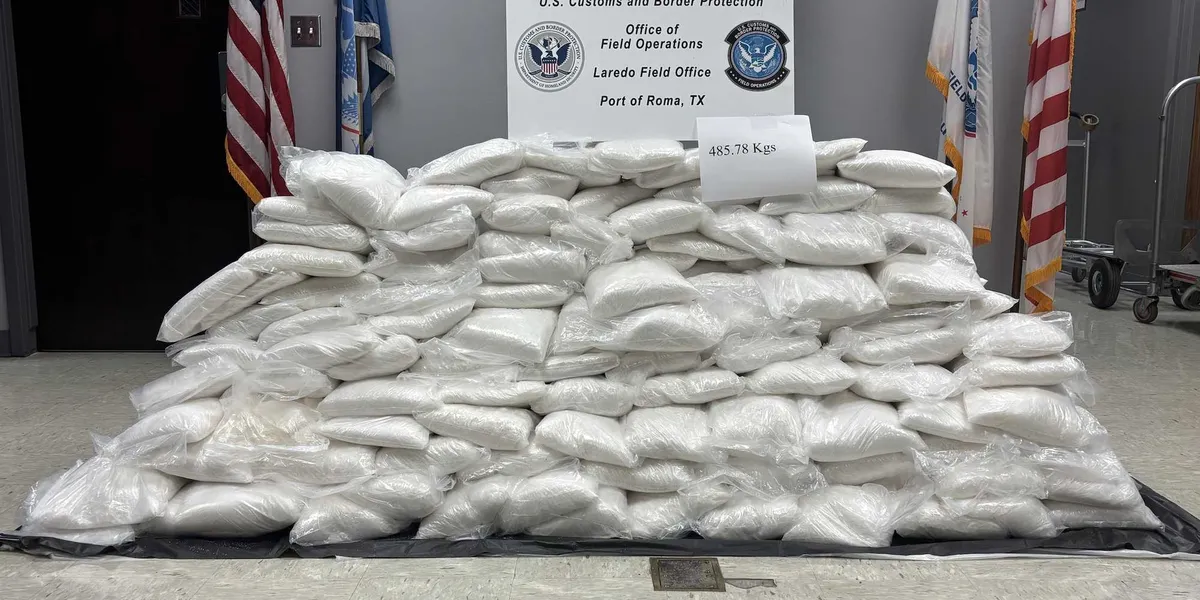
Customs officers intercepted a massive drug load hidden inside a shipment that was supposed to be ordinary household cleaner, and the size of the bust sent a loud message about how smugglers keep trying to move poison through everyday cargo. The seizure involved a staggering amount of methamphetamine, all tied to a load coming from Mexico and flagged by U.S. Customs and Border Protection. What looked like a routine delivery turned into a major border enforcement win.
According to the account, the meth was packed into a shipment of detergent, a classic concealment trick meant to blend illegal cargo into normal trade. That kind of disguise is exactly why border inspections matter so much, because smugglers rely on boredom, speed, and assumptions to get dangerous drugs past the line. When officers catch a load this large, it is not just about the drugs on the table, it is about the network that thought it could sneak them through.
The sheer scale of the seizure is what makes it hard to shrug off. One thousand pounds of meth is not street-level garbage, it is a serious pipeline of addiction, violence, and profit waiting to spread into American communities. Loads this big are built for one purpose, to flood the market and feed criminal organizations that treat border security like a business problem to outsmart.
That is why the southern border keeps coming back into focus whenever a major bust lands in the news. Smuggling groups keep using commercial shipments, cargo containers, and everyday products because they know legitimate trade is fast-moving and impossible to inspect item by item. The tactic is simple enough, hide the drugs in plain sight and hope the system is too overloaded to catch them.
But when enforcement is active and alert, those plans can fall apart fast. U.S. Customs and Border Protection has repeatedly shown that good targeting and careful inspections can expose concealment methods that would otherwise slip through the cracks. A shipment of detergent may not raise eyebrows at first glance, but the wrong cargo in the wrong place can turn into a giant alarm bell once officers start looking closer.
The bust also highlights how drug trafficking is never just a border issue. Meth that crosses into the country does not stay near the border for long, because the supply chain quickly reaches cities, suburbs, and rural towns where the damage is felt in overdoses, family breakdowns, theft, and pressure on law enforcement. Every large seizure interrupts that chain, even if only for a moment, and that moment matters.
For communities already dealing with the fallout from meth addiction, cases like this hit a nerve. Behind the headlines are the people who end up living with the chaos, including parents, first responders, teachers, and neighbors forced to deal with the wreckage. A single shipment can fuel a long trail of harm, which is why stopping it before it moves deeper into the country is such a big deal.
There is also a broader lesson in how smugglers adapt. When one route gets hot, they look for another. When one disguise gets exposed, they test a new one, whether that means hiding drugs in food products, cleaning supplies, machinery, or some other harmless-looking load.
That cat-and-mouse game is exactly why border security cannot be treated like a side issue. It takes vigilance, strong enforcement, and a willingness to keep pressure on trafficking networks that are constantly looking for a weak spot. A load of detergent might seem ordinary, but in the wrong hands it can become a moving warehouse for one of the most destructive drugs on the street.
