
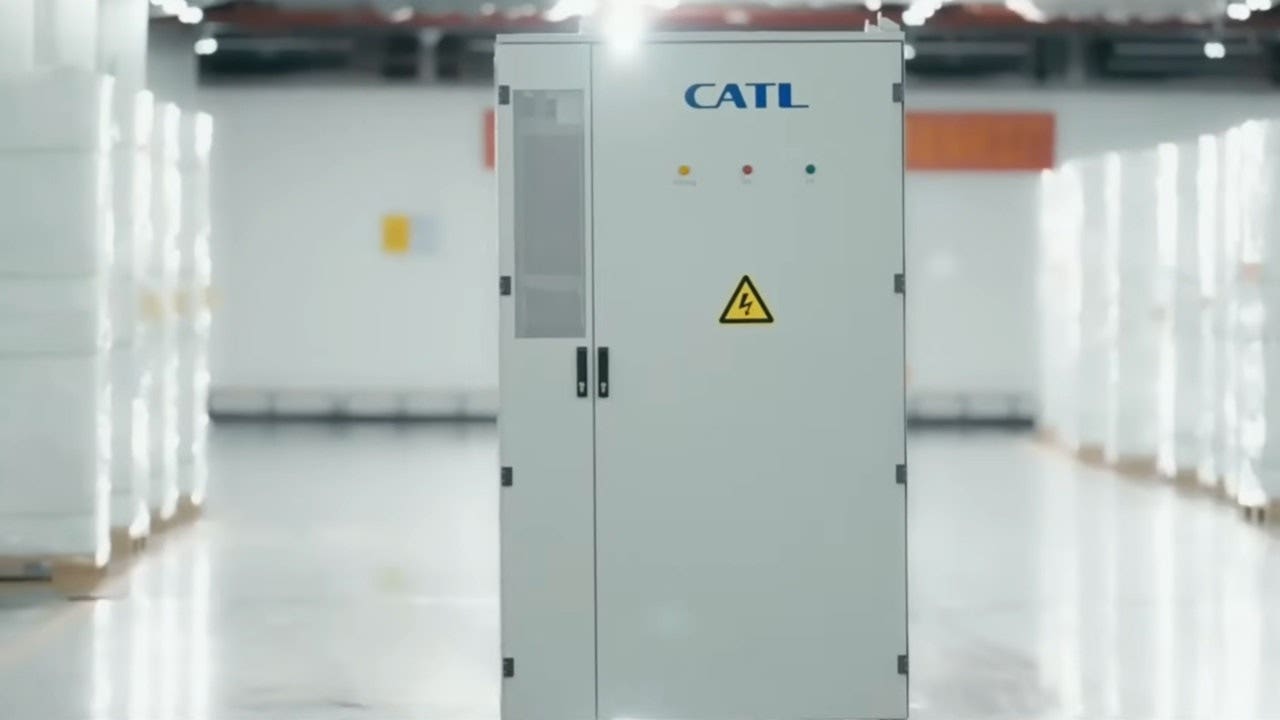
CATL has unveiled the TENER Sodium Energy Storage System aimed at large-scale grid projects, claiming field validation and commercial readiness while targeting shipments and deliveries over the next year; the system promises a sodium-based alternative to lithium for stationary storage, with potential advantages in supply diversity, temperature behavior and integration into existing platforms, though no specific U.S. rollout has been announced.
CATL says its TENER Sodium Energy Storage System is the first field-validated sodium-ion storage platform designed for commercial deployment at grid scale. This is not a tiny battery for a phone or car; it’s built for big storage sites that back up solar farms, wind projects and other generation sources. As electricity demand rises from AI data centers and extreme weather, grid-scale storage is becoming more critical.
There’s no announced U.S. launch yet, so the immediate impact on local utilities is uncertain. What matters now is the direction of grid storage technology and how sodium chemistry might fit into larger projects worldwide. Investors and developers will be watching timelines and shipments closely.
CATL introduced the system in Munich and projects cumulative shipments of 1 gigawatt-hour by the end of 2026, with deliveries in China beginning in September 2026 and global deliveries slated for June 2027. Those milestones put sodium-ion closer to commercial use than lab talk. Stationary storage is where this chemistry is meant to compete, not mobility applications.
Sodium has one big selling point: abundance. CATL notes sodium is far more common than lithium, and it’s widely distributed around the globe, which could ease supply pressure and pricing swings tied to lithium demand. That makes sodium attractive for systems where energy density and extreme lightness are not the top priorities, but cost, material security and scale are.
CATL does not claim sodium will immediately replace lithium. Instead, the company positions sodium and lithium as complementary options that can coexist in future storage portfolios. For utilities and project owners, more chemistry choices means less dependency on any single material and more leverage when sourcing equipment.
One practical pitch from CATL is compatibility: TENER Sodium reportedly fits into existing lithium iron phosphate energy storage platforms with the same physical footprint. That matters for developers who want to avoid redesigning enclosures or repeating certifications. Easier integration could lower deployment friction and speed up buildouts.
The system is rated at more than 30 megawatt-hours of capacity per installation, with each module weighing about 42 metric tons and 34 units needed to reach a one-gigawatt-hour site. The modular design supports flexible discharge durations of 1, 2, 4, 6 and 8 hours, giving planners room to match storage duration to local grid needs. Those specs are aimed squarely at utility-scale requirements.
CATL highlights extreme-temperature performance and safety improvements, claiming a 20 percent safety margin over lithium-ion systems via its battery management approach. The top-discharge airflow layout is said to cut heat generation by nearly 30 percent and reduce auxiliary power draw from an industry average of 2 percent to about 1 percent. The system also operates at roughly 65 decibels, which could ease local noise concerns when sites sit closer to communities.
On the manufacturing side, CATL reports expanded sodium-ion lines at its Fuding base adding 40 gigawatt-hours of annual capacity and a planned Jining site that could support 160 gigawatt-hours. The company also cited a three-year, 60-gigawatt-hour sodium-ion energy storage order signed with HyperStrong in April 2026 and described as the world’s largest sodium-ion commercial contract. Those moves show a serious industrial push.
U.S. adoption is a separate question and will hinge on cost, long-term performance, supply chain considerations and security reviews by utilities and regulators. Even a reliable new battery chemistry won’t solve transmission bottlenecks, slow permitting or local grid constraints by itself. Decision-makers will weigh tradeoffs before greenlighting large-scale installs.
If sodium-ion storage proves dependable, it could add useful flexibility to how electricity is stored and dispatched, especially as AI loads and renewable generation grow. Better storage helps balance supply during demand spikes and keeps power available when intermittent sources drop off, but it’s one tool among many needed to keep grids resilient.
Your phone holds your email, passwords, photos, banking apps and personal data. In this free CyberGuy Live replay, Kurt the CyberGuy walks you step by step through simple phone security fixes you can do at your own pace. You’ll learn how to improve your privacy settings, spot the latest phone scams, use trusted security tools and walk away with a simple checklist to stay protected. Watch the replay and get our checklist here: CyberGuyLive.com.
FOX NEWS POLL: VOTERS SEE AI REGULATION AS URGENT, RANK SAFEGUARDS AHEAD OF INNOVATION
AI BOOM: DEMAND FOR DATA CENTERS DRIVES INNOVATION BY ENERGY, TECH INDUSTRIES TO PRODUCE NEW POWER SOURCES
Would you be comfortable with Chinese-made battery systems supporting part of the U.S. electric grid if they helped make power more reliable? Share your thoughts and feedback at CyberGuy.com.
