
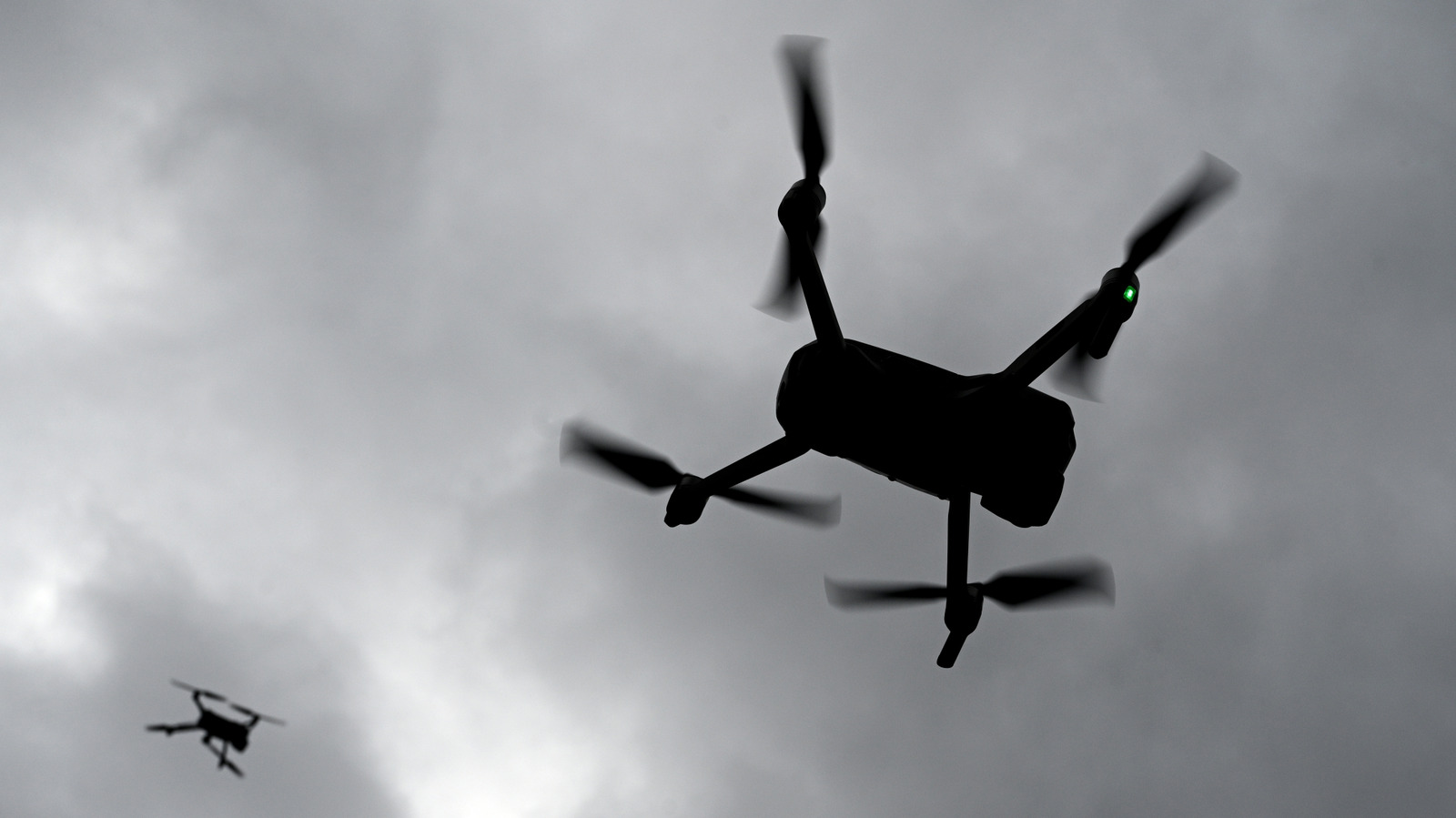
Russia is leaning into a blunt but clever answer to small drones, and it comes in the form of rifle rounds that break apart after leaving the barrel. The idea is simple enough to grasp fast: instead of one projectile, the cartridge sends multiple pieces toward the target, giving a shooter a better chance of clipping a fast, hard-to-hit drone. It is a sign of how drone warfare keeps forcing both sides to rethink old weapons for a very new kind of fight.
Drone attacks have become a defining feature of the Russia-Ukraine war, and they are not easy to stop once they are in the air. A lone interceptor missile is not a realistic answer to every threat, especially when cheap, disposable drones can show up in swarms and keep pressure on a target. That has pushed both Russia and Ukraine to expand their anti-drone tools, from jammers to guns to specialized ammunition.
The Russian round at the center of this effort is called Mnogotochie, and it is designed for use in rifled automatic weapons. It can be fired from rifles chambered in 5.45x39mm and 7.62x39mm, which matters because those calibers are common enough to make the concept practical on the battlefield. Once fired, the round splits into three parts, turning one shot into a wider cloud of danger for anything flying low and fast.
That spread is the whole point. Against a drone, a single tight bullet path can feel like trying to thread a needle while the target keeps moving, but multiple projectiles improve the odds a little by covering more space in the same instant. It is not shotgun buckshot, though the logic is similar, and that makes it a useful option for troops who need something beyond standard rifle fire.
There is also a strong dose of old-school warfare hiding inside the modern packaging. Armies have been throwing multiple projectiles at once for centuries, from cannon canister to grapeshot, and shotguns have long used pellets to increase hit probability at close range. Mnogotochie is basically a high-tech riff on that idea, adapted for drones instead of charging infantry or ships at sea.
Russia’s High Precision Systems holding company is making the ammunition, and the design itself is straightforward. The cartridges use three stacked projectiles that separate after exiting the barrel, which keeps the concept mechanically simple even if the battlefield use is not. The claimed effective range is around 300 meters, which gives soldiers a usable envelope without pretending this is some miracle long-range solution.
Still, the real test is not the engineering on paper, it is whether the round can reliably connect with something as quick and unpredictable as a drone. Small combat drones can reach roughly 87 mph and cover about 510 feet in four seconds, which leaves very little room for error once they are spotted. Even with a broader pattern, the shooter still has to track the target, lead it correctly, and make the shot count.
That is where the promise and the limits of these cartridges start to show. They may offer a better chance than a conventional bullet when the sky is busy and the target is darting around, but they do not erase the basic problem of speed, distance, and reaction time. In a war where drones keep getting cheaper, smaller, and more numerous, every edge matters, and Russia is clearly betting that a split-round rifle cartridge can buy a little more control when the air turns hostile.
