
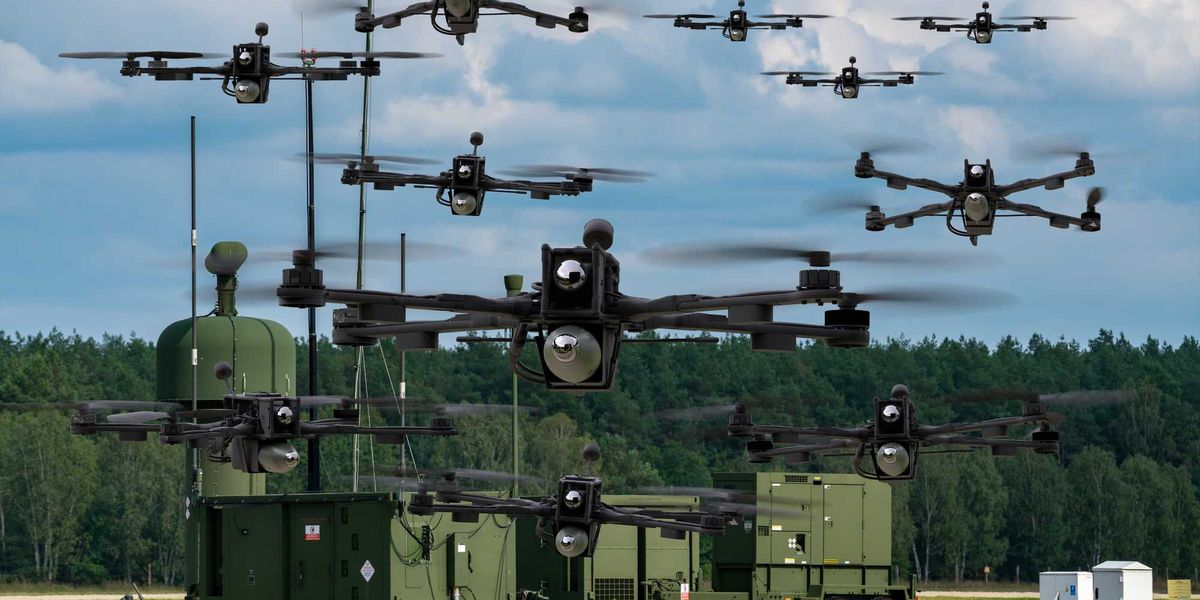
Small, cheap drones have rewritten the math of air defense, forcing militaries to rethink detection, targeting, and procurement. This piece surveys how low-cost UAVs create an economic imbalance, how layered sensor fusion and new effectors try to close the gap, and why rapid refresh cycles and distributed defense are now central to protecting infrastructure and forces. It explains why directed-energy answers are still immature and why interceptor drones and electronic warfare are shaping today’s battlefield.
Picture a $500 hobby drone able to carry a payload and a human controller with a cellphone. The countermeasure that takes it down can be a million-dollar missile or a complex laser system, and that price gap creates a strategic headache. Defense planners now face not a single technology gap but an operational challenge: how to detect, classify, decide, and act faster than the drone can reach its objective.
Detection is never simple. No one sensor type covers every scenario, so networks combine radar, radio-frequency sensing, infrared and electro-optical cameras, acoustic arrays, and automated classifiers. Each modality has blind spots: radar gets cluttered in cities, RF detection fails against autonomous flight, and cameras can mistake birds or weather effects for threats. The real work is fusing these inputs into a reliable track and a confident identity in the time it takes the target to cross the defended space.
“This is a consumer-electronics model applied to weapons procurement.” The sentence is literal: many counter-drone buys now follow short refresh cycles where commercial products are leased, upgraded, or swapped out every couple of years. That approach accepts rapid obsolescence as inevitable and treats procurement like buying the latest phone rather than building a decades-long system that is expensive to iterate.
Once a track is deemed hostile, defenders have several response options with different trade-offs. Jamming and electronic warfare can stop a drone without physical damage, but they must be carefully applied near civilians and friendly communications. Guns and cannon are effective at close range but consume ammunition and need line of sight, while missiles reach higher and farther but destroy the economic case against cheap attackers.
Directed-energy systems like high-energy lasers and high-power microwaves promise cheap shots and rapid engagement, yet their usefulness depends on power supply, weather, and support infrastructure. Those systems are progressing in tests, but they still face limits in range and deployment flexibility. For now, they act as one piece of a layered deterrent rather than a single silver bullet.
Interceptor drones have emerged as a cost-effective middle ground, meeting attackers with semi-disposable vehicles designed to collide, capture, or blind sensors. Real-world operations show drone-on-drone intercepts can make a dent in long-range loitering threats and do so at a fraction of the cost of traditional missiles. This tactic also shifts some of the burden onto manufacturing and logistics to supply many relatively cheap interceptors instead of a few high-end interceptors.
Defense architecture is becoming distributed. Bases, factories, and ports now require continuous low-altitude airspace monitoring, and civilian industrial sites increasingly field their own air-defense teams coordinated with national forces. That diffusion of responsibility means anti-drone efforts run through supply chains, factory floors, and local security, not just centralized military command posts.
Software and human decision-making are central vulnerabilities. Automating sensor fusion and response can shave critical seconds off reaction times, but it also embeds rules and confidence thresholds that no single operator fully understands. The fog of war is being recast as streams of telemetry, metadata, and probabilistic scores where authority to fire or jam must be tightly governed and quickly executed.
Ultimately, defending against cheap drones is about economics, tempo, and adaptability. Systems that combine layered sensors, a mix of kinetic and nonkinetic effectors, rapid procurement cycles, and local buy-in stand the best chance of keeping low-altitude skies under control. Technology will keep moving fast, and defenses must move faster to avoid being outpaced.
