
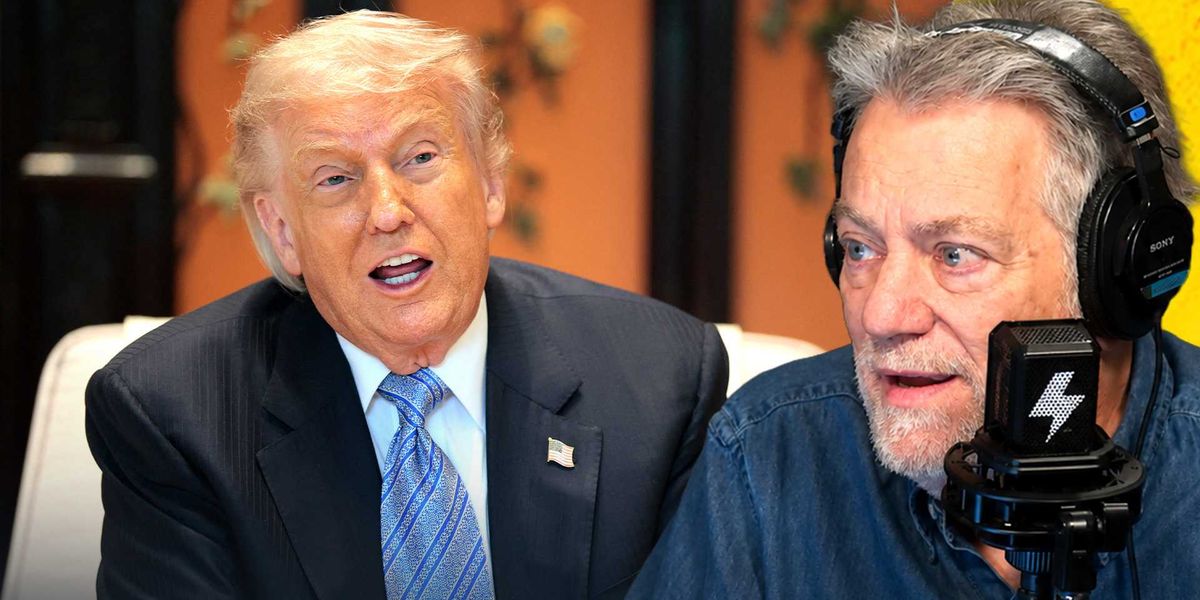
President Donald Trump defended the presence of Chinese students at American universities during a Sean Hannity interview, arguing that excluding them would cripple higher education, while conservative media figures pushed back, sparking a debate over economics, pride, and what keeps campuses afloat.
In the interview, Trump made a blunt case about the stakes, saying, “I could tell them I don’t want any students. It’s a very insulting thing to say to a country. They would then immediately go out and start building universities all over China.” He doubled down on the financial angle with another line: “If you want to see a university system die, take a half a million people out of it.” Those two points framed his practical argument that a sudden removal would be catastrophic for many schools.
Reaction among some of his usual allies was immediate and skeptical. BlazeTV host Pat Gray said, “We’re completely dependent on Chinese students,” in disbelief, and followed with, “What are you, Joe Biden? That’s something he would say. Or Barack Obama, not Donald Trump.” The surprise was clear: critics expected a tougher line, not the kind of economic realism Trump offered in that moment.
Executive producer Keith Malinak summed up the administration’s case as he heard it, saying, “And so far, as the president is making his case, the two main points that he has offered to us is that it’s highly insulting and the schools might go bankrupt.” That framing — insult to a nation and the survival of institutions — is exactly what set off the pushback from the conservative hosts, who were looking for a firmer stance on dependence.
Gray pressed harder on the financial claim and the scale. “I’m not seeing the bigger picture here that the president is, clearly,” he said, before adding bluntly, “Clearly not true, for one thing.” He argued it’s exaggerated to say American higher education would collapse, insisting, “American universities will not collapse without 500,000 Chinese in them. That’s nonsense.” Gray treated the half-million figure as a shock line, not a verdict.
He went on to question how concentrated those students actually are, noting, “This is a fairly new phenomenon to begin with. And secondly, 500,000 split between, what is it, 15,000 universities? How many do we have in the country? It’s not that many; you’re not going to lose that many students.” That take pushed back on the picture of immediate, widespread financial collapse and suggested the pain would be uneven.
Trump tried to draw a line between the elite and the rest, saying the “top schools will do fine” while the “lower schools” might be hurt. Gray disagreed with that view and argued the reverse, saying, “I think it’s just the opposite of that. It’s more like the Harvards and the Princetons that are going to do worse because how many Asian students are at those schools? They probably have the highest percentage.” He also added, “They’re cutting back on their Asian students because they’ve got too many,” highlighting how complex admissions and demographics have become.
The back-and-forth exposed a split in priorities: one side stressing the diplomatic and economic consequences of a mass exclusion, the other worrying about dependency and campus demographics. Trump’s line was geopolitical and practical; his critics from conservative media pushed back with skepticism about the scale and who would actually feel the pain.
Whatever side you take, the exchange underscored a larger question for Republicans and conservatives wrestling with national security, economic leverage, and the health of American institutions. This debate about foreign students on campus is as much about money and enrollment numbers as it is about strategy and pride, and the reaction shows how messy that mix can be on the right.
