
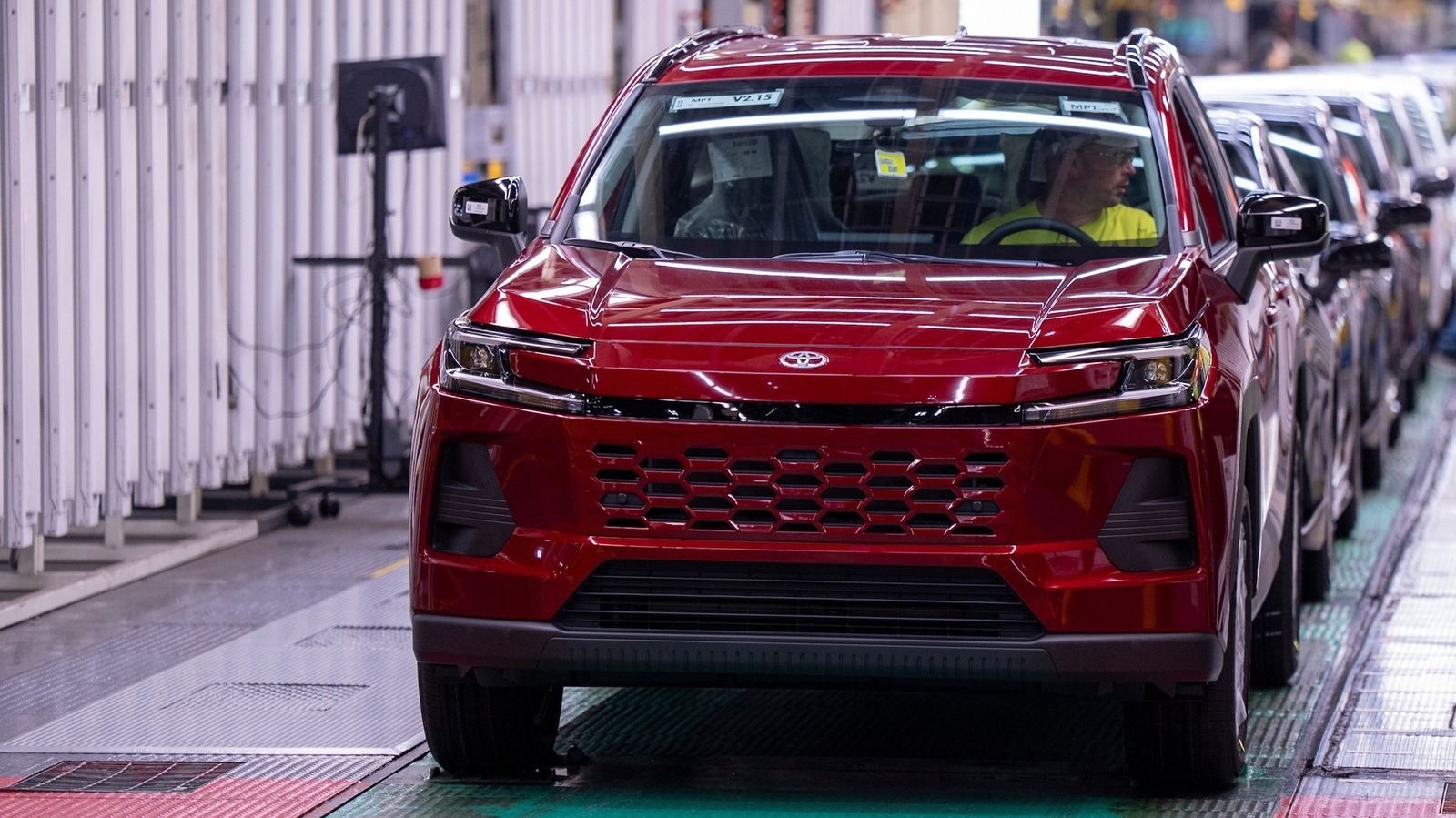
The Toyota RAV4 is still one of the hottest nameplates on the road, but its 2026 sales story has turned unusual fast. Demand has not dried up, yet deliveries have slipped hard because production and model changes have created a bottleneck that the market cannot ignore.
That split between interest and inventory is the key to the whole situation. Dealers are not sitting on piles of unsold RAV4s, and buyers are still showing up ready to move on one. The problem is that Toyota has not been able to feed the pipeline at the same pace as customer demand.
The sales numbers make the slowdown look dramatic. Toyota sold 479,288 RAV4s in the U.S. in 2025, which was the model’s best year ever, but from January through September 2026 that total fell to 253,664. Compared with the same stretch in 2025, when 358,134 units were sold, that is a 29.2% drop.
One sign that demand is still very much alive comes from dealer stock levels. While the average vehicle in September had about 51 days of supply, the RAV4 was moving so quickly that dealers only had around four days on hand. That kind of turnover does not point to a weak market, it points to a vehicle people keep asking for.
A big reason for the squeeze is that Toyota spent much of last year building the outgoing 2025 model, which pushed back the ramp-up for the 2026 version. The company’s two Ontario plants were also tied up early in the year with retrofits, leaving only limited production in January and February. When a model sells this well, manufacturers often lean on leftover stock to bridge the gap, but that cushion is harder to maintain when demand stays this strong.
Another major twist is under the hood. The 2026 RAV4 dropped the pure gas version entirely, which is a sharp break from the formula buyers had grown used to. Instead, the lineup now consists only of hybrid and plug-in hybrid variants, and that change matters because the gas model accounted for a huge chunk of last year’s volume.
From January through September 2025, about 201,912 of the 358,134 RAV4s sold were gas-only. Those buyers did not vanish, but many are now being funneled into a tighter pool of electrified trims that are harder to build in big numbers. As hybrid supply stays constrained, a lot of the would-be gas buyers are left waiting instead of walking away.
The hybrid versions are clearly carrying the load as best they can. Sales of the electrified RAV4 have climbed 43.6% through September, which shows the new formula still hits with shoppers who want efficiency without giving up a familiar SUV shape. Even with that lift, output for the North American RAV4 has reportedly fallen 30% through September, which explains why the sales chart looks so choppy.
Fuel prices also keep the hybrid pitch strong. In September 2026, regular gas averaged $4.36 a gallon nationwide, up 37.6% from $3.17 the year before, and that kind of jump changes shopping habits fast. A RAV4 hybrid delivering 41 to 43 mpg suddenly looks a lot smarter than a 2025 gas version that managed around 30 mpg, especially for drivers watching every fill-up.
That is why the RAV4 slowdown feels so misleading at first glance. The appetite is still there, the showroom traffic is still there, and the math on fuel economy still works in Toyota’s favor. What is missing is not enthusiasm, but enough units in the right trims to satisfy it, and that gap is still shaping the 2026 story in a very real way.
