
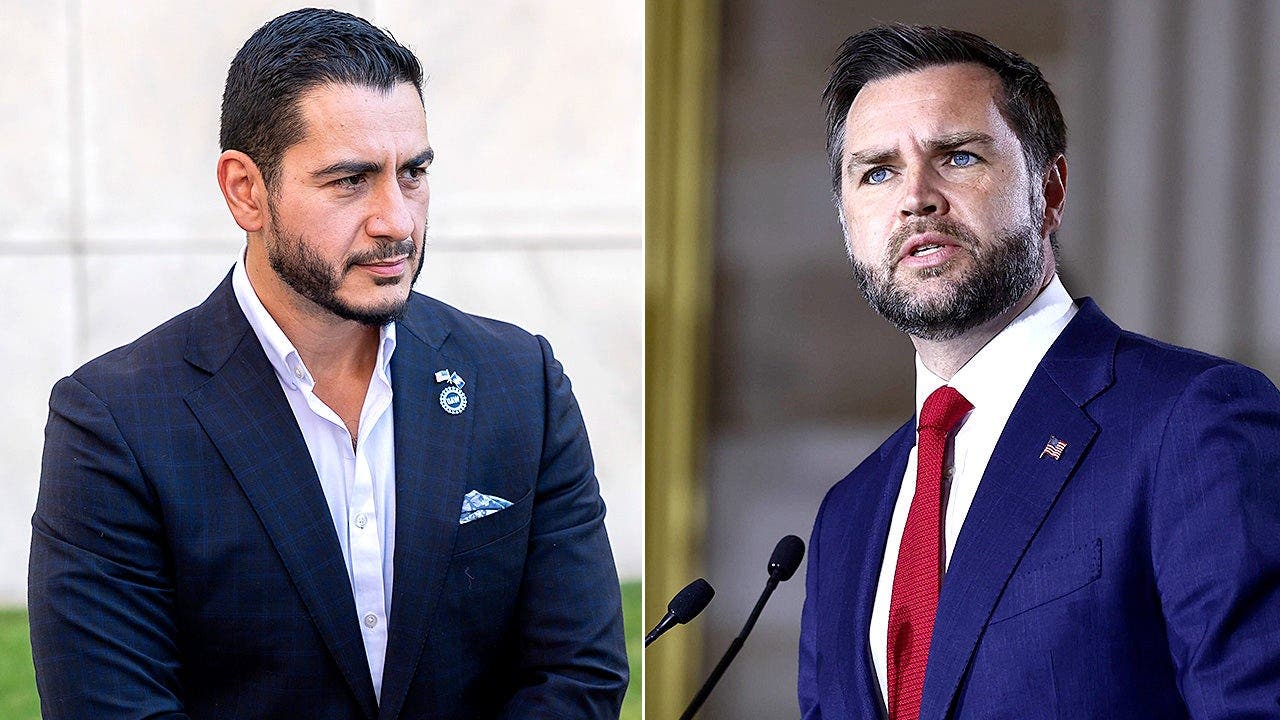
JD Vance weighed in on a surprise twist in Michigan’s Senate contest, saying Haley Stevens’ decision to back Republican Mike Rogers over Democrat Abdul El-Sayed would “certainly” give Rogers a lift. The vice president framed the endorsement as more than a symbolic break, arguing it could nudge undecided voters who might not normally cross party lines.
Speaking to reporters at Joint Base Andrews after campaign stops in New York and Ohio, Vance made clear he saw political value in the move. He said the signal from a sitting Democratic congresswoman could matter in a race where both camps are fighting hard for every last vote.
“I certainly think it helps,” Vance said. “I mean, the message is whether you’re a reasonable Democrat, a Republican, a conservative, an independent or just a liberal who loves the United States of America. El-Sayed is a crazy person and Mike Rogers is a patriot.”
Stevens’ endorsement came after a public rupture with El-Sayed, who had made it clear she was not welcome in his campaign orbit. In response, she backed Rogers and delivered a sharp message of her own, saying she did not belong in Abdul’s campaign. The move instantly turned a local Senate race into a bigger political spectacle.
Vance argued the endorsement could function like permission for voters who like parts of the Democratic brand but are uneasy about El-Sayed. In his telling, having a Democrat openly side with Rogers helps reinforce the idea that this race is not just about party labels, but about who is fit to represent Michigan.
Rogers also used the moment to sharpen his criticism of El-Sayed, casting his opponent as too far left for the state. He tied El-Sayed to activist circles and argued that Michigan voters should pay attention to the company he keeps, a line of attack meant to deepen doubts among moderates and independents.
The Democratic side of the race has also been pulled into a broader fight over ideology and influence. El-Sayed’s critics have focused on his association with Hasan Piker, a progressive streamer who has become a lightning rod for conservatives, while Stevens herself has said Piker’s views deserve condemnation.
That angle has only added fuel to an already charged campaign. Rogers made the case that his background as a former Army officer and FBI agent puts him on firmer ground, while El-Sayed pushed back by presenting his campaign as one built around travel, town halls, and a message that no Michigander should be left behind.
El-Sayed said his campaign held more than 700 events across more than 120 cities, arguing that the race should be about families feeling squeezed and voters wanting a reset. His message leaned into frustration with the status quo and painted Rogers as tied to a political agenda he says has failed working people.
The endorsements and counterattacks landed just as the election clock was running out. With both candidates making their final case to voters, the Michigan race became a test of whether a high-profile Democratic defection could shake up a contest already loaded with ideological baggage.
Vance, meanwhile, kept the focus on turnout and momentum during his own campaign swing. He backed a slate of Republicans in multiple states and urged supporters to show up on Election Day, a reminder that the Michigan Senate battle was just one piece of a much larger midterm push.
By the time the final rallies wrapped, the race had all the ingredients of a late-season scramble. A Democratic endorsement for the Republican, sharp attacks from both camps, and a national spotlight turned Michigan into one of the most closely watched Senate fights on the board.

1 Comment
Hooray victory awesome needed