
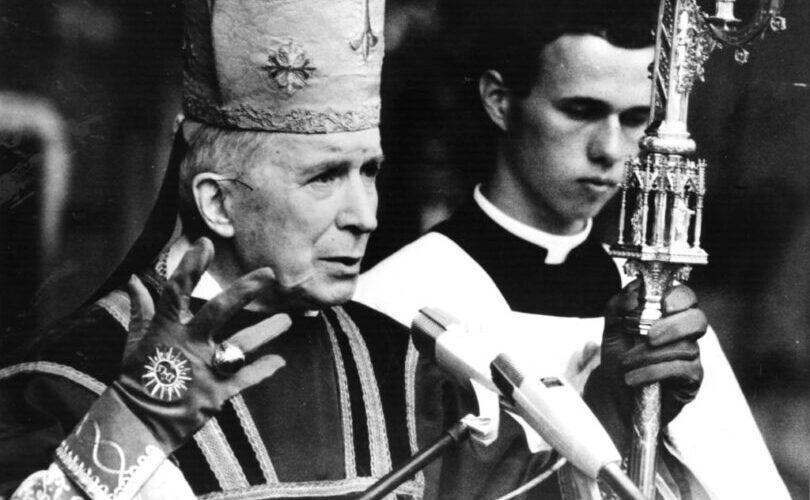
In 1988, Cardinal Joseph Ratzinger gave a blunt warning about the SSPX consecrations, but he also pointed to deeper problems inside the Church that could not be ignored. His remarks cut against the easy narrative that this was only about one act of defiance, because he kept circling back to Rome’s own failures, the liturgy, Vatican II, and the growing drift from Catholic truth. That tension still matters now, because the same faults he described have only become more visible.
Ratzinger first pushed back on the idea that the Vatican had simply been too soft with Archbishop Marcel Lefebvre. He noted the strange double standard of people who were openly disobedient themselves but suddenly became experts on strict obedience when it came to someone resisting the post-conciliar direction of the Church. In his view, the real issue was not just punishment or leniency, but the fact that Rome had allowed internal disorder to take root for years.
He then made a point that remains hard to brush aside: many Catholics were drawn to Lefebvre because they saw something spiritually solid in what he defended. Ratzinger said it would be a mistake to reduce that appeal to nostalgia or politics, because the attraction showed that real goods were missing from the broader Church life of the time. That meant the crisis needed an examination of conscience, not just a crackdown.
One of the sharpest parts of his address was his defense of the sacred in the liturgy. He warned that some priests and churchmen had treated desacralization like a goal, as if making Mass casual and inventive was automatically a sign of progress. Ratzinger insisted the liturgy is not a social event or a stage for creativity, but the place where God makes Himself present, and he argued that the Church had to recover that sense of mystery.
That critique lands with extra force because it was not coming from a fringe voice shouting from the outside. It was coming from a major figure inside the hierarchy who understood that people were leaving not because they wanted novelty, but because they were tired of seeing the holy flattened into entertainment. The question he left hanging was simple enough: why was this warning heard so clearly then, and so faintly now?
Ratzinger also challenged the habit of treating Vatican II like a kind of untouchable superdogma. He said the council was not the end of Tradition, and he reminded people that it had defined no dogma while many Catholics were acting as if everything before it had been downgraded. That matters because his argument only makes sense if something really had gone off track in the way the Council was being interpreted and used.
He did not stop there. He said older treasures of the Church were being pushed aside while new errors were tolerated, even when they touched basic truths like the Resurrection, the virginity of Mary, and the immortality of the soul. In plain English, he was saying that the rules had changed in practice, and not in a healthy direction.
His remarks on religious indifferentism were just as direct. Ratzinger warned against the idea that all religions are basically interchangeable symbols and that missions no longer need to speak about truth in any serious way. He asked a question that still stings: if truth no longer matters for salvation, then what exactly is left of Christian witness?
That concern has aged uncomfortably well. Today, a lot of Catholics see a Church that praises vague religious harmony while treating traditional Catholic belief like the awkward guest nobody wants to seat at the table. Ratzinger’s old warning about losing the center of faith now sounds less like a debate point and more like a report from the edge of the cliff.
He ended by saying the way forward was to return to the fullness of the Catholic religion and make the schism pointless by restoring what had been broken. That is a striking thought, especially because it shifts part of the burden back onto Rome rather than placing it all on the SSPX. Whether people like that conclusion or not, it is hard to pretend his analysis was shallow, and it is even harder now to ignore how many of the problems he named are still staring everyone in the face.
