
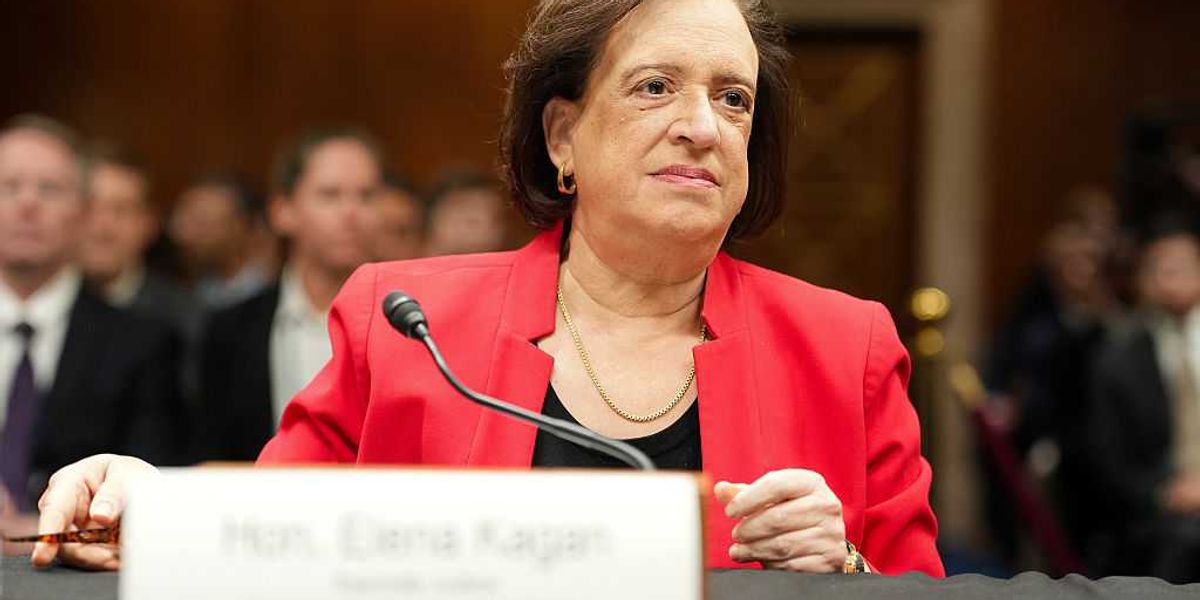
The Supreme Court has a knack for turning big, abstract phrases into real-world consequences, and that is exactly what is at stake when judges treat “science” like a magic spell instead of a method. Elena Kagan’s recent posture drew fire for sounding like a full-throated endorsement of bad science wrapped in respectable language, and the criticism lands because people want judges to be skeptical, not starry-eyed. When a justice appears to bless a claim just because it comes dressed up as expertise, the whole court looks less like a guardian of law and more like a rubber stamp.
The phrase “trust the science” has been used so often that it now works like a shortcut for shutting down debate, but the scientific method was never built on blind trust. Real science survives because it can be tested, challenged, and corrected when it is wrong, which is why courtroom deference can get dangerous fast. If a judge forgets that distinction, especially on a case with broad public impact, the result can feel less like reason and more like ideology wearing a lab coat.
That is why Kagan’s approach hit such a nerve. Critics saw not careful legal judgment but a ready-made blessing for claims that should have been scrutinized hard, the kind of move that makes people wonder whether the Court still understands the difference between evidence and authority. Once that line starts blurring, it becomes easy for powerful institutions to hide behind technical language while ordinary citizens are told to just accept it.
This is not a new problem, either. History is full of moments when official voices treated questionable ideas as settled fact, and the damage came later when the cracks showed up and could not be ignored. Invoking Joseph Stalin in this context is not about making a cheap comparison, it is about remembering how dangerous it gets when public institutions demand obedience while discouraging independent thinking.
Justice John Roberts has often been viewed as someone who prefers institutional caution, but caution means little if it turns into reflexive respect for whatever the elite consensus happens to be that week. The Court’s job is not to chase applause from experts or activists, and it is certainly not to pretend that every scientific claim is equally solid just because it comes from a polished source. A judge should be able to say, plain and simple, that science deserves scrutiny when the stakes are high.
That scrutiny matters because the public already senses how quickly “expert” language can be weaponized. People remember being told to swallow claims without question, and many are done pretending that every official explanation is automatically honest or complete. When a justice leans too hard into the “trust us” posture, it feeds the belief that the system is more interested in protecting narratives than in finding truth.
Richard Goodstein and other partisan voices may prefer a world where the court acts as a cheerleader for approved orthodoxy, but that is not the same thing as wisdom. The law should not bend to fashionable consensus, and it should never confuse confidence with correctness. If anything, a strong justice should be the one asking who benefits, what was tested, and whether the supposed certainty can actually hold up under pressure.
The bigger issue is trust itself. Once people think judges are casually endorsing shaky science, the damage spreads far beyond one opinion or one justice. It erodes confidence in the court, in public institutions, and in the basic idea that facts still matter when powerful people are speaking with one voice.
That is why this debate matters in a deeper way than a single headline. A healthy legal system needs judges who understand that science is a tool for finding truth, not a slogan for ending arguments. If the Court wants respect, it has to earn it the hard way, by showing it can tell the difference between genuine evidence and a polished sales pitch.
