
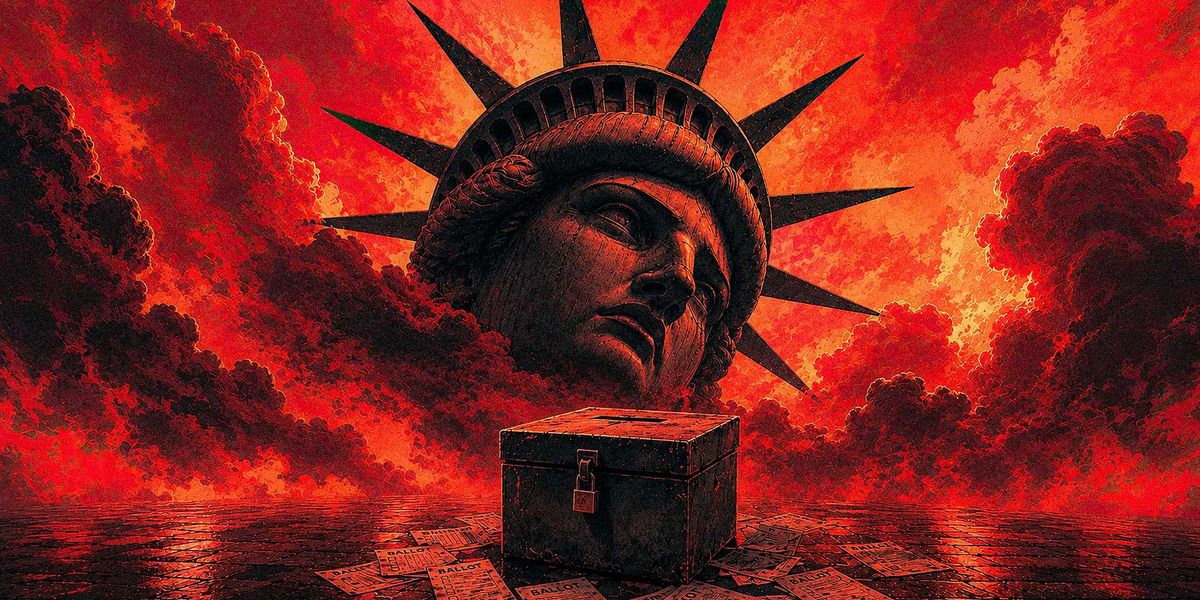
American politics has entered a harsher phase, where outrage, identity, and raw power matter more than polite disagreement. The tension is not just about who wins elections, but whether the country can still share basic ground before every dispute turns into a crisis.
The latest clash around conservative activist Charlie Kirk and the broader reaction to political violence shows how quickly the temperature rises. What once played as online theater now spills into real-world fear, with progressives, Republicans, and the media all treating every incident like proof that the nation is sliding toward something darker.
That’s where the deeper problem sits. When violence, immigration, trade fights, and even Supreme Court battles are folded into a single culture war, the result is a politics that feels less like debate and more like survival.
Charlie Kirk has become a useful symbol in that struggle because he draws loud answers from both sides. To supporters, he represents a direct challenge to the left’s grip on institutions, while critics see him as proof that conservative politics has gone too far in its confrontational style.
But the argument is not really about one commentator. It is about a country where people increasingly assume their opponents are not just wrong, but dangerous, and that belief makes every new controversy hit harder than the last.
That mindset has been sharpened by a steady stream of cultural and political pressure points. Immigration fights keep exposing how divided the public is over national identity, while trade wars remind voters that economic pain can be turned into partisan fuel almost overnight.
Then there is the digital layer, where figures like Hasan Piker help drive the mood from one outrage cycle to the next. Social media rewards the hottest take, not the calm one, and that pushes the public further into camps that barely speak the same language anymore.
The deeper theory behind all of this is not hard to spot. Political thinkers like Carl Schmitt argued that politics ultimately boils down to deciding who belongs and who doesn’t, who counts as friend and who counts as enemy, and modern American life often looks uncomfortably close to that logic.
That may sound dramatic, but it explains why every court fight and legislative showdown feels loaded with existential weight. The Supreme Court is no longer seen as a referee by many Americans, but as another battlefield where the other side’s victory feels like a permanent threat.
Republicans have spent years warning that the left treats institutions as weapons when it can’t win cleanly at the ballot box. Whether it is activist judges, campus pressure campaigns, or aggressive media framing, the complaint is that the opposition keeps rewriting the rules while pretending to defend democracy.
Progressives, for their part, insist they are responding to a real threat from the right. That response may be sincere, but it also feeds a self-fulfilling spiral, because once each side believes the other is an existential danger, moderation starts to look like surrender.
That spiral is what gives the phrase civil war its pull, even when nobody is talking about armies or front lines. It describes a nation that has broken into hostile moral tribes, each convinced the other side is pushing the country toward collapse.
The danger is not just rhetorical. Political violence thrives in an environment where enemies are constantly dehumanized, and where online applause can make reckless behavior feel heroic instead of shameful.
At the same time, the public is tired of being told that every explosive episode is an isolated event. People can see the pattern forming, and they know that when a society normalizes permanent panic, the next shock is never far away.
What makes the moment so volatile is that all of these forces reinforce one another. Economic anxiety, border fights, elite distrust, and culture war theater all merge into a single feeling that the country is losing control of itself.
That is why the reactions around Kirk, leftist violence, and the broader political atmosphere land with such force. They are not separate stories anymore, but pieces of the same restless scene, where everyone senses the ground shifting and nobody trusts the other side to stop the fall.

1 Comment
Prophesy from Kirk then