
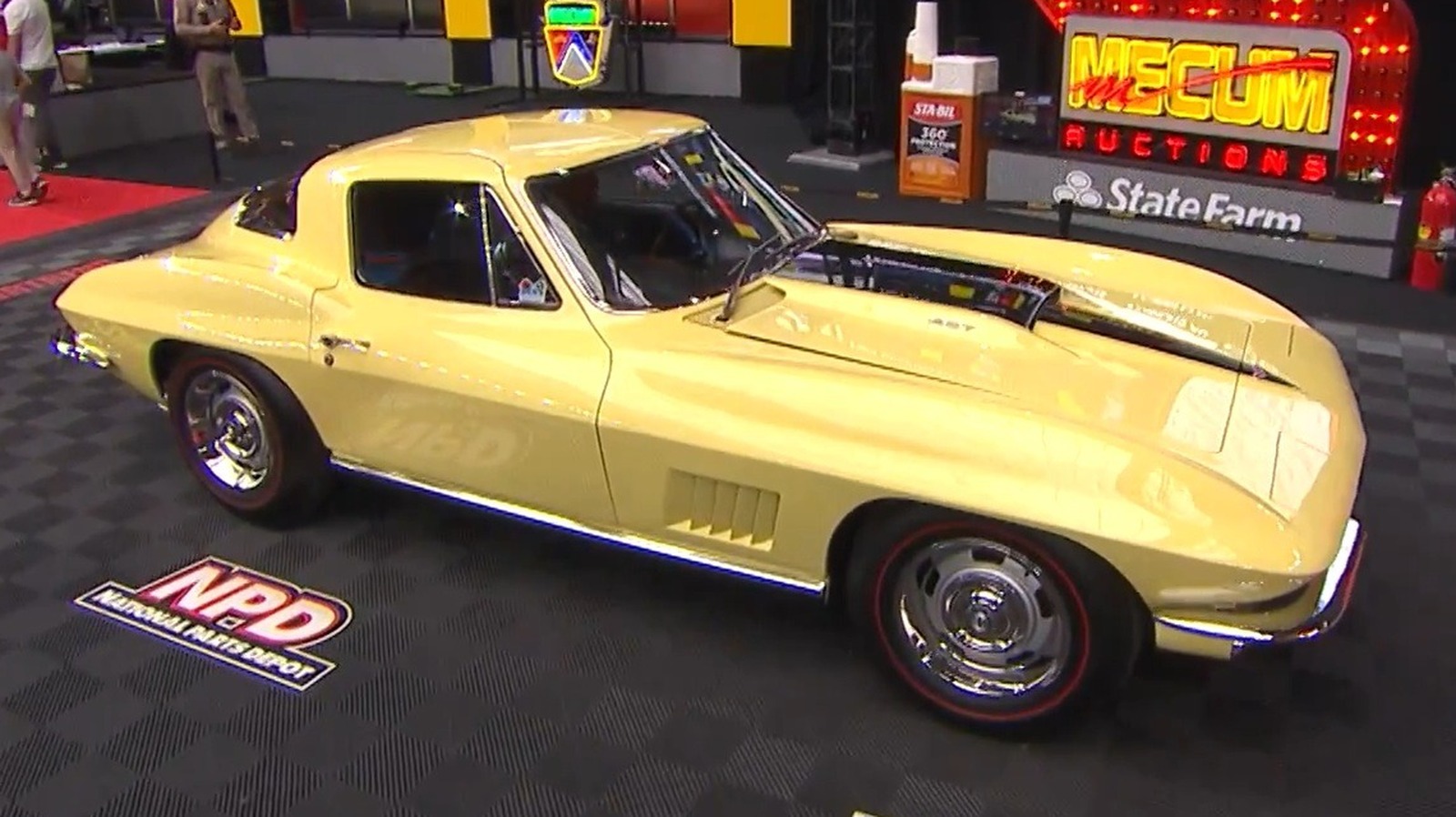
’60s Corvettes are already collectors items, but there’s one variant that’s even more sought-after due to a combination of performance and rarity. This piece takes a close look at what set that version apart and why buyers and racers still chase it decades later. Expect a mix of mechanical detail, cultural context, and the reasons that scarcity pushes values into the stratosphere.
The story starts with a car built for the track more than the boulevard. Engineers in the 1960s pushed Corvette into a serious performance role by fitting big-block engines, aggressive cams, and race-focused components into cars that still wore road-legal sheetmetal. That contrast between showroom looks and competition chops is a big part of the allure.
What made this specific variant stand out was a no-nonsense approach to power and weight. Instead of comfort options and street-oriented extras, the factory offered a stripped-down, high-output package aimed at owners who wanted a platform that could win on Sunday and still be driven home. That factory intent gave these cars a competitive edge and a mystique that dealers and private owners could never fully replicate later on.
Under the hood sat an engine that sounded menacing and delivered brutal acceleration for its era. Official horsepower numbers were conservative, a tactic GM often used, but real-world testing and racing showed these mills produced far more power than the sticker suggested. Combined with heavy-duty breathing, tougher valvetrain parts, and a camshaft tuned for high-rpm use, the result was a Corvette that behaved more like a prototype racer than a family cruiser.
Beyond the powerplant, suspension and braking upgrades were part of the package, so the car could handle the output without folding under stress. Beefed-up components, sturdier axles, and improved brakes made it possible to exploit the engine on twisty circuits and drag strips alike. Those features meant fewer hastily bolted-on aftermarket parts and more engineering designed to work together from the factory.
Rarity is the other half of the equation that drives collector obsession. These packages were offered in limited runs, often to comply with homologation rules or to meet a tiny slice of the market that actually wanted a race-ready street car. Because few left the factory, survivors that are complete and unmodified become museum-quality trophies, and even projects command big money because parts and period-correct builds are hard to source.
Ownership history and provenance amplify value even more; a documented competition past, original paperwork, and matching numbers turn a fast Corvette into a legend. Buyers at auctions routinely pay premiums for cars with a verified racing pedigree or long-term single-family ownership, while those lacking proof see their prices lag. That premium is part nostalgia, part the practical reality of finding a genuine example versus a clever recreation.
In the modern market, these Corvettes are treated like artifacts from a golden-age of American performance. Collectors prize originality and correct configuration, and restoration shops chase period-correct parts to bring faded examples back to their factory specification. For many enthusiasts, the combination of authentic race hardware and extreme scarcity makes owning one a statement about taste, history, and a willingness to preserve something uniquely American.
