
- How the European Mustang still differs from the U.S. version
- Why Europe gets only V8-powered Mustang trims
- How emissions rules affect output and performance
- Why the European Mustang costs more than the American one
- What changes come with right-hand drive markets
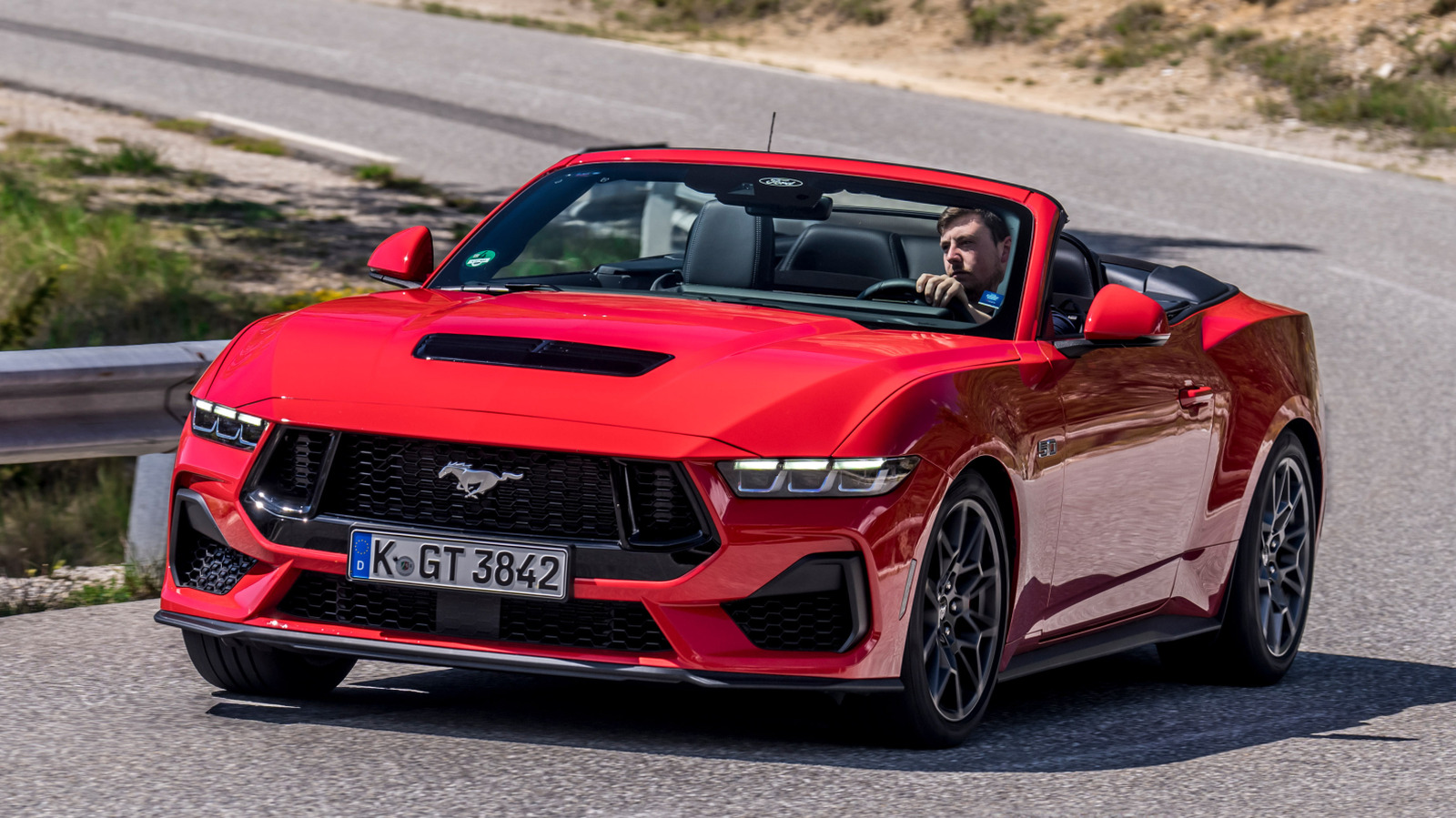
The Ford Mustang sold in Europe looks familiar at first glance, but it is not quite the same machine Americans get. Between emissions rules, pricing differences, and right-hand drive tweaks for certain countries, Ford has had to shape the pony car to fit a very different market. The result is still a Mustang, just one with a few sharp edges filed down and a few surprising extras added.
The latest Mustang in both regions is the seventh-generation S650, and its design does a lot of the heavy lifting. The tri-bar LED headlights, broader stance, and updated rear haunches give it a meaner look, while the cabin takes a big step into the digital age with a 12.4-inch instrument cluster and a 13.2-inch center screen. That interior overhaul is aimed at making the car feel modern enough for younger buyers without losing the Mustang attitude that keeps the badge recognizable.
One of the biggest differences starts under the hood. In Europe, Ford decided to skip the four-cylinder EcoBoost altogether and offer only V8 versions, because buyers there leaned hard toward the larger engine in the previous generation. That means the current lineup is built around the Mustang GT and the Dark Horse, both using the 5.0-liter V8, though the European tuning comes with a catch.
Stricter emissions controls trim the numbers. The European GT produces 440 horsepower instead of the U.S. car’s 480, while the Dark Horse lands at 448 horsepower rather than 500. That power loss stings on paper, but Ford still keeps the cars properly quick, with the 10-speed automatic helping the GT coupe hit 100 km/h in 4.9 seconds and the Dark Horse in 4.4 seconds.
Then there is the price tag, which gets ugly fast. Once the car is adjusted for European regulations and shipped across the Atlantic, the sticker climbs well beyond what U.S. buyers pay. The German-market GT lands around 62,400 Euros, which works out to roughly $71,000 with VAT included, while the Dark Horse starts at 75,000 Euros and reaches about $85,400.
That gap can make the Mustang feel like a premium toy in Europe rather than a muscle car bargain. Even some options shake out differently, with Ford allowing free color choices in Europe while charging extra in the U.S. for several paint colors. The front Recaro seats are another good example, since they are a pricey add-on in Europe but bundled differently in America depending on the package.
For left-hand-drive countries, the Mustang keeps its normal layout and works about as expected. The real oddity shows up in right-hand-drive markets like the U.K., Ireland, Cyprus, Malta, and the Isle of Man, where Ford shifts the controls to the other side but leaves the center console largely unchanged. That means the parking brake sits awkwardly on the passenger side, which is a little strange in daily driving and even stranger when the car’s drift-brake feature enters the conversation.
That drift-brake setup is one of the Mustang’s party tricks, designed for track use and rear-wheel mischief. It can be activated through the car’s menus and lets the driver lock or brake the rear wheels only, which is exactly the sort of thing Mustang fans love showing off. In a right-hand-drive car, though, the layout reminds you that Ford built the Europe version by adapting an American icon instead of starting from scratch.
