
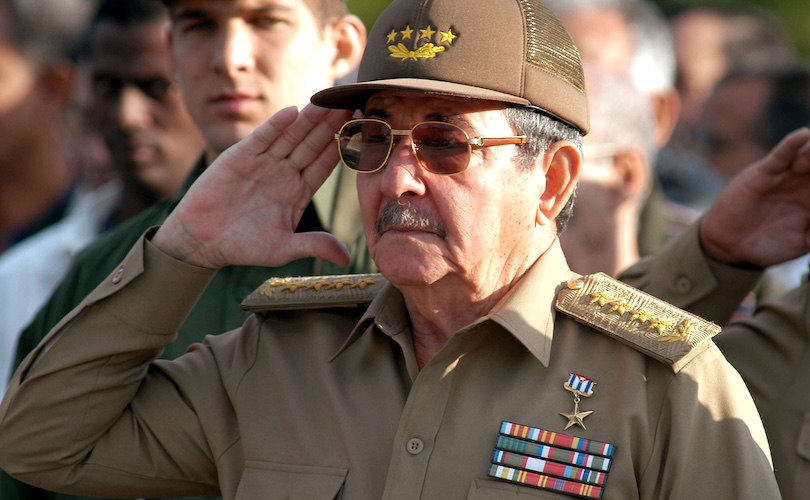
The United States has brought charges tied to a 1996 episode when Cuban Air Force jets shot down unarmed civilian planes, killing four people, and the move presses questions about accountability, justice for victims, and how the U.S. prosecutes alleged human rights violations abroad.
This case reaches back three decades to a grim moment in international law and human decency, and it now sits at the intersection of criminal justice and foreign policy. For many Americans, the memory of those civilian deaths still demands answers. The decision to pursue charges signals that the U.S. justice system believes accountability can cross borders when crimes are severe.
The incident itself was stark and brutal: planes flying by civilians were targeted and shot down. Four lives were lost, families shattered, and an era of impunity for the Cuban regime was exposed. Those facts have not faded, and they are the backbone of any legal action tied to that day.
A Republican perspective tends to emphasize law and order and the need to hold authoritarian leaders responsible. When a government uses military force against noncombatants, it deserves scrutiny and consequence. Pursuing legal recourse underscores a commitment to justice rather than political expediency.
The indictment connects specific allegations to a defined criminal act instead of vague rhetoric. That precision matters in courtrooms and in public debate, because it forces evidence into the open and invites judicial testing. The process gives victims a forum and the nation a statement about values.
Those who push back will call it political theater or a symbolic gesture, but legal steps have real-world effects. Investigations create records, subpoenas reveal documents, and trials compel witnesses to speak under oath. Over time, facts assembled in a public process can reshape historical narratives and deter future abuses.
Accountability also carries diplomatic weight. When the U.S. acts against individuals tied to human rights abuses, it sets a precedent other democracies may follow or endorse. That is a quiet form of pressure on regimes that rely on repression to stay in power.
Families of the victims deserve to see the effort made on their behalf, and victims’ rights are a core reason these prosecutions matter. Justice is not merely symbolic for survivors and relatives; it can be a measure of closure and a public affirmation that their loss was not ignored. The legal system’s willingness to engage with painful pasts is part of its civic promise.
Cuba’s long-standing leaders have often operated with a sense of impunity, insulated by state power and international politics. Those structures do not erase individual responsibility under criminal law. Naming and charging individuals interrupts that insulation and confronts the idea that state authority provides blanket immunity.
Critics will argue about jurisdiction, evidence, and the passage of time. Those are legitimate legal issues to be hashed out in court, not dismissed in headlines. The U.S. system is built to test those claims with rules of evidence and cross-examination, which is precisely why pursuing charges matters.
There are also practical concerns: locating witnesses, securing testimony from decades past, and establishing command responsibility are complex tasks. Yet modern investigative techniques and international cooperation have solved older crimes before. Determination in pursuing truth often matters more than the obstacles themselves.
This action sends a message to allies and adversaries alike that certain actions will not be forgotten. It is a reaffirmation that human life has value beyond geopolitical calculations and that misdeeds can be revisited even after years. That stance resonates with voters who want consistency between principles and practice.
For Americans watching from across the political spectrum, the case will be a test of how principles hold up under scrutiny. Republicans will stress accountability, deterrence, and moral clarity, while opponents may raise questions about timing and motive. The courtroom, not talk radio, should settle those disputes.
Pursuing these charges also highlights the role of Congress and the executive branch in shaping foreign policy responses to human rights abuses. Legislative oversight and judicial action together form a system of checks that can keep state power honest. Citizens expect that system to work, especially on matters involving loss of life.
As the legal process unfolds, expect detailed revelations about the incident and the chain of command. Those revelations can influence public opinion and inform future policy toward nations that flout international norms. Transparency through legal proceedings strengthens democratic accountability.
No legal outcome is guaranteed, but the choice to pursue justice matters on its own terms. It signals that the U.S. will not ignore graves wrongs simply because time has passed. For victims, for the rule of law, and for a consistent foreign policy, that pursuit is both necessary and right.
