
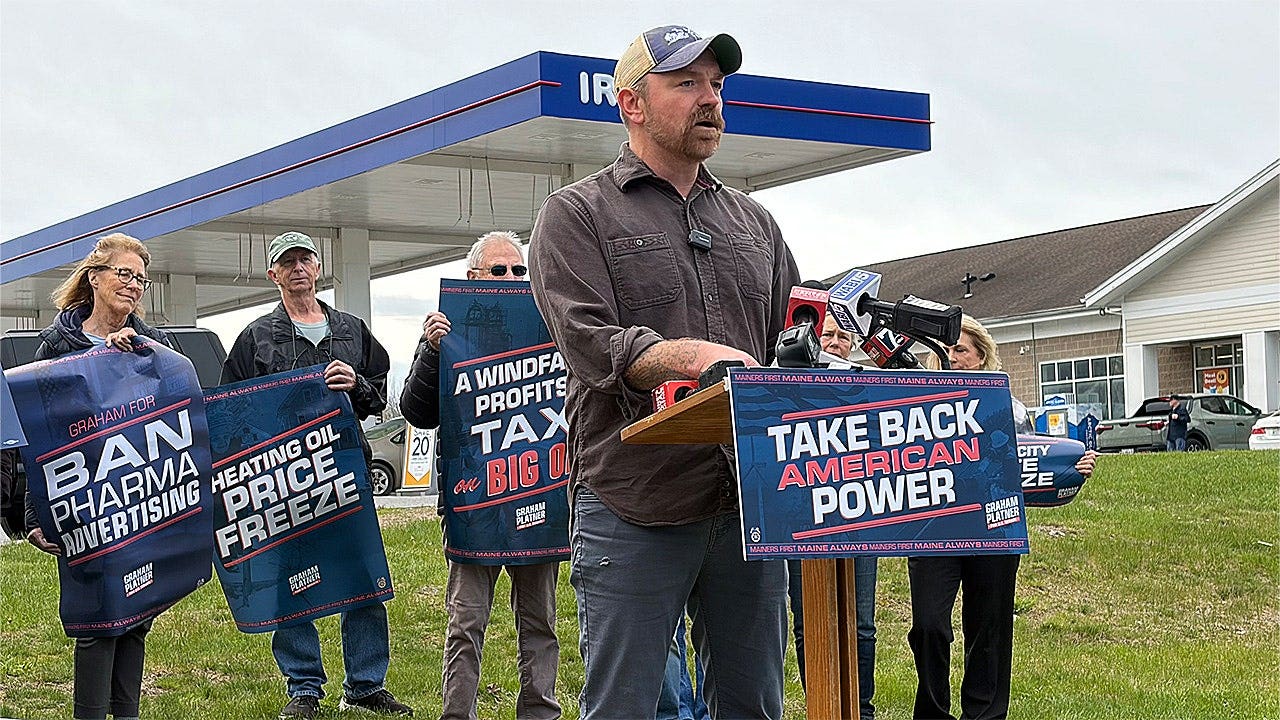
The race for Maine’s Senate seat has produced a startling pitch: a progressive candidate arguing the United States should cozy up to China on climate and energy. This piece takes that pitch apart, explains why Beijing is a risk not a partner, and argues for stronger American energy production and critical mineral strategy instead of handing leverage to a strategic rival.
Graham Platner, a progressive oyster farmer and Marine veteran running as a Democrat, has drawn attention for his approach to China. He told audiences, “Our position towards China should be one of cooperation instead of one of opposition,” and characterized a tougher stance toward Beijing as “absurd.” Those lines capture a worldview that treats geopolitical competition like a policy preference rather than a national security challenge.
That worldview badly misunderstands what China actually is. Beijing markets itself as a leader in renewables, yet it still burns vast amounts of coal and runs industrial systems with far looser environmental controls than ours. The result is a huge gap between the green rhetoric and the dirty reality, a gap too many in the West overlook when they talk about cooperation.
Another blind spot is supply chains. The coming battles over energy and technology won’t be about crude oil the way they were in the last century. They’ll be about batteries, rare earths, cathodes and the refineries that turn raw minerals into usable tech. China controls large portions of those midstream and downstream processes, and that gives it leverage far beyond production numbers.
Some on the left imagine a future where everyone sits around a solar-powered campfire singing “Kumbaya” after fossil fuels vanish. Even the most optimistic proposals, like calls to “invest[ed] in solar and wind and geothermal and battery storage and electric vehicles,” ignore the hard fact: the materials and processing capacity for those technologies are concentrated in places that do not share our strategic aims. Hope is not a supply chain.
Beijing has already used that leverage. Recent export controls and restrictions on key battery and rare earth components have shown how quickly access can shrink and prices spike. Those moves aren’t accidents; they are tools of statecraft. For a nation that relies on competitors for the guts of its clean tech, a geopolitical squeeze can become an energy and defense vulnerability overnight.
This is not an argument against clean energy. Quite the opposite: the faster America produces clean power and refines critical minerals at home, the safer and more prosperous we become. The shale revolution proved that American energy ingenuity can cut emissions while powering growth, and smarter market-driven investments in renewables and storage will do much more than international agreements alone.
Policy should focus on American advantage: build domestic refining and processing, invest in mining responsibly here, and scale manufacturing that meets high environmental and labor standards. Legislation that backs domestic supply chains and private investment will beat import-dependent fantasies. If we want leadership, we should lead with production, not apologies.
Calling for blind cooperation with an authoritarian, high-polluting competitor because of climate goals is not bold; it is naïve. Platner has a right to his stance, but treating a strategic rival as a partner of first resort hands them bargaining chips on the technologies that will matter most. That’s a risky trade for a country that should put American security and industry first.
