
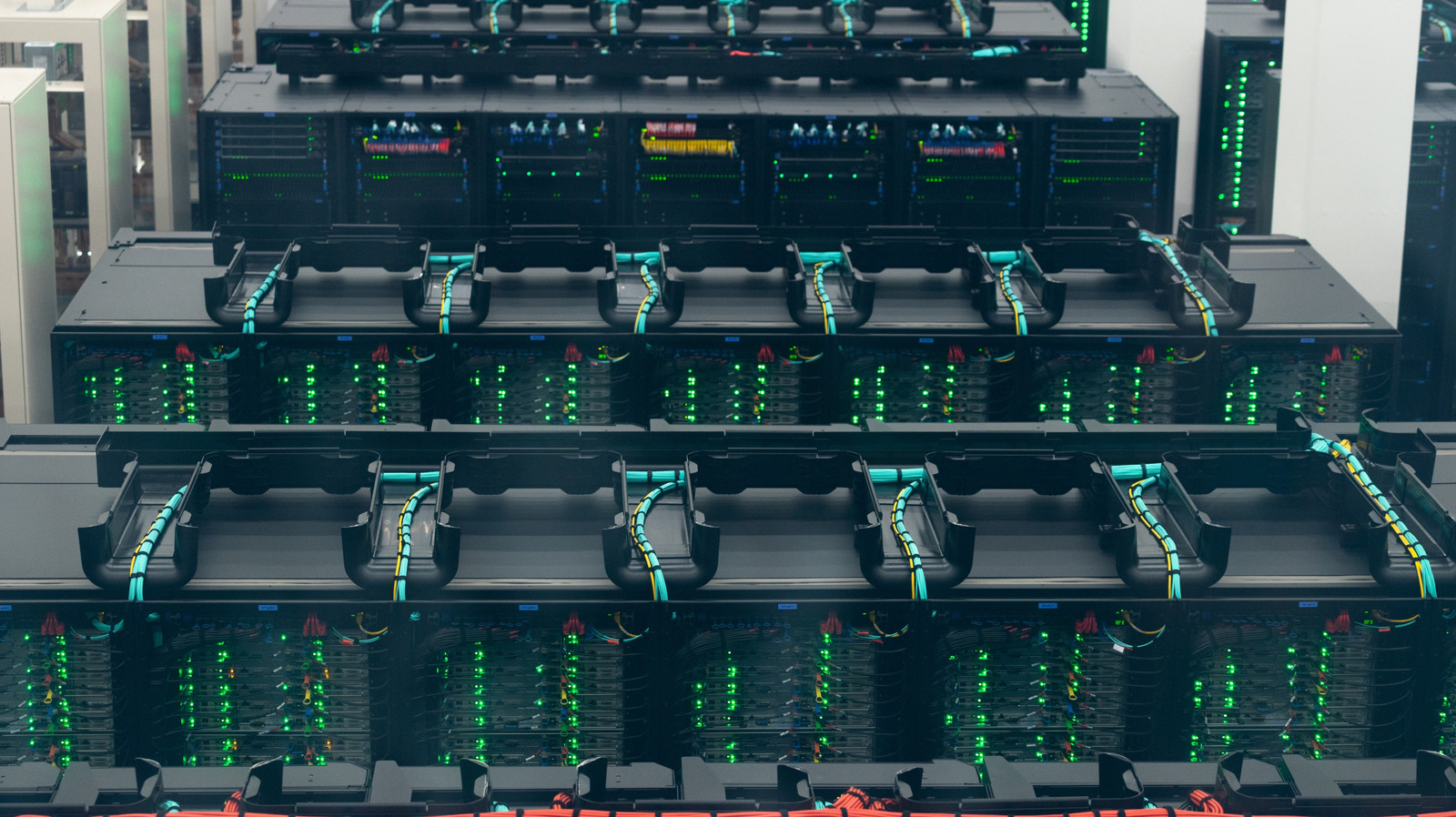
The United States now hosts the world’s most powerful supercomputer, and it’s notable not just for raw speed but for being the biggest in the country by one specific measure. This piece explains what that metric is, why size and speed don’t always mean the same thing, and what the machine’s presence means for research and industry. Expect clear, direct details about capacity, physical scale, and practical impact.
When people hear “most powerful,” they usually picture peak calculations per second, but “largest” can mean cabinet count, floor space, or memory footprint. The machine in question tops the charts on at least one of those measures, giving it a physical presence that matches its headline performance. Physical scale matters because it shapes how the system is used, cooled, and maintained.
Supercomputers are judged by multiple metrics that rarely align perfectly, which is why this story matters. Top500 rankings use LINPACK performance, while real-world workloads care about sustained throughput and memory. So a system can be the fastest on paper yet smaller in size, or vice versa, and each configuration brings tradeoffs for scientists and engineers.
Space matters in more ways than one, because more cabinets usually mean more power draw and more cooling complexity. Big systems need robust data center design, redundant cooling paths, and careful airflow planning to stay reliable. Those infrastructure demands affect operational costs and the kinds of workloads the facility can host.
Another way to be large is by aggregate memory and storage, and that changes the kinds of problems the machine can tackle. Massive memory lets researchers model complex systems with fewer workarounds, from climate simulations to molecular dynamics. When datasets grow in size and fidelity, the ability to hold them in core memory becomes a practical advantage.
The hardware mix also influences perceptions of size, such as when a system uses many GPUs versus many CPUs. GPU-heavy systems tend to squeeze more floating point performance into smaller cabinets, while CPU-centric racks can be bulkier for the same workload. Choosing one approach over another reflects priorities around parallelism, energy use, and software readiness.
Practical uses for a physically large, powerful machine are wide-ranging and immediate, including weather forecasting and materials discovery. Institutions running these systems often partner with universities, national labs, and industry to maximize impact. Those collaborations create pipelines that move experimental findings into products and policies more quickly.
Operational costs are a blunt reality, because cooling and power account for a large slice of the total budget. Efficiency improvements, like liquid cooling and chip-level power management, help contain those costs but add complexity. The design choices around efficiency often determine how sustainable the system is over its planned lifecycle.
Security and stewardship become more visible with high-profile machines, since national competitiveness and research independence are at stake. Access policies balance open science with protecting sensitive work and critical infrastructure. Managing that balance takes technical controls, clear governance, and ongoing oversight.
Building and running a top-tier supercomputer also creates a local ecosystem of expertise, from site engineers to system programmers. Those teams gain hands-on experience with next-generation tools and workflows that spill over into nearby universities and companies. Over time that human capital helps the region attract further investment and talent.
Software and algorithm development tend to lag hardware advances, so part of the value of a very large machine is the stimulus it provides for optimization work. Researchers rewrite kernels, improve parallel I/O, and tune libraries to squeeze better results out of the platform. Those improvements often benefit a wide range of applications beyond the original target workloads.
As computational demands keep growing, we should expect more machines that push different boundaries, whether that means raw FLOPS, memory, or sheer physical scale. The current system’s claim to being the largest in the U.S. by a particular metric highlights how varied “leadership” can be. Future systems will continue to test where size, speed, and efficiency intersect, and who can best use those capabilities.
