
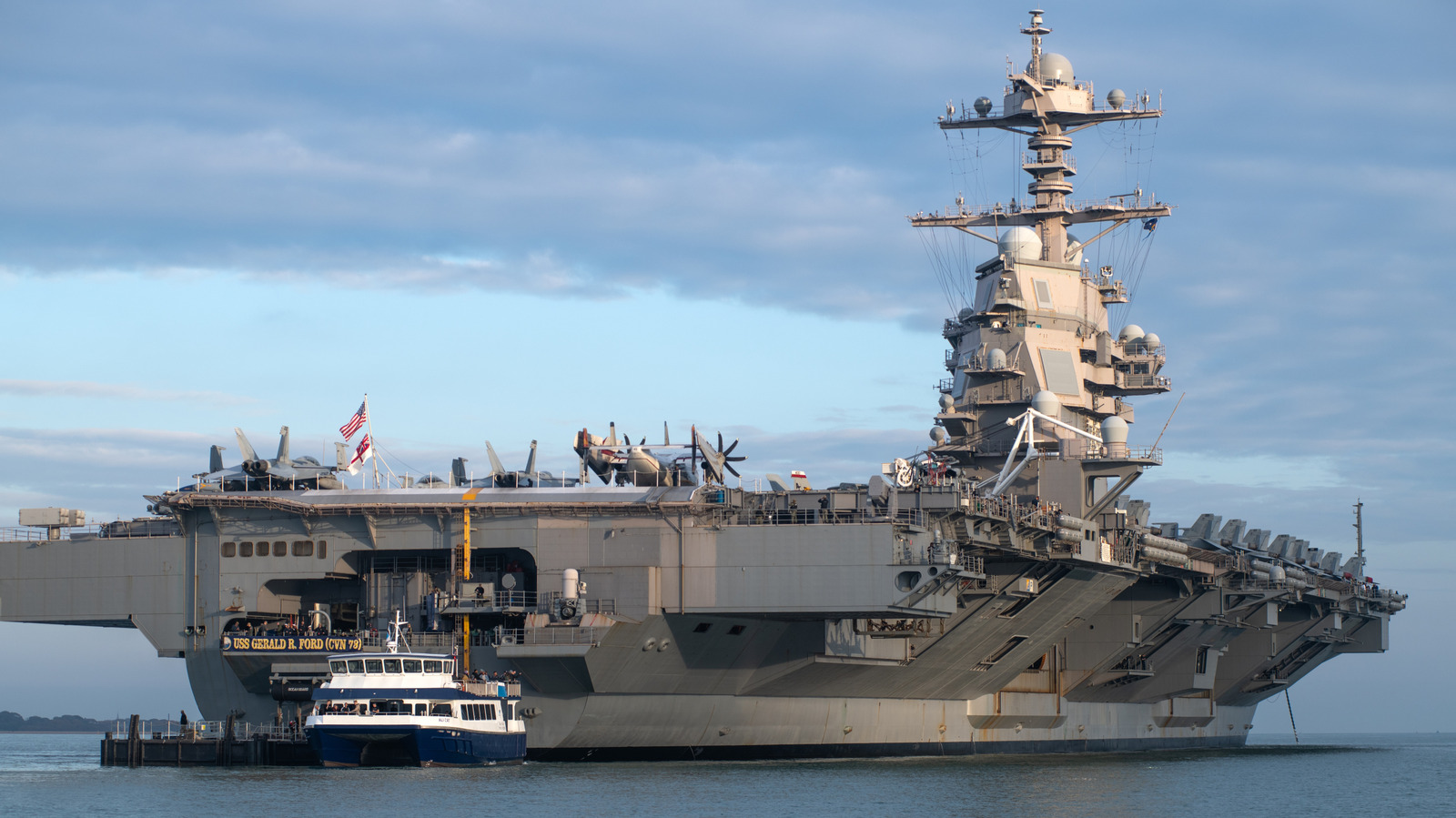
The Navy is preparing to test the USS Gerald R. Ford’s ability to supply power to shore-based facilities, a move that turns a floating fortress into a potential emergency grid asset; this article looks at why the idea matters, how the ship’s power plant could be used ashore, the technical and legal hurdles involved, and what the experiment might mean for disaster response and naval strategy.
The USS Gerald R. Ford stepping into a role beyond carrier strike is notable because carriers normally focus on sea control and aviation. Turning its massive power plant toward shore needs a rethink of equipment, doctrine, and partnerships with civilian authorities. The Navy’s stated intent to evaluate this capability signals interest in using naval platforms for broader resilience missions.
At the heart of the concept is the carrier’s ability to generate substantial, steady electricity with its onboard reactors and distribution systems. If that generation can be safely routed ashore, it could replace or supplement land-based generation during outages. That opens doors for short-term relief in places hit by storms, grid failures, or other emergencies where immediate power matters most.
Practical uses include disaster recovery on island chains, supporting bases with damaged infrastructure, or providing stopgap power for hospitals and water treatment plants. The carrier can move where it’s needed, which gives it an advantage over fixed power plants. But mobility doesn’t erase the heavy lifting required to match shipboard output to civilian systems built on different assumptions.
Technical integration is the obvious hurdle, from the physical connectors to the electrical harmonization needed to match voltage and frequency. Civilian grids often insist on strict protections against backfeed and voltage spikes, so robust control gear and protocols will be essential. The Navy will need to test not just power flows but safeguards that prevent damage to both ship and shore equipment.
Logistics and training are equal parts of the puzzle. Sailors will have to learn the vocabulary and procedures of utilities, while local crews must know how to accept and distribute ship-sourced electricity. That means drills, joint planning, and perhaps new Navy billets focused on civil-military energy liaison. None of that happens overnight, but the potential payoff is a faster, more flexible response capability.
There are real trade-offs to consider, including cost and the opportunity cost of tying up a carrier for non-combat missions. Deploying a major capital ship to support electrical needs ashore reduces its availability for naval tasks and carries risks in contested environments. Planners will need to weigh those factors against the humanitarian and strategic benefits of resilient, mobile power sources.
Safety and regulatory issues add another layer of complexity. Connecting a nuclear-powered vessel to a civilian grid will invite scrutiny over safeguards, oversight, and liability. Local, state, and federal regulations differ widely, so any deployment will require legal clearances and pre-arranged agreements. Those arrangements will shape where and when the carrier can realistically plug in.
Strategically, the experiment hints at a broader concept: platforms that do more than fight. In peacetime, naval assets that can aid allies and civilians strengthen partnerships and buy goodwill. In crisis, they offer options that static infrastructure cannot. Testing the USS Gerald R. Ford’s shore-power potential is therefore as much about doctrine and relationships as it is about cables and transformers.
Whatever the test results show, the idea of a carrier supplying on-shore power reframes how military assets contribute to national resilience and emergency response. It raises questions about interoperability, training, and the balance between combat readiness and civic support. The coming evaluations will tell whether this capability becomes a niche tool for occasional crises or evolves into a planned feature of future deployments.
